
Teriyaki Pork Rolls
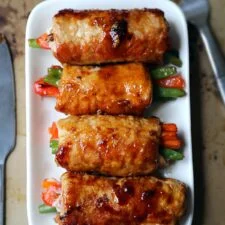
These Japanese-inspired teriyaki pork rolls wrap tender pork around green beans, carrot and red pepper, then finish in a sweet soy glaze. They make a quick, colourful dinner with vegetables tucked into every roll.
Ingredients
- 6 thin chops (about 454 g)pork
- 18green beans, ends trimmed
- 1 small, cut into 18 stripscarrot
- 1 small, cored, deseeded and thinly slicedred pepper
- 30 mlvegetable oil
- for dustingflour
- to tastesalt and pepper
- 30 mlsoy sauce
- 15 mlsugar
- 30 mlwater
Instructions
- 1
Blanch the vegetables
Bring a pot of salted water to the boil and add all the vegetables. Boil for 2 minutes, then drain and pat dry with kitchen paper. Set aside.
- 2
Mix the sauce
In a small bowl, mix the soy sauce, sugar and water. Set the sauce aside.
- 3
Dust the pork
Dust both sides of one pork chop with flour.
- 4
Add the filling
Place 3 green beans, 3 carrot strips and 3 strips of red pepper on the pork.
- 5
Season and roll
Season with salt and pepper, then start rolling the pork around the vegetables.
- 6
Secure the rolls
Hold each roll closed with toothpicks.
- 7
Heat the oil
Add the oil to a pan. Once it is hot, add the pork rolls.
- 8
Brown the pork
Cook until golden brown, about 8 minutes, then remove the toothpicks.
- 9
Glaze the rolls
Pour in the sauce and shake the pan so it coats all sides of the rolls.
- 10
Slice and serve
Turn off the heat and slice the rolls into pieces. Serve warm over any sliced vegetables left over.
What are teriyaki pork rolls?
Teriyaki refers to a Japanese cooking style in which food is glazed with a sweet, savoury sauce. These rolls use that flavour idea with pork wrapped around crisp-tender vegetables, rather than serving the meat as a whole chop.
The recipe keeps the preparation simple: briefly blanch the vegetables, roll them in the pork, then coat everything in a quick soy and sugar sauce. The colourful filling also makes each slice easy to serve.
Nutrition and macros by portion
The nutrition label shows one serving as written: 311 calories, 21g protein, 40g carbs, 9g fat.
| Portion | Adjustment | kcal | Protein | Carbs | Fat |
|---|---|---|---|---|---|
| Lighter | Use less oil | 218 kcal | 15g | 28g | 6g |
| This serving | As written | 311 kcal | 21g | 40g | 9g |
| Hungry | Add steamed rice | 467 kcal | 32g | 60g | 13g |
The pork supplies most of the protein, while the flour, sugar and vegetables contribute carbohydrates. Vegetable oil and the pork provide fat, and the soy sauce contributes salt. Serve with extra vegetables or a modest portion of rice to round out the plate.
Prepare the vegetables
Blanching: Boil the beans, carrot and red pepper for 2 minutes, then drain and dry them well. This short cook softens the vegetables slightly while leaving them firm enough to roll.
Portioning: The recipe calls for 3 beans, 3 carrot strips and 3 pepper strips in each roll. Arrange the filling so it sits inside the pork rather than poking out at the ends.
Roll and secure the pork
Flour coating: Dust each chop on both sides before adding the vegetables. Keep the coating light; it helps the meat brown and gives the sauce something to cling to.
Toothpicks: Roll the chop snugly around its filling and fasten it closed. Remove the toothpicks before slicing and serving.
Get the browning right
Hot pan: Add the rolls when the oil is hot so the pork starts browning rather than sitting in oil. Give them room to cook evenly, working in batches if the pan is crowded.
Doneness: The stated cooking time is about 8 minutes, until the pork is golden brown. Check the thickest part is cooked through before taking the rolls off the heat.
Make the quick teriyaki-style glaze
Mixing: Stir the soy sauce, sugar and water together before you start cooking, so the glaze is ready to add. The water loosens the mixture while the sugar lends sweetness.
Coating: Add the sauce after browning and shake the pan to cover the rolls on all sides. Turn off the heat once they are coated to avoid reducing the sauce too far.
Serving ideas
Vegetables: Serve the sliced rolls warm over any vegetables left after filling them. If there are none, the rolls can still be served on their own or with a simple vegetable side.
A fuller plate: Steamed rice is a natural accompaniment to the sweet-savoury sauce. Keep the rolls as the centrepiece and add rice or extra vegetables to suit your appetite.
Recipe notes & tips
- Pat the blanched vegetables dry so excess water does not make the rolls slippery.
- Keep the vegetable strips together as you roll to make even slices later.
- Use a light dusting of flour rather than a thick coating.
- Have the sauce mixed before heating the pan, as it is added near the end.
- Remember to remove every toothpick before slicing or serving.
Variations
- Add ginger: Mix a little finely grated ginger into the soy sauce mixture for extra warmth.
- Use chicken: Substitute thin chicken cutlets for the pork and cook until thoroughly done.
- Change the vegetables: Use thin strips of courgette in place of some of the red pepper.
- Make it less sweet: Reduce the sugar to suit your taste.
- Serve with rice: Add steamed rice to make the rolls a more substantial meal.
Common mistakes to avoid
- Wet vegetables: They can make the filling slippery; drain and pat them dry after blanching.
- Loose rolling: The filling may fall out; roll the pork snugly and secure it with toothpicks.
- Crowded pan: The rolls may brown unevenly; cook them in batches if needed.
- Sauce added too early: It can cook down before the pork browns; add it after the rolls are golden.
- Forgotten toothpicks: They are easy to miss when slicing; remove them all before serving.
How to store
Refrigerate leftovers in a covered container and eat within 2 days. Reheat until piping hot, either gently in a pan or in the microwave; the pork may be less tender after reheating.
Frequently asked questions
Can I prepare the rolls ahead?
You can blanch and dry the vegetables in advance, then keep them covered in the fridge. For the best texture, roll and cook the pork close to serving time.
How do I know the pork is cooked through?
The rolls should be golden brown, and the pork should be cooked through at the thickest part. If unsure, cut into one roll to check before serving.
Can I use a different cut of pork?
Use thin, boneless pork that can be rolled around the filling. Thicker cuts may need to be flattened so they cook evenly.
What can I serve with the rolls?
Steamed rice works well with the soy glaze, or serve the rolls with extra vegetables for a lighter accompaniment.
Why are my rolls difficult to slice?
Make sure the toothpicks have been removed, then use a sharp knife and cut with a steady motion. Letting the rolls rest briefly can also help keep the filling in place.
Cook it from the original
This recipe comes from pickledplum.com. Their page has the author’s own photos, notes and tips — the best place to cook it from.
Open the recipe on pickledplum.com