
Pork with paprika and olives
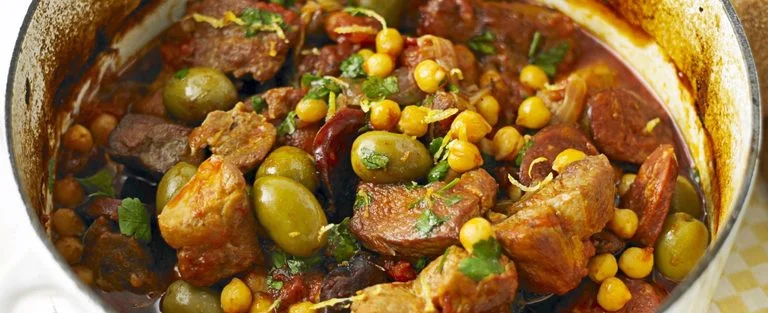
This slow-cooked pork stew combines smoked paprika, chorizo, chickpeas and green olives for a hearty weekend meal. Serve it with crusty bread to mop up the rich tomato and stock sauce.
Ingredients
- 500 gdiced pork leg or shoulder
- to tasteolive oil
- 1red onion, cut into thin wedges
- 2 clovesgarlic, crushed
- 100 gchorizo, cut into chunks
- 1 tspsmoked paprika
- 1 × 400 g tinchopped tomatoes
- 300 mlchicken stock
- 1 × 400 g tinchickpeas
- 100 ggreen olives, drained and rinsed
- 1lemon, zested and juiced
- 1 small bunchparsley, chopped
- to servecrusty bread
Instructions
- 1
Heat the oven
Preheat the oven to 150°C, or 130°C fan (Gas Mark 2).
- 2
Brown the pork
Season the pork and brown it all over in a little olive oil. Lift it out of the pan.
- 3
Soften the aromatics
Cook the onion and garlic in the same pan until softened.
- 4
Add paprika
Stir in the chorizo and smoked paprika and cook for 2 minutes. Add the tomatoes, chicken stock and pork.
- 5
Cook the stew
Cover the pan and cook in the oven for 1 hour. Add the chickpeas and olives, then cook for another hour.
- 6
Finish and serve
Stir in the lemon zest and juice and the parsley. Serve with crusty bread.
What is pork with paprika and olives?
This is a tomato-based pork stew, slow-cooked until the meat is tender and the flavours have had time to mingle. Paprika, chorizo and olives give it a savoury, smoky edge.
It draws on familiar Spanish-style ingredients rather than one fixed regional tradition. Here, chickpeas make the stew more substantial, while lemon and parsley bring freshness at the end.
Nutrition and macros by portion
The nutrition label shows one serving as written: 503 calories, 36g protein, 16g carbs, 33g fat.
| Portion | Adjustment | kcal | Protein | Carbs | Fat |
|---|---|---|---|---|---|
| Lighter | Less chorizo, more vegetables | 352 kcal | 25g | 11g | 23g |
| This serving | As written | 503 kcal | 36g | 16g | 33g |
| Hungry | Add extra crusty bread | 755 kcal | 54g | 24g | 50g |
The chickpeas and tomatoes provide most of the carbohydrates, while pork and chickpeas contribute protein. Much of the fat comes from the pork and chorizo, with olive oil also adding some; serve with a generous portion of vegetables alongside the bread to balance the plate.
Why this combination works
Pork: Leg or shoulder both suit a long, gentle cook; browning the pieces first adds flavour to the pan.
Chorizo and paprika: Chorizo contributes seasoning and richness, while smoked paprika deepens the stew’s savoury character.
Chickpeas and olives: The chickpeas add substance, and the olives bring a briny contrast to the tomato sauce.
Build flavour in the pan
Brown the pork all over before taking it out, then soften the onion and garlic in the same pan. This sequence lets the vegetables pick up the browned flavours left behind.
Give the chorizo and paprika their stated 2 minutes in the pan before adding the liquid. Keep the heat moderate so the paprika does not scorch.
Let the oven do the work
The covered stew cooks for 1 hour before the chickpeas and olives go in, then gets another hour in the oven. Adding them later helps keep their flavours distinct.
Check that the pork is tender before serving. If it still feels firm, continue cooking until it yields easily when prodded.
Finish with lemon and parsley
Lemon zest and juice are stirred in at the end rather than cooked for the full time. They lift the rich tomato, pork and chorizo flavours.
Parsley adds a fresh note just before serving. Chop it while the stew finishes cooking so it is ready to stir through.
What to serve alongside
Crusty bread is the suggested accompaniment and makes it easy to enjoy every bit of the sauce. Serve it alongside the stew rather than stirring it into the pot.
For a fuller meal, add a simple green salad or steamed green vegetables. Their freshness provides a contrast to the slow-cooked stew.
Recipe notes & tips
- Cut the pork into evenly sized pieces so they brown and cook at a similar rate.
- Brown the pork in batches if the pan is crowded, so the pieces sear instead of steaming.
- Use the same pan for the onion and garlic to retain the flavour from browning the meat.
- Drain and rinse the chickpeas and olives before adding them.
- Taste the finished stew before adding extra salt, as chorizo and olives are already savoury.
Variations
- Add peppers: Stir sliced red pepper into the pan with the onion.
- Use white beans: Swap the chickpeas for drained white beans.
- Choose a different olive: Use pitted black olives for a milder, less briny flavour.
- Add heat: Include a pinch of chilli flakes with the smoked paprika.
- Serve with potatoes: Offer boiled or roasted potatoes instead of crusty bread.
Common mistakes to avoid
- Crowding the pan: The pork can steam rather than brown; cook it in batches if needed.
- Skipping the browning: The stew misses flavour from the seared meat; brown the pork before adding the liquid.
- Scorching the paprika: It can turn bitter; stir it with the chorizo briefly over moderate heat.
- Adding chickpeas too soon: They spend longer in the oven than the method calls for; add them after the first hour.
- Serving tough pork: It needs more time to soften; continue cooking until it yields easily.
How to store
Cool leftovers and refrigerate them in a covered container for up to 3 days. Reheat gently in a pan until piping hot, adding a splash of water or stock if the sauce has thickened.
Frequently asked questions
Can I make this stew ahead?
Yes. Cook it through, cool it promptly and refrigerate it in a covered container. Reheat gently until piping hot and stir in a little water or stock if needed.
Can I use pork shoulder instead of leg?
Yes. The recipe lists either cut, and both are suited to slow cooking.
Do I drain the chickpeas?
Yes. Drain the tin before adding the chickpeas, as specified in the ingredient list.
Can I cook it on the hob?
The supplied method uses the oven. If adapting it for the hob, keep it covered and at a gentle simmer, checking that it does not catch on the base.
How do I know when the pork is ready?
After the full cooking time, it should be tender and yield easily when prodded. If it is still firm, cook it for longer.
Cook it from the original
This recipe comes from olivemagazine.com. Their page has the author’s own photos, notes and tips — the best place to cook it from.
Open the recipe on olivemagazine.com