
Taiyaki
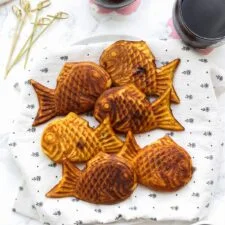
Taiyaki are Japanese fish-shaped waffles with a crisp, golden shell and a soft centre wrapped around a filling. Make them as a hands-on snack or dessert, using sweet red bean paste or one of the optional alternatives.
Ingredients
- 200 gcake flour or pancake flour
- 1 teaspoonbaking powder
- 1/2 teaspoonbicarbonate of soda
- 2 tablespoonsgranulated sugar
- A pinchsalt
- 140 mlwater
- 100 mlmilk or a non-dairy alternative such as oat milk or soya milk
- 1 largeegg
- A littleneutral oil, for brushing the taiyaki pan
- As neededanko (sweet red bean paste)
- Optional, as neededNutella
- Optional, as neededstrawberry jam
- 1taiyaki pan
Instructions
- 1
Sift dry ingredients
Sift the flour, baking powder, bicarbonate of soda, sugar and salt into a bowl.
- 2
Mix and chill
Whisk in the water, milk and egg until the batter is smooth. Cover and refrigerate for at least 1 hour and up to 2 hours.
- 3
Warm the pan
Brush the fish-shaped moulds with a little oil. Set the taiyaki pan over a burner on medium-low heat and warm it for a couple of minutes.
- 4
Pour first batter
Add enough batter to each mould to cover about 50% of its surface, leaving the tail empty; it will be filled when you add the filling and more batter.
- 5
Add the filling
Let the batter cook for a few seconds, then place a little anko, or another chosen filling, in each mould.
- 6
Cover and flip
Pour in more batter to cover the filling and fill the tail this time. Close the top of the pan and flip it over.
- 7
Cook until golden
Cook for 2–3 minutes, then flip the pan. Cook for another 1–2 minutes, until both sides are golden brown. Taiyaki pans vary in size, so the cooking time may be shorter or longer.
- 8
Cool before serving
Transfer the taiyaki to a baking rack and leave them to cool for a few minutes before eating.
What is taiyaki?
Taiyaki is a Japanese fish-shaped cake, commonly cooked in a hinged mould and filled before the two sides seal together. Its name refers to the sea bream shape, and it is often enjoyed as a street snack or sweet treat.
This version uses a simple, lightly sweet batter and lets you choose the filling. Chilling the batter and adding it in two layers helps enclose the centre within the fish-shaped shell.
Nutrition and macros by portion
The nutrition label shows one serving as written: 111 calories, 3g protein, 22g carbs, 1g fat.
| Portion | Adjustment | kcal | Protein | Carbs | Fat |
|---|---|---|---|---|---|
| Lighter | Use less filling | 78 kcal | 2g | 16g | 1g |
| This serving | As written | 111 kcal | 3g | 22g | 1g |
| Hungry | Serve two taiyaki | 167 kcal | 5g | 34g | 1g |
The flour, sugar and fillings provide most of the carbohydrates, while the egg and milk contribute some protein. The small amount of oil used to brush the pan and the egg account for much of the fat; serve a taiyaki with fruit to balance the plate.
Choosing the flour and batter
Flour: Cake flour gives a tender result, while pancake flour is a convenient alternative. Sifting the dry ingredients helps distribute the raising agents and sugar evenly.
Liquid: Water, milk and egg make a pourable batter. Oat or soya milk can stand in for dairy milk; whisk just until smooth rather than beating it for longer than needed.
Why the batter is chilled
Rest: The recipe calls for at least 1 hour in the fridge, and allows up to 2 hours. Cover the bowl while it chills so the surface does not dry out.
Before cooking: Give the batter a gentle stir if it has settled. It should still be easy to pour into the small moulds.
Filling the fish moulds
First layer: Cover about half of each mould with batter, leaving the tail empty at this stage. Let it cook for a few seconds so the filling can sit on the base.
Filling: Use a modest amount of anko or another chosen filling, keeping it away from the edges so the top batter can seal around it.
Top layer: Add enough batter to cover the filling and fill the tail, then close the pan. Take care when flipping the hot pan, following its handle and hinge design.
Getting the texture right
Heat: Medium-low heat gives the batter time to cook through while the outside turns golden. A pan that is too hot may brown the shell before the centre is cooked.
Doneness: Look for golden colour on both sides and a cooked-through shell. The mould size and burner vary, so use the stated times as a guide rather than a guarantee.
Serving taiyaki
Cooling: Set the cooked fish on a baking rack for a few minutes before eating. This lets the surface settle and makes the hot filling less likely to burn your mouth.
Pairing: Serve them warm on their own as a snack or dessert. For a more balanced plate, add fresh fruit alongside rather than another sweet topping.
Recipe notes & tips
- Measure the filling before you start cooking so each fish gets a similar amount.
- Brush the moulds lightly with neutral oil to help the cooked batter release.
- Keep the burner at medium-low and adjust the timing to suit your particular pan.
- Use a spoon or jug to pour batter neatly into the moulds.
- Let the cooked taiyaki rest on a baking rack rather than stacking them while hot.
Variations
- Classic anko: Fill each fish with sweet red bean paste for the traditional-style option in this recipe.
- Nutella: Use a small amount of Nutella as an optional sweet filling.
- Strawberry jam: Spoon in a little jam, keeping it away from the mould edges.
- Dairy-free batter: Replace the milk with oat milk or soya milk.
- Savoury filling: Choose a savoury filling and use a little so it can be enclosed by the batter.
Common mistakes to avoid
- Overfilling the moulds: Too much batter or filling can spill at the edges; leave room for the top layer to seal.
- Filling the tail too early: Leave it empty under the first batter layer, then fill it when you add the top batter.
- Using high heat: The outside can brown too quickly; keep the burner at medium-low.
- Flipping too soon: Give the base batter a few seconds to cook before adding the filling.
- Eating straight away: The centre can be very hot; cool the taiyaki on a rack for a few minutes.
How to store
Cool completely, then store in an airtight container in the fridge for up to 2 days. Reheat in a dry pan over low heat until warmed through, or use an oven; the outside may soften during storage.
Frequently asked questions
Can I make the batter ahead?
Yes. The method calls for chilling it for at least 1 hour and up to 2 hours. Keep it covered in the fridge during that time.
Can I use a different filling?
Yes. Anko is the listed filling, with Nutella and strawberry jam as optional alternatives. A savoury filling can also be used, as long as it fits inside the mould.
Can I make these without a taiyaki pan?
The fish shape and method rely on a taiyaki pan. Without one, you can cook the batter in a different waffle or cake mould, but the result will not have the traditional fish shape.
How do I know when the taiyaki are cooked?
They should be golden brown on both sides, with the batter cooked through. Pan size and heat affect the time, so check as they cook.
Can I use non-dairy milk?
Yes. The recipe suggests oat milk or soya milk as alternatives to dairy milk.
Cook it from the original
This recipe comes from pickledplum.com. Their page has the author’s own photos, notes and tips — the best place to cook it from.
Open the recipe on pickledplum.com