
Brown Sugar Carnitas
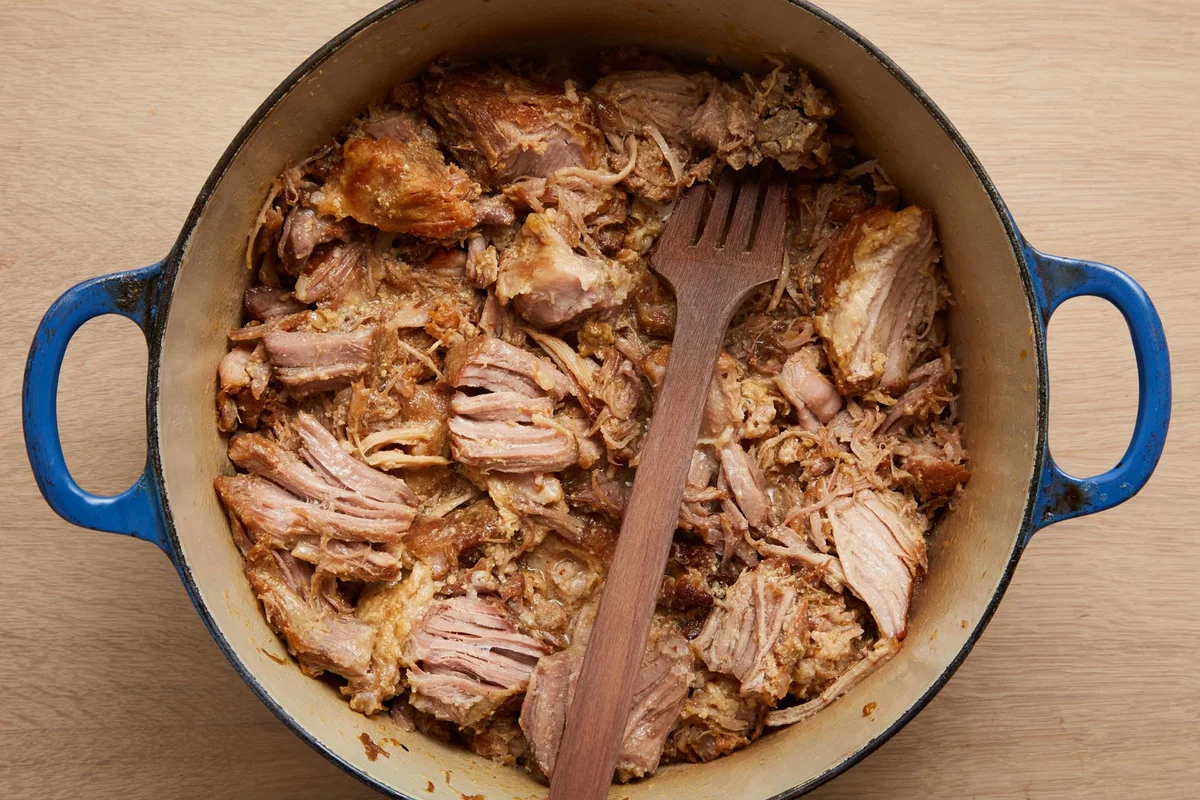
These Brown Sugar Carnitas are pork shoulder slowly cooked with milk, garlic, onion and bay, then finished with a touch of brown sugar. The result is tender, savoury meat with a lightly sweet finish, ready to shred and serve in tacos or bowls.
Ingredients
- 240 ml (1 cup)lard, vegetable shortening or oil
- 1.36–1.81 kg (3–4 lb)boneless pork shoulder or butt, with the fat on, cut into 7.5 cm (3-inch) chunks
- 20 g (4 teaspoons), dividedkosher or sea salt
- 5 ml (1 teaspoon)freshly ground black pepper
- 480 ml (2 cups), dividedmilk
- 2garlic cloves
- ¼white onion, coarsely chopped
- 2bay leaves
- 100 g (½ cup)brown sugar
Instructions
- 1
Brown the pork
Heat the lard in a large Dutch oven or heavy casserole over medium-high heat. Season the pork with 10 g (2 teaspoons) of the salt and the black pepper. Once the lard has melted, add the pork and brown it on all sides, turning and stirring for about 10–12 minutes.
- 2
Simmer the meat
Blend 360 ml (1½ cups) of the milk with the garlic, onion and remaining 10 g (2 teaspoons) of salt until smooth. Pour the mixture over the pork and bring it to a simmer. Reduce the heat to medium-low, add the bay leaves and cover. Cook for 1 hour 15 minutes, turning the pork chunks a couple of times during cooking.
- 3
Add the sugar
In a small bowl, stir the brown sugar into the remaining 120 ml (½ cup) of milk. Pour this over the carnitas, stir and cook uncovered for another 4–5 minutes. Turn off the heat.
- 4
Shred the pork
Lift the meat out with a slotted spoon and put it in a bowl. Shred it with two forks, add a couple of tablespoons of the seasoned fat from the casserole and toss.
What are carnitas?
Carnitas are a Mexican preparation of pork cooked until tender, then pulled or broken into pieces. The name means “little meats”, and the dish is associated with Michoacán, where pork is traditionally cooked slowly in its own fat.
This version uses milk, aromatics and brown sugar alongside the pork. The milk helps form the cooking liquid, while the sugar brings a gentle sweetness at the end.
Nutrition and macros by portion
The nutrition label shows one serving as written: 570 calories, 39g protein, 12g carbs, 40g fat.
| Portion | Adjustment | kcal | Protein | Carbs | Fat |
|---|---|---|---|---|---|
| Lighter | Use less cooking fat | 399 kcal | 27g | 8g | 28g |
| This serving | As written | 570 kcal | 39g | 12g | 40g |
| Hungry | Serve a larger portion | 855 kcal | 59g | 18g | 60g |
Pork shoulder and the cooking fat account for most of the fat and protein, while the milk and brown sugar provide most of the carbohydrates; the meat and salt contribute sodium. Serve a moderate portion with beans or vegetables to add fibre and balance the plate.
Choosing the pork
Pork shoulder: this well-marbled cut becomes tender during the long, covered simmer. Keep the fat on as directed; it contributes flavour and helps the meat stay moist.
Chunk size: cut the pork into roughly 7.5 cm pieces so they brown on several sides and cook evenly. Similar-sized chunks also make it easier to judge when they are tender enough to shred.
Build flavour before simmering
Browning: give the chunks about 10–12 minutes over medium-high heat, turning them so they colour on all sides. This step adds savoury flavour before the milk mixture goes in.
Blended aromatics: purée the first 360 ml of milk with the garlic, onion and salt until smooth. Pour it over the browned meat and scrape any browned bits into the liquid as you stir.
Keep the simmer gentle
Covered cooking: once the liquid reaches a simmer, reduce the heat to medium-low and cover the casserole. Turn the chunks a couple of times during the 1 hour 15 minute cook so they cook evenly.
Doneness: the pork should be tender enough to pull apart easily with forks. If it is still firm, give it more time over a gentle heat rather than raising the temperature.
Finish with milk and sugar
Sweet finish: mix the brown sugar into the reserved milk before pouring it over the meat. Cook uncovered for just 4–5 minutes, stirring, then turn off the heat as the method directs.
Seasoned fat: after shredding, toss the pork with a couple of tablespoons of the cooking fat. This adds moisture and flavour; add it gradually so the meat does not become greasy.
Serving ideas
Tacos: spoon the shredded pork into warm tortillas and add fresh toppings such as chopped onion, coriander or salsa. Keep the toppings simple so the sweet-savoury pork remains the focus.
A fuller plate: serve with beans, rice or a crisp salad. The accompaniments provide contrast to the rich, tender meat.
Recipe notes & tips
- Choose a heavy casserole with enough room to turn the pork chunks without crowding them.
- Let the lard melt fully before adding the seasoned meat.
- Keep the covered simmer gentle to help the pork become tender without scorching the bottom.
- Turn the chunks a couple of times during the long simmer, as directed.
- Add the cooking fat to the shredded pork a little at a time and stop when it is moist enough.
Variations
- Use vegetable oil: substitute it for the lard or shortening while keeping the quantity the same.
- Choose sea salt: use it in place of kosher salt, measuring the stated amount.
- Adjust the sweetness: use less brown sugar for a less sweet finish.
- Add fresh toppings: serve the pork with chopped onion or coriander for a fresh contrast.
- Make it a bowl: pair the carnitas with rice, beans and vegetables instead of tortillas.
Common mistakes to avoid
- Skipping the browning: the pork misses an important layer of flavour; brown all sides for the stated 10–12 minutes.
- Boiling hard: a vigorous boil can make the cooking uneven; reduce the heat to medium-low after the simmer begins.
- Leaving out the turns: chunks may cook less evenly; flip them a couple of times during the covered simmer.
- Shredding too early: firm meat is harder to pull apart; check that it separates easily with forks first.
- Adding too much fat: the finished pork can feel greasy; toss in the seasoned fat a couple of tablespoons at a time.
How to store
Cool leftovers and refrigerate them in a covered container for up to 3 days. Reheat gently in a covered pan with a splash of water or milk, stirring until hot throughout.
Frequently asked questions
Can I make these carnitas ahead?
Yes. Cook and shred the pork, then refrigerate it in a covered container. Reheat gently before serving, adding a small splash of liquid if needed.
How do I know when the pork is ready to shred?
It should pull apart readily with two forks. If it still resists, continue cooking gently and check again.
Can I use oil instead of lard?
Yes. The ingredient list allows vegetable shortening or oil as alternatives to lard, using the same quantity.
Can I use a different cut of pork?
The recipe specifies boneless pork shoulder or butt with the fat on. A leaner cut may not become as tender or rich during the same cooking time.
What should I serve with Brown Sugar Carnitas?
Serve them in warm tortillas with fresh toppings, or alongside rice, beans or a crisp salad.
Can I freeze the leftovers?
Yes. Freeze the cooled shredded pork in an airtight container, then thaw it in the refrigerator and reheat gently.
Cook it from the original
This recipe comes from patijinich.com. Their page has the author’s own photos, notes and tips — the best place to cook it from.
Open the recipe on patijinich.com