
Beef and potato croquettes (Korokke)
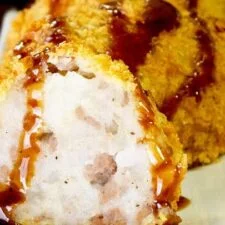
Japanese korokke are crisp, golden croquettes filled with soft potato and savoury beef. They make a comforting meal with a crunchy coating, cabbage on the side and tangy tonkatsu sauce for dipping.
Ingredients
- 2 largepotatoes, peeled and roughly chopped
- 300 gground beef
- 1 mediumonion, finely chopped
- 1 clovegarlic, minced
- 2 tablespoonsbutter
- as neededvegetable oil, for frying
- 1 largeegg
- as neededpanko breadcrumbs
- as neededplain flour
- as neededshredded cabbage
- as neededtonkatsu sauce
- to tastesalt
- to tasteblack pepper
Instructions
- 1
Boil the potatoes
Bring a medium-sized pan of water to the boil. Add the potatoes and cook until tender all the way through. Drain them into a mixing bowl, mash and set aside.
- 2
Cook the filling
Melt the butter in a large pan over high heat. Add the onion and garlic and cook for about 2–3 minutes, then add the beef and cook until fully done. Stir the beef mixture into the mashed potatoes and season well with salt and pepper.
- 3
Heat the oil
Heat the frying oil to 171°C (340°F).
- 4
Coat and fry
Shape the mixture into balls about the size of your palm. Dust each with flour, dip it in the egg and coat it in panko. Fry until golden brown and crisp, working in batches so the pan is not overcrowded and the oil temperature does not drop.
- 5
Serve the croquettes
Serve with tonkatsu sauce and shredded cabbage.
What are korokke?
Korokke are Japanese croquettes, commonly made with a soft potato filling encased in a crisp breadcrumb coating. The name and style reflect the influence of European croquettes, adapted into a familiar Japanese home-cooked dish.
This version combines mashed potatoes with beef, onion and garlic. A panko crust gives the outside a light crunch, while cabbage and tonkatsu sauce provide a fresh, tangy finish.
Nutrition and macros by portion
The nutrition label shows one serving as written: 640 calories, 24g protein, 59g carbs, 34g fat.
| Portion | Adjustment | kcal | Protein | Carbs | Fat |
|---|---|---|---|---|---|
| Lighter | More cabbage, less oil | 448 kcal | 17g | 41g | 24g |
| This serving | As written | 640 kcal | 24g | 59g | 34g |
| Hungry | Larger croquette portion | 960 kcal | 36g | 89g | 51g |
Potatoes and the panko coating provide most of the carbohydrates, while beef contributes protein and much of the filling's fat; butter and frying oil add further fat. Serve with a generous portion of cabbage for a fresh, crisp side, and keep extra sauce on the side so everyone can add it to taste.
Build a savoury filling
Potatoes: boil them until completely tender so they mash easily and bind the filling without lumps.
Beef and aromatics: cooking the onion and garlic in butter first helps soften them before the beef goes into the pan. Let the beef cook through, then mix it thoroughly with the potatoes and season well.
Shape for even frying
Even portions: shape the mixture into balls roughly the size of your palm, keeping them similar in size so they fry at about the same rate.
A complete coating: dust each croquette with flour, dip it in beaten egg and cover it in panko. Coat all sides so the filling is enclosed by the crumb layer.
Watch the oil and colour
Oil temperature: aim for 171°C before frying. If the oil is not hot enough, the coating can absorb more oil; a thermometer makes it easier to check.
Golden crust: fry until the outside is crisp and deeply golden. Avoid crowding the pan, since adding too many croquettes at once can cool the oil.
Serve with contrast
Cabbage: serve the croquettes with shredded cabbage for a cool, crisp contrast to the hot, soft filling.
Tonkatsu sauce: offer it alongside or spoon a little over the croquettes just before serving, so the panko keeps its crunch for longer.
Plan the frying
Get the coating ingredients ready while the potato and beef mixture is prepared, then shape and bread the croquettes before heating is complete. This keeps the sequence orderly when the oil is ready.
Fry in batches and allow the oil to return to temperature between them. The recipe gives an overall time of 35 minutes, but the exact frying time depends on the size of the croquettes and the pan.
Recipe notes & tips
- Drain the potatoes thoroughly before mashing so the filling is not watery.
- Let the beef mixture cook fully before combining it with the potato.
- Mix the filling evenly so each croquette gets a similar share of beef.
- Set out the flour, egg and panko before shaping the croquettes.
- Fry in small batches and let the oil recover its heat between batches.
- Serve the cabbage and sauce alongside the croquettes to keep the coating crisp.
Variations
- Add spring onions: stir finely sliced spring onions into the filling for a gentle savoury lift.
- Use a different mince: substitute pork or turkey mince for the ground beef.
- Make smaller croquettes: shape bite-sized portions and keep a close eye on their colour as they fry.
- Add curry flavour: mix a little curry powder into the potato and beef filling.
- Serve with lemon: add lemon wedges alongside the cabbage for a bright contrast.
Common mistakes to avoid
- Wet potato mixture: drain the potatoes well before mashing so the croquettes hold their shape.
- Uneven shaping: make the portions similar in size to help them brown consistently.
- Patchy coating: cover every side with flour, egg and panko so the filling stays enclosed.
- Cool frying oil: heat it to 171°C before adding the croquettes and allow it to recover between batches.
- Overcrowding the pan: fry fewer croquettes at a time to avoid dropping the oil temperature.
- Saucing too early: serve the tonkatsu sauce on the side to preserve the crunchy coating.
How to store
Refrigerate leftover cooked croquettes in a sealed container for up to 3 days. Reheat in an oven or air fryer until hot and crisp; microwaving can soften the coating.
Frequently asked questions
Can I make the croquettes ahead?
You can shape and coat them ahead, then keep them covered in the fridge until ready to fry. Fry them just before serving for the crispest coating.
How do I know the oil is hot enough?
Use a thermometer to check for 171°C. If you do not have one, add a small crumb of panko: it should sizzle on contact, but this is less precise.
Why are my croquettes falling apart?
The potato mixture may be too wet or the coating may not cover the croquettes fully. Drain the potatoes well and make sure each piece is coated with flour, egg and panko.
Can I bake these instead of frying?
The method provided is for frying, which creates the intended crisp crust. Baking is possible, but the texture and browning will differ.
What can I serve with korokke?
Serve them with shredded cabbage and tonkatsu sauce as directed. They also work as part of a meal with rice or other simple Japanese-style sides.
Can I freeze the croquettes?
They can be frozen after shaping and coating, before frying. Freeze them in a single layer first, then store them in a sealed container; cook from frozen carefully, allowing extra time and checking that the centres are hot.
Cook it from the original
This recipe comes from pickledplum.com. Their page has the author’s own photos, notes and tips — the best place to cook it from.
Open the recipe on pickledplum.com