
Dulce de Leche Ricotta Pancakes
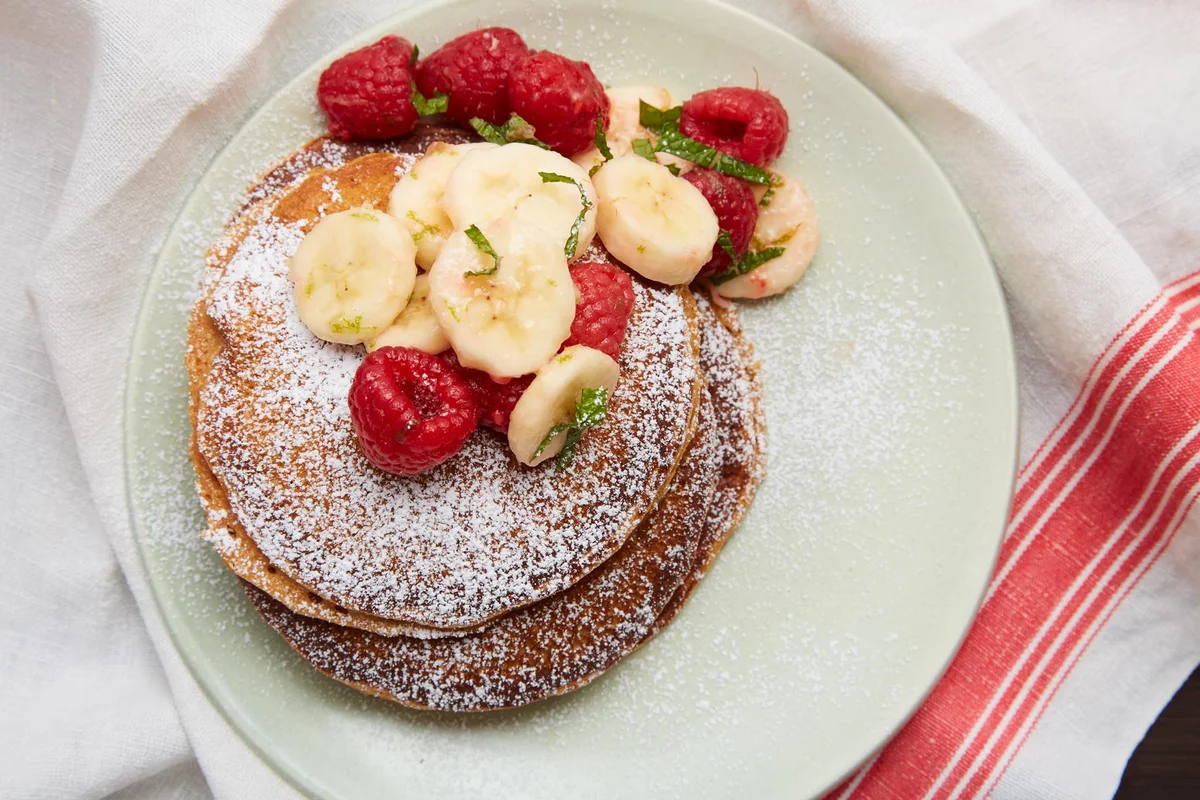
These tender ricotta pancakes pair the mild tang of fresh cheese with the caramel sweetness of dulce de leche, brightened by lime. They make a quick, special-feeling breakfast, especially with fresh fruit on top.
Ingredients
- 250 gricotta or requesón cheese
- 300 gdulce de leche or cajeta
- 3eggs
- 125 gplain flour
- 6 gbaking powder
- 5 gbicarbonate of soda
- 1.5 gsalt
- 15 mllime juice
- 1 teaspoonlime zest
- As neededbutter or vegetable oil, for cooking the pancakes
- To tasteicing sugar
- To tastefruit of your choice, such as berries, mango or bananas
Instructions
- 1
Mix the batter
In a medium bowl, whisk the ricotta, dulce de leche and eggs until smooth. Add the flour, baking powder, bicarbonate of soda and salt, and mix until fully combined. Stir in the lime juice and zest.
- 2
Cook the pancakes
Heat a large non-stick frying pan or griddle over medium-low heat for at least 5 minutes. Once hot, add enough butter or oil to coat the surface. Ladle 60 ml (¼ cup) of batter per pancake and cook for 2–3 minutes on the first side. Flip and cook for 1–2 minutes on the second side. Serve dusted with icing sugar and topped with fruit of your choice.
What are dulce de leche ricotta pancakes?
Pancakes are a familiar breakfast across the Americas, while dulce de leche and cajeta bring a caramel-like sweetness associated with Latin American cooking. This version, featured in Pati’s Mexican Table, Episode 4 of Season 7, combines that sweetness with ricotta for a soft, rich batter.
The lime adds a fresh, tart note that keeps the sweet cheese and caramel from tasting too heavy. Fruit on top gives each serving another layer of flavour and texture.
Nutrition and macros by portion
The nutrition label shows one serving as written: 206 calories, 8g protein, 27g carbs, 7g fat.
| Portion | Adjustment | kcal | Protein | Carbs | Fat |
|---|---|---|---|---|---|
| Lighter | Use less dulce de leche | 144 kcal | 6g | 19g | 5g |
| This serving | As written | 206 kcal | 8g | 27g | 7g |
| Hungry | Serve a larger stack | 309 kcal | 12g | 41g | 11g |
The flour supplies most of the carbohydrates, while dulce de leche adds both carbohydrates and sugar. Ricotta and eggs contribute protein, and the cheese, egg yolks and cooking fat provide much of the fat. Pair a serving with extra fresh fruit, or plain yoghurt, to round out the plate.
Choosing the cheese and caramel
Cheese: Ricotta makes a mild, moist batter; requesón is a suitable alternative if that is what you have. Either works best mixed thoroughly with the eggs and dulce de leche.
Caramel: Use dulce de leche or cajeta, whichever is available. As both sweeten the batter, the recipe does not need extra sugar mixed in.
Mixing the batter
Wet ingredients: Start by mixing the ricotta, dulce de leche and eggs until smooth, so the caramel is distributed evenly. Add the dry ingredients and mix just until there are no pockets of flour.
Lime: Stir in the juice and zest last, as directed. The zest contributes fragrant citrus flavour, while the juice adds a little acidity.
Getting the heat right
Preheating: Give the pan or griddle at least 5 minutes over medium-low heat before adding the batter. This allows it to heat through gently rather than scorching the pancake surfaces.
Greasing: Add enough butter or vegetable oil to cover the cooking surface. Re-grease as needed between batches so the pancakes release cleanly.
Knowing when to flip
First side: Cook each pancake for 2–3 minutes, as specified. The underside should be cooked enough to release from the pan when you slide a spatula underneath.
Second side: Flip and cook for 1–2 minutes. The pancakes are ready when the second side is cooked through; if they are browning too quickly, lower the heat.
Serving with fruit
Toppings: Finish with a dusting of icing sugar and fruit such as berries, mango or bananas. Choose fruit with a little tartness if you want contrast with the sweet caramel.
Alongside: Serve the pancakes with plain yoghurt or a small bowl of extra fruit for a fresher breakfast plate. Add toppings just before serving so the pancakes stay warm.
Recipe notes & tips
- Measure each pancake with a 60 ml ladle for a consistent size.
- Keep the heat at medium-low so the sweet batter has time to cook without browning too fast.
- Mix the batter until the flour is incorporated, then stop rather than continuing to beat it.
- Use a thin, flexible spatula to turn the pancakes gently.
- Add icing sugar and fruit immediately before serving.
Variations
- Use cajeta: Swap in cajeta for dulce de leche for a different caramel flavour.
- Choose requesón: Use requesón in place of ricotta if you have it available.
- Add berries: Top the cooked pancakes with berries for a tart, juicy contrast.
- Try tropical fruit: Serve with mango or banana, as suggested in the recipe.
- Change the citrus: Use lime juice and zest as written, keeping the same amounts for the intended balance.
Common mistakes to avoid
- Pan too hot: The outside can brown before the centre cooks; keep the heat at medium-low.
- Skipping the preheat: A poorly heated pan can cook unevenly; allow at least 5 minutes.
- Overmixing: Beating the batter for too long can make the pancakes less tender; stop once the ingredients are combined.
- Flipping too early: A pancake may tear if its first side is not set; give it the full 2–3 minutes.
- Adding too little fat: Pancakes may stick to the cooking surface; coat it with enough butter or oil.
How to store
Refrigerate leftover pancakes in a covered container for up to 3 days, keeping fruit and icing sugar separate. Reheat gently in a lightly greased frying pan or in the microwave until warmed through.
Frequently asked questions
Can I use requesón instead of ricotta?
Yes. The recipe gives requesón as an alternative to ricotta, and it can be used in the same amount.
Can I use cajeta instead of dulce de leche?
Yes, either is listed for the batter. Use the same quantity.
Why are the pancakes cooking too quickly?
The pan may be hotter than medium-low. Reduce the heat and let the pancakes cook for the stated times, adjusting the heat if they brown too fast.
How much batter should I use for each pancake?
Use 60 ml (¼ cup) of batter per pancake, as directed.
What fruit goes well with these pancakes?
The recipe suggests berries, mango or bananas. Choose whichever you like, or combine them.
Can I make the batter ahead?
The method does not specify advance preparation. For the best texture, mix the batter shortly before cooking and serve the pancakes warm.
Cook it from the original
This recipe comes from patijinich.com. Their page has the author’s own photos, notes and tips — the best place to cook it from.
Open the recipe on patijinich.com