
Chorizo Stuffed Pork Roast with Three Chiles Adobo
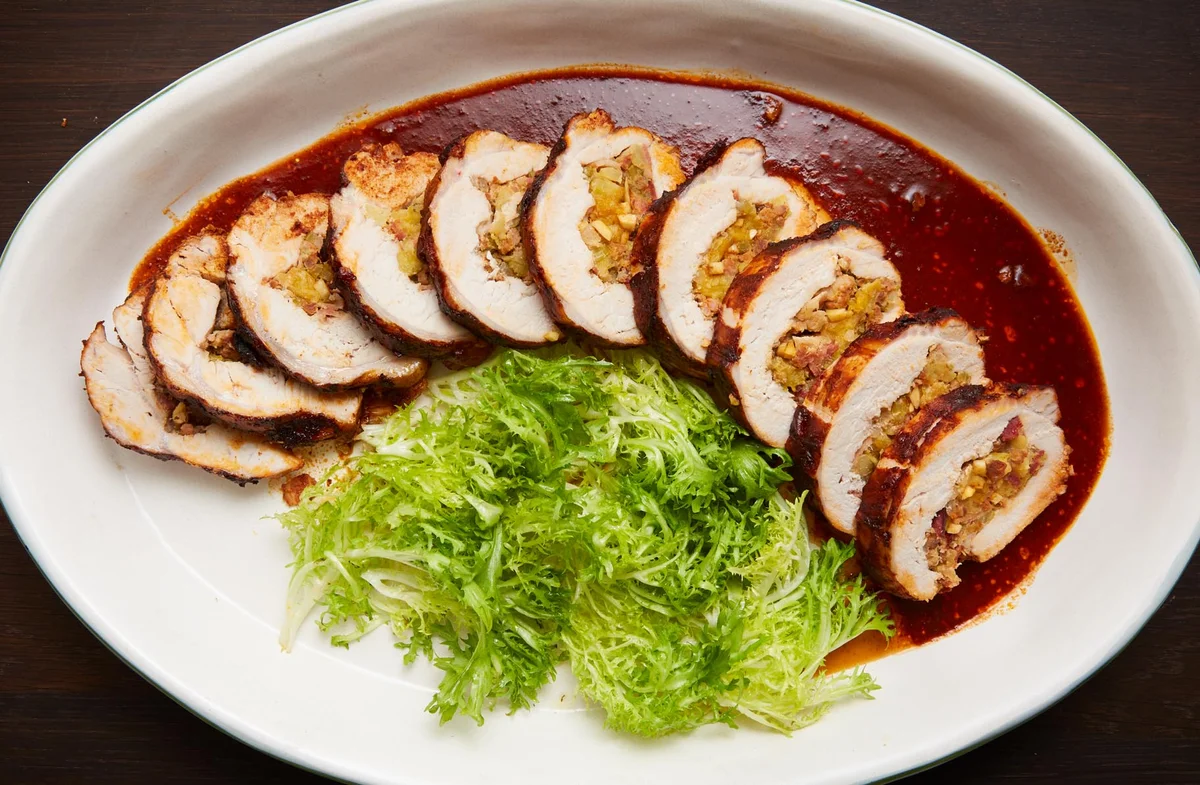
This Mexican pork loin is rolled around a savoury-sweet filling of chorizo, bacon, apple, plantain and almonds, then roasted with a smooth adobo made from three dried chiles. It makes a generous centrepiece, with the chile sauce cooking alongside the meat and bringing the flavours together.
Ingredients
- 2pasilla chiles, stemmed and seeded
- 2ancho chiles, stemmed and seeded
- 2guajillo chiles, stemmed and seeded
- 1garlic clove
- 1ripe tomato
- 30 ml (2 tablespoons)white distilled vinegar
- 1.25 ml (¼ teaspoon)ground cumin
- 2.5 ml (½ teaspoon)ground allspice
- 5 ml (1 teaspoon)dried oregano
- 5 ml (1 teaspoon), or to tastekosher or sea salt
- to tastefreshly ground black pepper
- 1.36 kg (3 pounds), butterflied to 6 mm (¼ inch) thicknessboneless pork loin
- 15 ml (1 tablespoon)vegetable oil
- 227 g (½ pound), casings removed and choppedMexican chorizo
- 85 g (3 ounces), coarsely choppedbacon slices
- 75 g (½ cup), choppedwhite onion
- 50 g (½ cup), choppedcelery
- 1, peeled and dicedGranny Smith apple or another tart green apple
- 1, peeled and dicedripe plantain
- 45 g (⅓ cup)slivered almonds
- 2.5 ml (½ teaspoon)kosher or sea salt
Instructions
- 1
Cook the chiles
Put the pasilla, ancho and guajillo chiles, garlic and tomato in a saucepan and cover with water. Bring to the boil over medium-high heat, then simmer for 10 minutes, until the chiles have softened and the tomato is cooked and mushy.
- 2
Blend the adobo
Lift the cooked chiles, garlic and tomato into a blender using tongs or a slotted spoon. Add 240 ml (1 cup) of their cooking liquid, the vinegar, cumin, allspice, oregano, salt and pepper; blend until completely smooth.
- 3
Prepare the pork
Ask a butcher to butterfly the pork loin to 6 mm (¼ inch) thick, or cut it yourself with a sharp knife. Make a 6 mm (¼ inch) deep horizontal cut into the centre, then keep making cuts of the same depth, pulling each section back without detaching it so the loin opens out like a roll. Enclose it between two large pieces of plastic wrap or wax paper and pound to an even thickness and tenderise it slightly. If the opened loin is very large, divide it into two pieces of about 25 × 13 cm (10 × 5 inches).
- 4
Marinate the loin
Pour about half of the adobo into a large baking dish. Set the butterflied pork in the dish so its underside is coated, then pour the remaining adobo over the top and spread it across the meat.
- 5
Heat the oven
Set a rack in the middle of the oven and preheat it to 163°C (325°F).
- 6
Cook the filling
Heat the oil in a large frying pan over medium-high heat. Add the chorizo and cook for 3–4 minutes, until it begins to release fat and brown. Add the bacon and cook for 2–3 minutes, until it starts to brown. Stir in the onion, celery, apple and plantain, and cook for about 6–7 minutes until softened and cooked through. Mix in the almonds and salt, then remove the pan from the heat.
- 7
Fill and roll
Spoon the filling over the butterflied loin, dividing it between the pieces if you made two. Spread it out, leaving about 2.5 cm (1 inch) clear around the edge. Roll the pork gently without squeezing, keeping the filling enclosed.
- 8
Roast the pork
Set the rolled loin on a chopping board and tie it with butcher’s twine at intervals of about 2.5 cm (1 inch) from end to end. Return it to the baking dish, cover with foil and roast for 50 minutes. Increase the oven to 204°C (400°F), remove the dish and carefully take off the foil. Roast uncovered for another 25–30 minutes, until the pork reaches at least 63°C (145°F) internally and the top is well browned. Remove from the oven, cover loosely with foil and rest for at least 10 minutes before removing the twine and slicing.
- 9
Slice and serve
Arrange the slices on a platter and pour the remaining marinade from the baking dish over the top.
What is chorizo-stuffed pork roast?
This roast brings together a butterflied pork loin, a spiced chile adobo and a filling inspired by the sweet-savoury combinations found in Mexican cooking. The recipe is featured in Pati’s Mexican Table, in an episode focused on Tijuana’s culinary scene.
Three dried chiles give the sauce depth, while chorizo, bacon, fruit and almonds make the centre substantial and varied in texture. Roasting the rolled pork in the adobo lets the sauce season the meat as it cooks.
Nutrition and macros by portion
The nutrition label shows one serving as written: 740 calories, 57g protein, 24g carbs, 47g fat.
| Portion | Adjustment | kcal | Protein | Carbs | Fat |
|---|---|---|---|---|---|
| Lighter | Less chorizo and bacon | 518 kcal | 40g | 17g | 33g |
| This serving | As written | 740 kcal | 57g | 24g | 47g |
| Hungry | Larger slice with rice | 1110 kcal | 86g | 36g | 71g |
The pork provides most of the protein, while the chorizo, bacon, oil and almonds contribute much of the fat. The plantain, apple, onion and small amount of adobo contribute the carbohydrates. Pair a slice with vegetables and a modest serving of rice or beans for a more balanced plate.
Building the three-chile adobo
Dried chiles: simmering the pasilla, ancho and guajillo softens them for blending and mellows their texture. Save some of the cooking liquid to help turn the chiles and tomato into a smooth sauce.
Seasoning: vinegar adds a sharp note, while cumin, allspice and oregano round out the chile flavour. Blend thoroughly so the sauce spreads evenly over the pork.
Butterflying the pork
Even thickness: the loin needs to open into a broad, fairly even sheet so it can hold the filling and roll neatly. A butcher can butterfly it, or you can make a series of shallow horizontal cuts and unfold each section.
Gentle pounding: use plastic wrap or wax paper to contain the meat, then pound only enough to even it out and tenderise it slightly. If the sheet is unwieldy, divide it into two pieces before filling.
Getting the filling right
Browned meats: cook the chorizo first so it can release some fat, then add the bacon until it begins to colour. This gives the onion, celery, apple and plantain a savoury base as they soften.
Fruit and nuts: the apple and plantain bring sweetness and softness, while almonds add a firmer bite. Let the filling cool slightly before spreading it so it is easier to handle.
Rolling and tying
Leave a border: keep about 2.5 cm (1 inch) clear around the pork’s edges so the filling is less likely to spill out as you roll. Roll gently rather than compressing the stuffing.
Secure the shape: tie the roast at roughly 2.5 cm (1 inch) intervals to help it hold together during cooking. If you have two pork pieces, divide the filling between them and tie each roll.
Roasting and checking doneness
Covered first: the initial 50 minutes under foil gives the pork time to cook in the adobo. Removing the foil for the final 25–30 minutes exposes the surface so it can brown.
Check the centre: use a thermometer in the thickest part of the pork and look for at least 63°C (145°F). Rest the roast for at least 10 minutes before slicing so it is easier to carve.
Serving the roast
Slice the tied roast crosswise to show the filling spiralled through the pork, then spoon the baking-dish adobo over the slices. A sharp carving knife helps keep the rounds intact.
Serve with rice, beans or roasted vegetables to make a balanced plate and provide a simple contrast to the rich filling.
Recipe notes & tips
- Use a blender that can handle hot liquid, or let the cooked chile mixture cool slightly before blending.
- Measure out 240 ml (1 cup) of the chile cooking liquid for the adobo rather than adding it all at once.
- Keep the pork sheet as even as possible so the roll cooks consistently.
- Leave the filling border clear and tie the roll securely before roasting.
- Use a meat thermometer to check the thickest part of the pork rather than judging doneness by colour alone.
- Rest the roast for at least 10 minutes before removing the twine and slicing.
Variations
- Adjust the heat: use fewer or more of the dried chiles to suit their heat and your preference.
- Use another apple: choose a tart green apple if Granny Smith is unavailable.
- Change the nuts: replace the slivered almonds with another nut if needed.
- Make two rolls: divide the pork and filling into two rolls if the butterflied loin is too large to manage.
- Serve with beans: add beans and rice alongside the roast for a more substantial meal.
Common mistakes to avoid
- Uneven butterflying: make shallow cuts of a consistent depth and pound the opened loin gently to even it out.
- Blending a thick adobo: add the measured 240 ml (1 cup) of chile cooking liquid to help the mixture blend smoothly.
- Filling to the edge: leave about 2.5 cm (1 inch) clear around the pork so the filling is less likely to escape.
- Squeezing the roll: roll gently without packing the filling tightly, which can force it out.
- Skipping the thermometer: check for at least 63°C (145°F) in the centre of the pork before taking it from the oven.
- Slicing straight away: rest the roast for at least 10 minutes so it is easier to cut.
How to store
Refrigerate leftover pork in an airtight container for up to 3 days. Reheat slices gently, covered, with a little of the adobo to help keep them moist.
Frequently asked questions
Can I ask a butcher to butterfly the pork loin?
Yes. Ask for it to be butterflied to about 6 mm (¼ inch) thick. You can also open it yourself with shallow horizontal cuts and pound it to an even thickness.
Can I make the adobo ahead?
Yes. Blend the adobo ahead and keep it covered in the refrigerator until you are ready to coat the pork.
What if my pork loin opens into a very large sheet?
Cut it into two pieces of about 25 × 13 cm (10 × 5 inches), spread the filling between them and roll each piece separately.
How do I know when the roast is cooked?
Check the thickest part with a meat thermometer; the recipe calls for at least 63°C (145°F). The top should also be browned after the uncovered roasting stage.
Can I leave out the plantain?
The plantain is part of the filling’s sweet, soft texture. Leaving it out will change the filling, but you can still make the roast with the remaining ingredients.
How should I serve the roast?
Slice it and spoon the remaining adobo over the top. Rice, beans or vegetables make suitable sides.
Cook it from the original
This recipe comes from patijinich.com. Their page has the author’s own photos, notes and tips — the best place to cook it from.
Open the recipe on patijinich.com