
Flan Napolitano
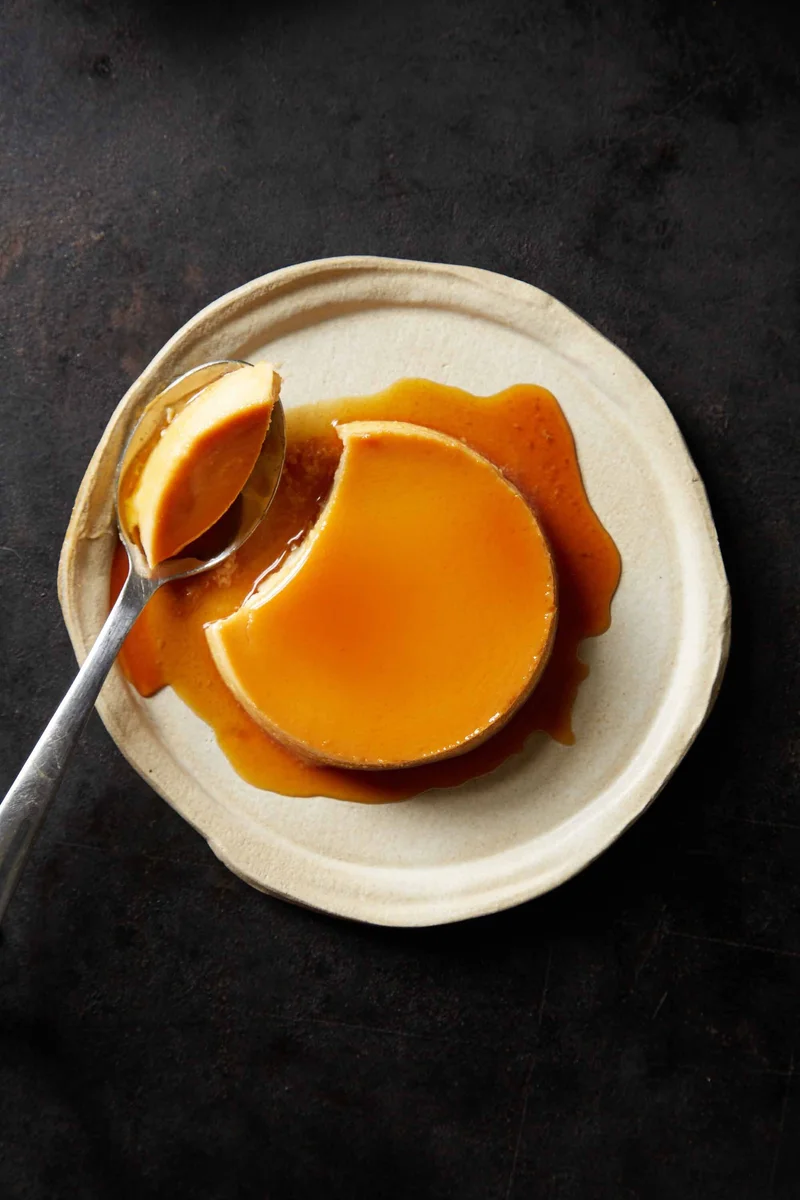
Flan Napolitano is a smooth Mexican baked custard with a layer of caramel that becomes its glossy topping when turned out. Individual portions make it easy to serve chilled after a meal.
Ingredients
- 250 g (1 and 1/4 cups)granulated sugar
- 397 g (one 14-ounce can)sweetened condensed milk
- 340 g (one 12-ounce can)evaporated milk
- 4eggs
- 15 ml (1 tablespoon)vanilla extract
- 113 g (4 ounces or 1/2 cup)cream cheese
Instructions
- 1
Preheat the oven
Heat the oven to 175°C (350°F), with a rack positioned in the middle.
- 2
Make the caramel
Put the sugar in a medium saucepan over medium-high heat. Swirl the pan now and then without stirring, and cook for about 5 to 7 minutes, until the sugar melts and turns to caramel. Divide it evenly among eight 180 ml (6-ounce) ramekins. Let it cool slightly while you prepare the batter.
- 3
Blend the custard
Put the condensed milk, evaporated milk, eggs, vanilla and cream cheese in a blender. Blend until smooth, then divide the mixture evenly between the ramekins over the caramel.
- 4
Bake in a water bath
Arrange the ramekins in a roasting pan. Carefully pour in boiling water until it reaches about halfway up the ramekins, keeping water out of them. Cover the pan tightly with foil and lower it carefully and evenly into the oven to avoid splashing. Bake for 45 to 50 minutes, until the flans are set.
- 5
Cool and chill
Carefully remove the pan from the oven without splashing the water, and take care when lifting the foil because hot steam will escape. Use tongs or an oven mitt to lift out the hot ramekins and let the flans cool to room temperature. Refrigerate for at least a couple of hours; they will keep for up to 1 week.
- 6
Unmould and serve
Once chilled, run a wet knife around the edge of each flan to loosen it. Invert a ramekin over a plate and let the flan release, caramel side up. Repeat with the remaining flans and serve cold.
What is flan Napolitano?
Flan Napolitano is a Mexican-style baked custard, enriched here with cream cheese and sweetened condensed milk. Flan has deep roots in Spanish cooking and became part of Mexican home cooking, where it is often served as a chilled dessert.
Caramel is cooked directly in the ramekins, so it coats each custard as it is turned out. The cream cheese gives this version a fuller, smooth texture.
Nutrition and macros by portion
The nutrition label shows one serving as written: 424 calories, 11g protein, 56g carbs, 18g fat.
| Portion | Adjustment | kcal | Protein | Carbs | Fat |
|---|---|---|---|---|---|
| Lighter | Smaller ramekin portions | 297 kcal | 8g | 39g | 13g |
| This serving | As written | 424 kcal | 11g | 56g | 18g |
| Hungry | Larger flan portion | 636 kcal | 17g | 84g | 27g |
The condensed milk and sugar provide most of the carbohydrates, while the cream cheese, eggs and milks contribute much of the fat and protein. To balance the plate, serve one flan with fresh fruit rather than another sweet dish.
The caramel layer
Dry sugar: let it melt in the saucepan, swirling occasionally rather than stirring. Stirring can encourage crystals to form.
Colour: watch closely near the end of cooking, since caramel can darken quickly. Divide it between the ramekins while it is still pourable, then give it a short time to cool.
Blend for a smooth custard
Cream cheese: blending it with the milks, eggs and vanilla helps distribute it through the mixture. Make sure the finished batter looks smooth before portioning.
Even portions: divide the batter as evenly as you can so the ramekins bake at a similar rate. Avoid splashing batter onto the sides above the caramel.
Why use a water bath?
Gentle heat: the water surrounding the ramekins helps the custard cook more evenly than direct oven heat. Fill the roasting pan to about halfway up their sides.
Safe handling: keep water out of the ramekins, and move the filled pan carefully so it does not slosh. The water and foil will be hot when the pan comes out of the oven.
Check for doneness
Set edges: after 45 to 50 minutes, the flans should be set rather than liquid. The recipe gives setting as the cue; avoid extending the bake unnecessarily.
Chilling: let the ramekins cool to room temperature before refrigerating them for at least a couple of hours. The cold custard is easier to unmould and serve.
Serving ideas
Keep it simple: serve each flan cold, with its caramel side facing up. The caramel provides the sauce, so extra toppings are optional.
After a meal: the individual ramekins make the portions straightforward to plate. A small serving of fresh fruit alongside can add a fresh contrast.
Recipe notes & tips
- Use ramekins of a similar size so the custards bake at a comparable pace.
- Swirl the saucepan gently as the sugar melts, but do not stir it.
- Pour the caramel into the ramekins promptly before it firms in the pan.
- Pour the water bath carefully and keep its level about halfway up the ramekins.
- Lift the foil away from you to avoid the steam escaping beneath it.
- Chill the flans fully before trying to turn them out.
Variations
- Citrus note: blend in a little finely grated orange zest for a fragrant twist.
- Coffee flavour: add a small amount of instant espresso to the blender for a coffee accent.
- Cinnamon: add a pinch of ground cinnamon to the custard mixture.
- Shared flan: bake the mixture in one larger flan mould, allowing for a different baking time and checking that it is set.
- Fruit pairing: serve with fresh berries or sliced mango for a bright contrast.
Common mistakes to avoid
- Stirring the caramel: this can encourage crystallisation; swirl the pan instead.
- Burning the sugar: caramel darkens fast near the end; watch it closely and pour it as soon as it is melted and caramel-coloured.
- Water in the custard: pour the bath slowly into the roasting pan, not over the ramekins.
- Splashing the water bath: carry the pan level and move it carefully into and out of the oven.
- Skipping the chill: refrigerate for at least a couple of hours before unmoulding.
- Forcing the flan out: loosen the edge with a wet knife, then invert the ramekin and let it release.
How to store
Cover and refrigerate the flans in their ramekins; they will keep for up to 1 week. Serve them cold rather than reheating.
Frequently asked questions
How can I tell when the flans are ready?
Bake for 45 to 50 minutes, until the custards are set. Avoid leaving them in the oven longer than needed.
Can I make the flans ahead?
Yes. They need at least a couple of hours to chill, and the recipe says they keep for up to 1 week in the refrigerator.
Can I use one large mould instead of ramekins?
The method is written for eight individual ramekins. A larger mould can be used, but the baking time will differ, so check for doneness rather than relying on the stated time.
Why is my flan difficult to unmould?
It may need more chilling, or the edge may still be attached to the ramekin. Chill it fully and run a wet knife around the rim before inverting.
Can I stir the caramel?
The recipe calls for swirling the saucepan occasionally without stirring. This helps the sugar melt while limiting the chance of crystals forming.
Is the water bath necessary?
It is part of this recipe and helps the custards bake gently. Pour boiling water into the roasting pan until it comes about halfway up the ramekins.
Cook it from the original
This recipe comes from patijinich.com. Their page has the author’s own photos, notes and tips — the best place to cook it from.
Open the recipe on patijinich.com