
Stuffed Roasted Turkey Breast
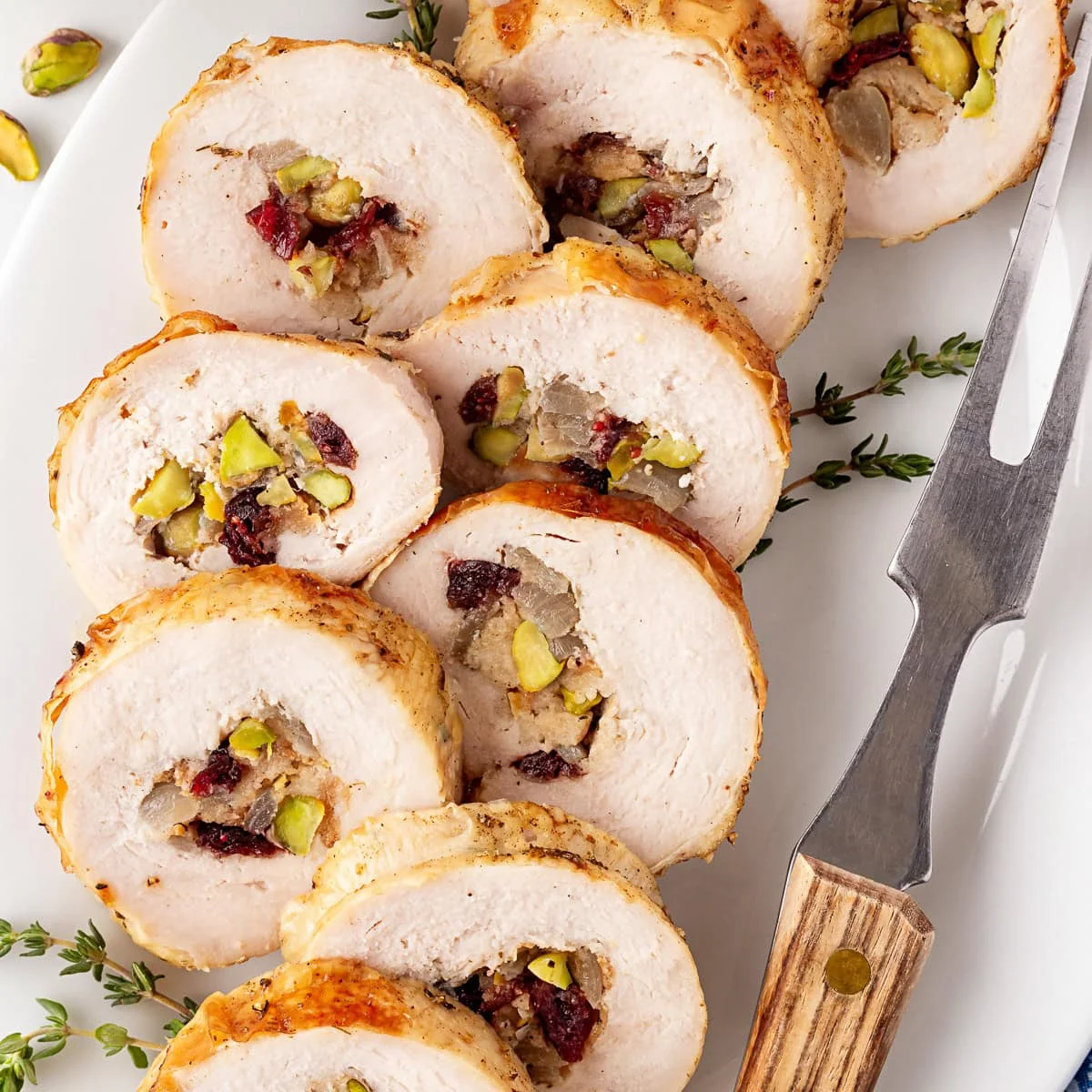
This American-style turkey roulade wraps a savoury bread, cranberry and pistachio stuffing inside a boneless turkey breast. Brining it overnight helps keep the meat flavourful, while rolling it makes the roast straightforward to carve.
Ingredients
- 2.84 litres (3 quarts)water
- 180 ml (3/4 cup)maple syrup
- 180 ml (3/4 cup)kosher salt
- 1 fresh bunchthyme
- 3bay leaves
- 2 cloves, crushedgarlic
- 30 ml (2 tbsp)black peppercorns
- 1 large (1.36–1.81 kg / 3–4 lb)fresh turkey breast
- 1/2, choppedonion
- 14 g (1 tbsp)butter
- 2 slicesstale bread, or the ends off a loaf
- 60 ml (1/4 cup)dried cranberries
- 60 ml (1/4 cup)pistachios
- 5 ml (1 tsp), plus more for the outsidepoultry seasoning
- To tastesalt and pepper
- 60 ml (1/4 cup)white wine or chicken broth
- To tasteolive oil
- As neededkitchen twine
Instructions
- 1
Make the brine
Put all the brine ingredients except the turkey in a large stockpot. Bring to the boil and cook until the salt dissolves. Take the pot off the heat and let the brine cool completely.
- 2
Brine overnight
When the brine is completely cool, add the turkey and refrigerate it overnight.
- 3
Prepare the onion
When you are ready to roast, remove the turkey from the brine and pat it dry. Cook the onion in 1 tablespoon of butter until translucent, then leave it to cool.
- 4
Mix the stuffing
Break the bread into small pieces and put them in a bowl with the cranberries, pistachios, poultry seasoning, salt, pepper and white wine or chicken broth. Add the cooled onion and mix well.
- 5
Flatten the breast
Preheat the oven to 200°C (400°F). Place the turkey skin-side down on a large cutting board and cover it with plastic wrap. Use a kitchen mallet to flatten the breast to an even thickness, making it longer than it is wide.
- 6
Fill and roll
Spread the stuffing lengthwise over the turkey, keeping the skin on the outside of the roll. Roll it into a long, narrow shape, or make a shorter, fatter roll by placing the stuffing towards one end before rolling. The shape affects the cooking time, so check the turkey with a thermometer; it is cooked when it reaches 74°C (165°F).
- 7
Tie and season
Slide twine underneath the breast and tie it tightly in 3–4 places. Place it in a small roasting pan, rub the outside with olive oil and coat evenly with poultry seasoning or herbes de Provence. Do not add extra salt, as the turkey may already be too salty.
- 8
Roast and rest
Roast for 1 hour 30 minutes, or until a thermometer reads 74°C (165°F). Remove from the oven and rest for 10 minutes before slicing. Serve with mashed potatoes, vegetables and your favourite gravy.
What is stuffed roasted turkey breast?
A turkey roulade is a boneless breast flattened, filled and rolled into a compact roast. Roulades are a familiar way of preparing filled meats in European cooking, while this version uses American-style Thanksgiving flavours.
The maple-syrup brine seasons the turkey, and the stuffing brings together bread, dried cranberries and pistachios. Rolling the breast makes it easy to portion into neat slices.
Nutrition and macros by portion
The nutrition label shows one serving as written: 349 calories, 31g protein, 42g carbs, 7g fat.
| Portion | Adjustment | kcal | Protein | Carbs | Fat |
|---|---|---|---|---|---|
| Lighter | Less oil, more vegetables | 244 kcal | 22g | 29g | 5g |
| This serving | As written | 349 kcal | 31g | 42g | 7g |
| Hungry | Larger turkey portion | 524 kcal | 47g | 63g | 11g |
The turkey provides most of the protein, while the bread and maple syrup contribute carbohydrates; butter, olive oil and pistachios contribute fat. Serve a slice with vegetables and a moderate portion of mashed potatoes to make a balanced plate.
The brine and turkey
Brine ingredients: water, maple syrup, salt, thyme, bay leaves, garlic and peppercorns infuse the turkey as it rests overnight. Cool the brine completely before adding the meat.
Turkey breast: pat the brined meat dry before filling and seasoning it. The recipe warns against adding extra salt on the outside, since the brine has already seasoned the turkey.
Making the stuffing
Bread: stale bread breaks into pieces and absorbs some of the wine or broth, helping the filling hold together. Mix it with the cranberries, pistachios and poultry seasoning.
Onion: cook it in butter until translucent, then let it cool before stirring it into the stuffing. This gives the onion time to soften without adding it hot to the other ingredients.
Flattening and rolling
Even thickness: cover the turkey with plastic wrap before pounding it with a kitchen mallet. Aim for a broad, even sheet so the meat can roll around the filling.
Skin on the outside: arrange the stuffing lengthwise and roll so the skin covers the exterior. A long, narrow roll or a shorter, fatter one both work, but the shape affects how quickly the turkey cooks.
Checking doneness
Roasting: cook the tied roll at 200°C (400°F) for about 1 hour 30 minutes. The recipe gives this as a guide; use a thermometer because the roll's shape changes the cooking time.
Temperature: check the centre of the turkey and take it out when it reaches 74°C (165°F). Rest it for 10 minutes before slicing so it is easier to serve.
Serving the roulade
Sides: serve slices with mashed potatoes, vegetables and gravy, as suggested in the recipe. These familiar accompaniments work well with the sweet-tart fruit and savoury stuffing.
Carving: cut the rested roulade crosswise into slices so each portion shows the filling. Keep the slices together on a warm serving plate while bringing the sides to the table.
Recipe notes & tips
- Cool the brine completely before putting the turkey in it.
- Pat the turkey dry after brining so the outside is easier to season.
- Let the cooked onion cool before mixing it into the stuffing.
- Use twine at 3–4 points to keep the roulade secured while it roasts.
- Use a thermometer rather than relying only on the stated roasting time.
- Rest the roast for 10 minutes before cutting it.
Variations
- Use broth: choose chicken broth instead of white wine in the stuffing.
- Change the herbs: use herbes de Provence on the outside instead of poultry seasoning.
- Swap the nuts: replace pistachios with another nut you enjoy.
- Vary the fruit: use a different dried fruit in place of the cranberries.
- Adjust the roll: make it long and narrow or shorter and fatter, then check doneness with a thermometer.
Common mistakes to avoid
- Warm brine: adding turkey before the brine cools completely; let it cool first.
- Uneven breast: leaving thick areas can make the roll cook unevenly; pound it to an even thickness.
- Hot onion: mixing the onion in straight from the pan; let it cool before adding it to the stuffing.
- Loose roll: leaving the roulade untied can let it open during roasting; tie it tightly in 3–4 places.
- Extra salt: salting the outside after brining can make the turkey too salty; season it with herbs instead.
- Guessing doneness: relying on time alone can miss the effect of the roll's shape; check for 74°C (165°F) with a thermometer.
How to store
Refrigerate leftover turkey in a covered container and eat within 3–4 days. Reheat slices until hot throughout, adding a little gravy or broth if needed to keep them moist.
Frequently asked questions
Can I make the brine ahead?
Yes. Prepare it ahead and let it cool completely before adding the turkey. The turkey then brines in the refrigerator overnight.
Can I use chicken broth instead of white wine?
Yes. The recipe lists white wine or chicken broth for the stuffing.
How do I know when the turkey is done?
Check the centre of the roast with a thermometer. The recipe specifies 74°C (165°F).
Does the shape of the roll matter?
It affects the cooking time: a long, narrow roll may cook differently from a shorter, fatter one. Use a thermometer to check doneness.
Why should I avoid adding extra salt?
The turkey has been brined, so the recipe advises against adding more salt to the outside.
How long should the roulade rest before slicing?
Rest it for 10 minutes after taking it out of the oven, then slice and serve.
Cook it from the original
This recipe comes from noshingwiththenolands.com. Their page has the author’s own photos, notes and tips — the best place to cook it from.
Open the recipe on noshingwiththenolands.com