
Instant Pot Greek Yogurt
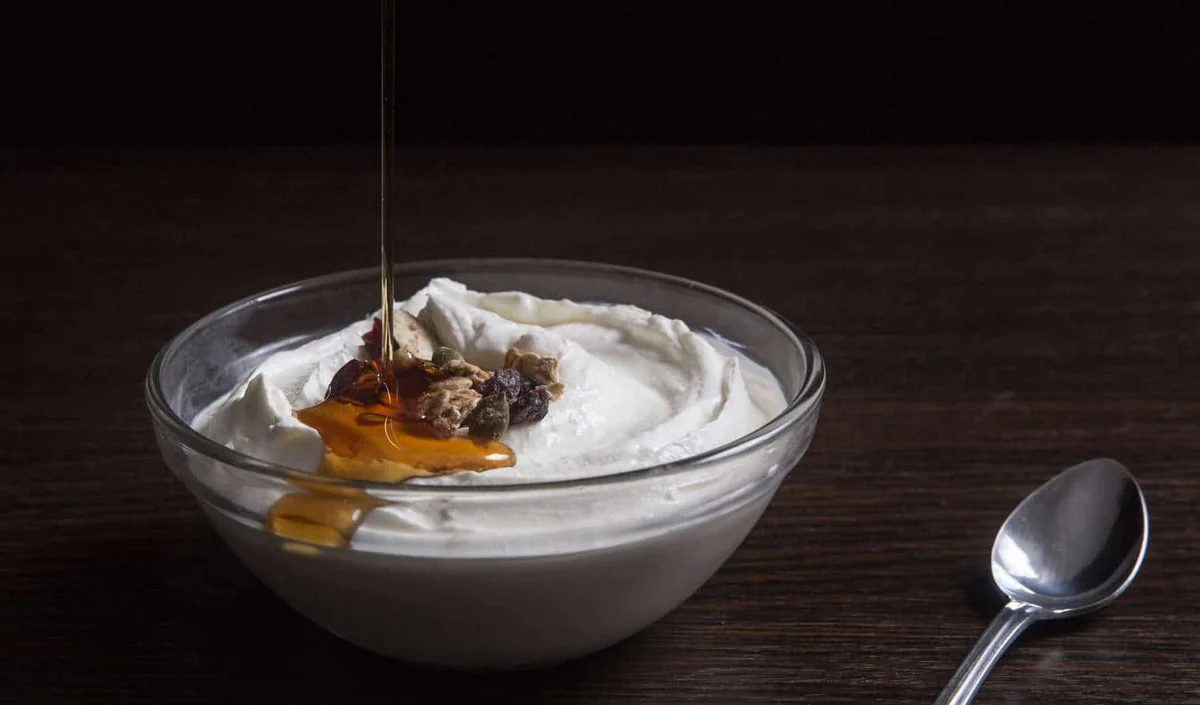
Make thick, tangy Greek yoghurt at home with whole milk and a little live-culture yoghurt in an Instant Pot. The process takes patience, but the hands-on steps are simple and you can control how tangy and thick the finished yoghurt becomes.
Ingredients
- 2 litres (½ gallon)whole milk
- 32 g (a little more than 2 tbsp)plain Greek yoghurt with active bacterial cultures
Instructions
- 1
Sterilise equipment
Optional: add 2 cups of cold water and a trivet to the Instant Pot. Put the silicone spatula, Pyrex measuring cup and tablespoon measure inside, close the lid and set the vent to Sealing. Sterilise at High Pressure for 3 minutes, then allow a natural release. Alternatively, boil the equipment, including a meat thermometer, on the hob for 10 minutes. Air-dry everything on a clean rack.
- 2
Heat the milk
Pour 2 litres (½ gallon) of whole milk into the inner pot and close the lid; the vent position does not matter. Select Yogurt More to bring the milk to at least 82°C (180°F); the display will show “boil” and this takes roughly 35–40 minutes. When the display changes to “yogt”, the heating cycle is complete.
- 3
Check the temperature
Open the lid and promptly check the milk temperature in several places to confirm it is above 82°C (180°F). Stir with a silicone spatula and check again. If it has not reached that temperature, close the lid and use Slow Cook Less for another 15 minutes.
- 4
Prepare the starter
Once the milk is above 82°C (180°F), put 32 g (a little more than 2 tbsp) of plain Greek yoghurt with active bacterial cultures in the Pyrex measuring cup. Do not add the starter to hot milk, as the heat can kill the cultures. If the cup was sterilised, make sure it has cooled before using it.
- 5
Cool the milk
Leave the inner pot on the worktop until the milk cools to 44°C (111°F), or cool it more quickly by partially immersing the pot in cold tap water in a larger pot or the sink. Stir the milk in a circular motion with a silicone spatula, checking its temperature frequently; cooling this way takes about 2–4 minutes. Remove the inner pot from the water as soon as it reaches 44°C (111°F), and try not to scrape the bottom, where milk solids may have stuck.
- 6
Mix in starter
Add ½ cup of the 44°C (111°F) milk to the starter in the measuring cup and gently mix with the tablespoon measure. Pour this mixture into the inner pot and stir gently a few times with the silicone spatula.
- 7
Incubate the yoghurt
Return the inner pot to the Instant Pot, close the lid and select Yogurt Normal; the vent position does not matter. Set the time for 8–12 hours, depending on how tangy you like the yoghurt, with longer incubation producing a tangier result. It may set in roughly 6 hours, but avoid moving the Instant Pot or opening the lid before then; once set, you can open it for a taste.
- 8
Strain the yoghurt
When the yoghurt has reached the tanginess you want, transfer it to a Greek yoghurt maker to separate the whey. Put the maker in the fridge to stop incubation and strain for 3 hours to overnight, depending on how thick you want the yoghurt. If it becomes too thick, whisk some whey back in.
- 9
Serve the yoghurt
Serve the plain Greek yoghurt with honey or maple syrup, fruit, granola or another topping of your choice.
What is Greek yoghurt?
Greek yoghurt is yoghurt that has been strained to remove some of its whey, leaving a thicker texture than unstrained yoghurt. This home-made version uses an Instant Pot to heat and incubate whole milk before straining it.
The method relies on a small amount of yoghurt containing live cultures to start fermentation. Incubating for longer makes the result more tangy, while straining for longer makes it thicker.
Nutrition and macros by portion
The nutrition label shows one serving as written: 295 calories, 51g protein, 18g carbs, 2g fat.
| Portion | Adjustment | kcal | Protein | Carbs | Fat |
|---|---|---|---|---|---|
| Lighter | Use less granola | 207 kcal | 36g | 13g | 1g |
| This serving | As written | 295 kcal | 51g | 18g | 2g |
| Hungry | Serve a larger portion | 443 kcal | 77g | 27g | 3g |
The milk supplies most of the protein and also contributes the carbohydrates and fat; the small amount of starter adds relatively little to the batch. Serve the yoghurt with fruit and a modest amount of granola for a more balanced plate.
Why heat the milk first?
Milk temperature: heating the milk to at least 82°C (180°F) is a key part of this method. Check it in several places after the cycle, since the display changing to “yogt” is not a substitute for checking the milk itself.
Starter temperature: the live-culture yoghurt goes in only after the milk has cooled to 44°C (111°F). Mixing it into hotter milk risks damaging the cultures that make the yoghurt ferment.
Cooling and mixing
Cool the milk: leaving the inner pot on the worktop takes longer, while a cold-water bath can bring it to temperature in a few minutes. Keep checking with a thermometer and lift the pot out of the water as soon as it reaches 44°C (111°F).
Temper the starter: first mix the starter with ½ cup of the cooled milk, then return that mixture to the pot. Gentle stirring distributes it without introducing an unnecessary vigorous mix.
Incubation and tanginess
Set the timer: the recipe gives a range of 8–12 hours, with a longer time producing more tang. The yoghurt may set in roughly 6 hours, but wait until it has set before opening the lid to taste it.
Keep it still: avoid moving the Instant Pot or lifting the lid during fermentation. Once the yoghurt has reached the flavour you want, move on to straining.
How to get the texture right
Strain time: 3 hours gives a less firm result than straining overnight. Use the texture you prefer as your cue rather than treating one straining time as compulsory.
Adjust the finish: if the yoghurt is thicker than you like, whisk some of the separated whey back in. This gives you a way to loosen it without changing the fermentation step.
Serving ideas
Sweet toppings: honey or maple syrup add sweetness to the plain yoghurt. Add them when serving so each portion can be adjusted to taste.
Fruit and crunch: fruit or granola make easy toppings, or use another favourite accompaniment. Keep toppings separate until serving if you want to preserve the yoghurt’s smooth texture.
Recipe notes & tips
- Check the milk temperature in several places after heating.
- Use a thermometer to confirm the milk has cooled to 44°C (111°F) before adding the starter.
- Stir the starter into ½ cup of cooled milk before mixing it into the pot.
- Keep the Instant Pot still and closed while the yoghurt incubates.
- Strain in the fridge and check the thickness after 3 hours.
- Whisk some whey back in if the strained yoghurt is too thick.
Variations
- Honey: drizzle it over the yoghurt just before serving.
- Maple syrup: use it instead of honey for a different sweetness.
- Fresh fruit: add fruit on top when serving.
- Granola: scatter it over the yoghurt for crunch.
- Whey adjustment: whisk some whey back in to make the yoghurt less thick.
Common mistakes to avoid
- Adding starter too early: wait until the milk has cooled to 44°C (111°F) so the heat does not damage the cultures.
- Skipping the temperature check: test the milk in several places and heat it for another 15 minutes on Slow Cook Less if it is below 82°C (180°F).
- Overheating the starter: mix it with cooled milk rather than adding it directly to the hot pot.
- Opening the lid too soon: leave the yoghurt undisturbed until it has set, roughly 6 hours.
- Straining for too long: check the texture after 3 hours and stop when it suits you.
- Scraping the pot bottom: stir gently during rapid cooling, as milk solids may have stuck there.
How to store
Refrigerate the strained yoghurt in a clean, covered container and use it within 3–4 days. Serve it cold; stir before serving if any whey has separated.
Frequently asked questions
Can I use a different plain yoghurt as the starter?
Use plain yoghurt that lists active bacterial cultures. The recipe specifies plain Greek yoghurt; avoid flavoured or sweetened yoghurt.
How long should I incubate the yoghurt?
Set the Instant Pot for 8–12 hours, choosing a longer time for a tangier result. The yoghurt may set in roughly 6 hours, but the recipe advises waiting until it is set before opening the lid.
Can I cool the milk without a cold-water bath?
Yes. Leave the inner pot on the worktop until the milk reaches 44°C (111°F). A cold-water bath is the quicker option described in the method.
How long should I strain it?
Strain for 3 hours to overnight, depending on how thick you want it. Check the texture as it drains.
What if the yoghurt is too thick?
Whisk some of the separated whey back into the yoghurt until it reaches the consistency you like.
Can I sweeten it before serving?
Yes. The recipe suggests honey or maple syrup, along with fruit, granola or other favourite toppings.
Cook it from the original
This recipe comes from pressurecookrecipes.com. Their page has the author’s own photos, notes and tips — the best place to cook it from.
Open the recipe on pressurecookrecipes.com