
Homemade Mediterranean Flatbread
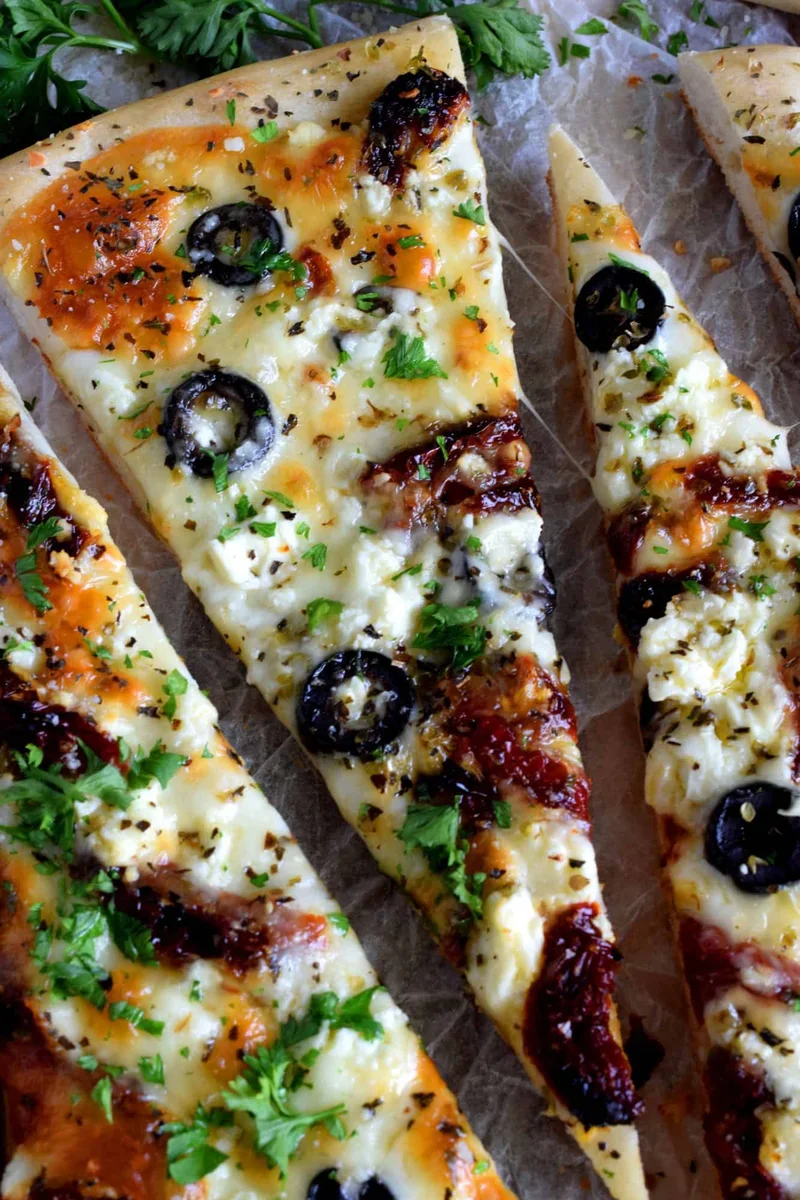
This quick Mediterranean-style flatbread pizza pairs a crisp, thin base with mozzarella, sun-dried tomatoes, olives and tangy feta. It is ready in about 25 minutes and easy to customise with different toppings.
Ingredients
- 177 mlwarm tap water (about 43°C)
- 1 teaspoonactive dry yeast
- 22.5 mlolive oil
- 1 teaspoonsugar
- 281 gplain flour
- 1/2 teaspoonsalt
- 227 gmozzarella, sliced about 6 mm thick
- 120 mlsun-dried tomatoes in olive oil, roughly chopped
- 60 mlblack olives
- 170 gfeta, crumbled
- 1 teaspoondried basil
- 1 teaspoondried oregano
- 1 tablespoonfresh parsley, chopped (optional, for garnish)
- 1 largeegg
- 1 tablespoonwater
- as needednon-stick cooking spray
Instructions
- 1
Warm the bowl
Pour hot tap water into a metal mixing bowl and leave it for a few minutes to warm the bowl. While it stands, preheat the oven to 260°C, using the regular oven setting rather than the grill.
- 2
Activate the yeast
Tip out the hot water and dry the bowl. Add the warm tap water and yeast, stir gently with a rubber spatula for no more than 5–10 seconds, then leave it for at least 3 minutes until it bubbles and foams.
- 3
Mix the dry ingredients
Sift together 2 cups of the flour, the salt and the sugar.
- 4
Make the dough
Stir the olive oil into the yeast mixture for a few seconds. Add all the sifted flour mixture and stir with a wooden spoon until the liquid is absorbed.
- 5
Knead and rest
Lightly flour a clean work surface and turn out the dough. Knead for 4–5 minutes until it forms a ball, then return it to the metal bowl and cover with a tea towel. Set the bowl on top of the preheating oven, not on a burner, and leave the dough for 5 minutes.
- 6
Prepare the pans
Lightly coat two small baking sheets or pizza pans with non-stick cooking spray and set them aside.
- 7
Shape the bases
Lightly flour a flat surface and a rolling pin. Roll half the dough into a rectangle roughly the size of a pan, transfer it to the pan and press it evenly into the corners and up to the sides. Repeat with the remaining dough on the second pan; the shapes need not be perfectly regular.
- 8
Brush the edges
Whisk the egg with 1 tablespoon of water. Use a pastry brush to lightly coat the perimeter of each dough base.
- 9
Add the toppings
Divide the mozzarella evenly between the two bases, keeping it off the egg-brushed edges. Top each with the sun-dried tomatoes, black olives and feta, then sprinkle over the dried basil and oregano.
- 10
Bake and serve
Bake for 10 minutes. Remove from the oven, garnish with chopped parsley if using, cut into wedges and serve immediately.
What is Mediterranean flatbread pizza?
Flatbreads are found in food traditions across the Mediterranean and neighbouring regions; this recipe takes the simple flat base in a pizza-style direction. Its toppings bring together creamy mozzarella, salty feta, olives and concentrated tomato flavour.
Quick dough: The yeast dough gets only a brief rise, making this a speedy homemade option rather than a long-fermented pizza. Rolling it into two thin bases helps it bake through quickly.
Nutrition and macros by portion
The nutrition label shows one serving as written: 662 calories, 30g protein, 63g carbs, 33g fat.
| Portion | Adjustment | kcal | Protein | Carbs | Fat |
|---|---|---|---|---|---|
| Lighter | Use less feta | 463 kcal | 21g | 44g | 23g |
| This serving | As written | 662 kcal | 30g | 63g | 33g |
| Hungry | Serve a larger portion | 993 kcal | 45g | 95g | 50g |
The flour supplies most of the carbohydrates, while mozzarella, feta and egg contribute protein; the cheeses and olive oil account for much of the fat. Add a salad or extra vegetables alongside a portion to balance the plate with fresh produce.
The dough and yeast
Warm water: The recipe specifies water at about 43°C to help activate the yeast. Stir it briefly, then wait for visible bubbles and foam before mixing in the other ingredients.
Flour: Sift 2 cups with the salt and sugar, as directed, and use the remaining flour when kneading and rolling. Work the dough for 4–5 minutes until it gathers into a ball.
Shape an even base
Divide evenly: Roll each half to roughly match its pan, then press the dough into the corners and sides. An even thickness matters more than a perfectly neat rectangle.
Leave a border: The egg wash goes around the perimeter, and the mozzarella should stay inside that brushed edge. This keeps the outer rim distinct from the topped centre.
Balance the toppings
Mozzarella: Sliced mozzarella gives the bases a soft, melting layer. Spread it across both flatbreads rather than piling it in the middle.
Salty accents: Sun-dried tomatoes, black olives and feta bring concentrated, savoury flavours. Distribute them over each base so the slices have a good mix of toppings.
Bake for a short time
Hot oven: Bake at 260°C for 10 minutes, using the regular oven setting rather than the grill. The high heat and thin dough make it important to keep to the recipe’s short baking time.
Doneness: Check that the edges look baked and the mozzarella has melted. If the dough still looks underdone, give it a little more time and keep an eye on the bases.
Serve it fresh
Finish: Add the chopped parsley after baking if you are using it, then cut the flatbreads into wedges. Serving them straight away makes the most of the melted cheese and crisp edges.
On the side: Pair a wedge with a green salad or simply dressed vegetables for a fresh contrast to the rich cheese and olives.
Recipe notes & tips
- Check the yeast mixture for bubbles or foam before adding the flour.
- Use the remaining flour to dust the work surface and rolling pin as needed.
- Roll both bases to an even thickness so they bake at a similar rate.
- Keep the mozzarella away from the egg-washed perimeter.
- Divide the toppings evenly between the two pans.
- Add the parsley after baking so it stays fresh in flavour.
Variations
- Add peppers: Scatter sliced roasted peppers over the bases with the other toppings.
- Include spinach: Add a modest layer of well-drained spinach to avoid making the dough wet.
- Use fresh herbs: Finish with chopped fresh basil instead of dried basil.
- Swap the olives: Use green olives in place of the black olives.
- Add artichokes: Top each flatbread with drained, sliced artichoke hearts.
Common mistakes to avoid
- Water too hot: Very hot water can hinder the yeast; use warm water around 43°C.
- Skipping the yeast check: If it has not bubbled after resting, check that the yeast is active before proceeding.
- Uneven dough: Thick patches may bake differently; press or roll the bases to an even thickness.
- Cheese on the border: Keep mozzarella inside the egg-brushed perimeter as instructed.
- Too many toppings: A heavy layer can make the thin base difficult to bake evenly; spread toppings across both bases.
- Overbaking: Start checking at the 10-minute mark and remove the flatbreads once baked.
How to store
Store leftover slices in an airtight container in the fridge for up to 3 days. Reheat in an oven until warmed through; the base may soften slightly after storage.
Frequently asked questions
Can I make the dough ahead?
The method is designed for a quick dough and gives it only a 5-minute rest. For best results, follow that timing and assemble the flatbreads shortly before baking.
Can I use a different cheese?
You can swap the mozzarella for another cheese that melts well, though the flavour and texture will change. Feta provides a salty contrast, so consider keeping it if you change the mozzarella.
Do I need two pans?
The recipe divides the dough between two small baking sheets or pizza pans. Use pans that fit both bases without crowding them in the oven.
Can I use fresh herbs instead of dried?
Fresh herbs can be used, but dried basil and oregano are what the recipe specifies for baking. Fresh parsley is listed as an optional garnish after baking.
How do I know the flatbreads are ready?
At 10 minutes, look for baked-looking edges and melted mozzarella. If the dough still appears underdone, continue baking briefly and check again.
Can I change the toppings?
Yes. The flatbreads are easy to customise, but keep the toppings evenly spread and avoid overloading the thin dough.
Cook it from the original
This recipe comes from lordbyronskitchen.com. Their page has the author’s own photos, notes and tips — the best place to cook it from.
Open the recipe on lordbyronskitchen.com