
Vegetable Upma
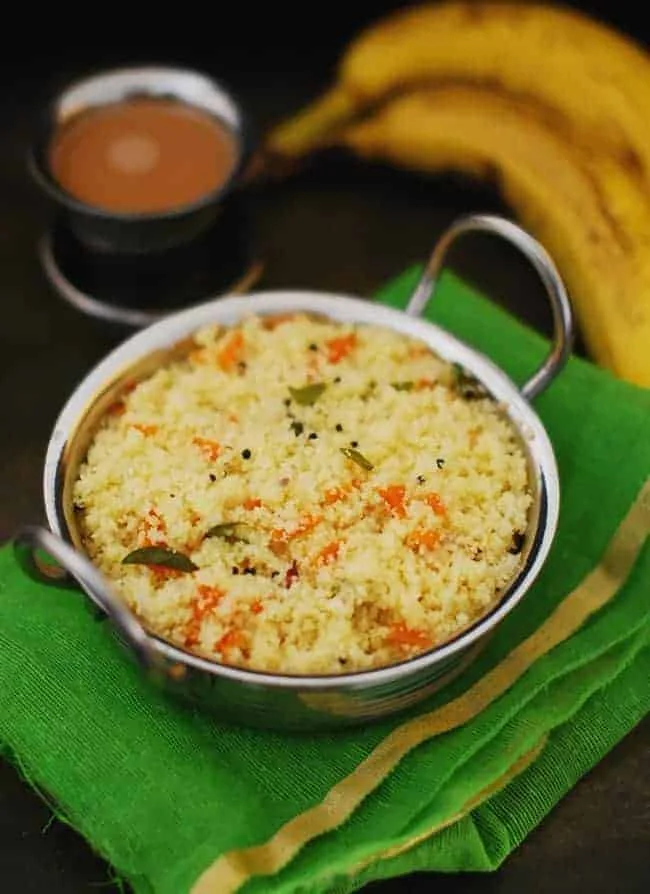
Vegetable upma is a savoury Indian breakfast made by cooking roasted semolina with vegetables, aromatics and water. This version is quick to prepare and makes a warm, filling alternative to toast or cereal.
Ingredients
- 160 g (1 cup)semolina (rava)
- 4small pearl onions, sliced
- 2green chillies, chopped
- 7.5 ml (½ tbsp)ginger, chopped
- 40 g (¼ cup)cooked carrot
- 40 g (¼ cup)cooked green peas
- 2.5 ml (½ tsp)mustard seeds
- 30 ml (2 tbsp)ghee or oil
- 240–360 ml (1–1½ cups)water
- To tastecurry leaves
- To tastesalt
Instructions
- 1
Roast the semolina
Dry-fry the semolina for 5 minutes, or until it gives off a roasted aroma.
- 2
Cook the aromatics
Heat the ghee or oil in a pan and let the mustard seeds splutter. Add the sliced onions, green chillies, ginger and curry leaves, then sauté for 4 minutes.
- 3
Add vegetables
Stir in the cooked carrot and peas. Add the water and salt.
- 4
Cook the upma
When the water comes to a boil, add the roasted semolina and mix well. Serve hot.
What is vegetable upma?
Upma is a savoury South Indian dish commonly made by cooking semolina with water and seasonings. It is often served for breakfast, with variations that include vegetables and different spices.
Here, onion, chilli, ginger and curry leaves flavour the semolina, while carrot and peas add colour and texture. Dry-roasting the semolina first helps bring out its nutty aroma.
Nutrition and macros by portion
The nutrition label shows one serving as written: 430 calories, 12g protein, 72g carbs, 18g fat.
| Portion | Adjustment | kcal | Protein | Carbs | Fat |
|---|---|---|---|---|---|
| Lighter | Use less ghee | 301 kcal | 8g | 50g | 13g |
| This serving | As written | 430 kcal | 12g | 72g | 18g |
| Hungry | Serve a larger portion | 645 kcal | 18g | 108g | 27g |
Semolina supplies most of the carbohydrates, while ghee or oil contributes most of the fat; the peas add a little protein. Pair a serving with yoghurt or extra vegetables for a more balanced plate.
Roasting the semolina
Dry pan: keep the semolina moving over medium heat so it warms evenly without scorching. It is ready when it smells toasted; it does not need to turn deeply brown.
Grain size: fine or medium semolina both work, though they may absorb water at different rates. Begin with the lower amount of water and add more if needed.
Building the flavour
Mustard seeds: let them splutter in the hot ghee or oil before adding the other aromatics. This releases their flavour into the cooking fat.
Aromatics: sauté the onion, chilli, ginger and curry leaves for the stated 4 minutes. The onion should soften, while the ginger and leaves perfume the pan.
Getting the texture right
Boiling water: add the semolina only once the water is boiling, then mix it in thoroughly. This helps it cook evenly rather than forming dry patches.
Water level: use 240 ml for a firmer result or up to 360 ml for softer upma. If the mixture looks dry before the semolina is tender, add a little hot water.
Vegetables and timing
Cooked vegetables: the carrot and peas are already cooked, so they only need stirring through before the water is added. Cut the carrot small enough to distribute easily through the semolina.
Quick finish: once the semolina goes into the boiling water, stir promptly and serve when it is cooked through and cohesive. The recipe gives no total cooking time for this final stage, so use the texture as your guide.
How to serve it
Serve the upma hot, while it is soft and fragrant. A spoonful of yoghurt or a fresh side salad can add contrast to the warm, savoury bowl.
For a more substantial breakfast, pair it with extra cooked vegetables or a protein-rich side such as yoghurt.
Recipe notes & tips
- Stir the semolina frequently as it roasts so it does not catch on the pan.
- Have the vegetables and aromatics ready before heating the ghee or oil.
- Add the semolina gradually while mixing to help prevent lumps.
- Use the smaller quantity of water first, then add more if you prefer a softer texture.
- Taste for salt after the semolina has absorbed the water.
Variations
- More vegetables: Stir in cooked chopped beans or cauliflower with the carrot and peas.
- Extra heat: Add another chopped green chilli if you like a spicier bowl.
- Cashew garnish: Fry a few cashews in the ghee or oil before adding the mustard seeds, then set them aside to scatter over the finished dish.
- Lemon finish: Add a squeeze of lemon just before serving for a brighter flavour.
- Coriander topping: Scatter chopped fresh coriander over the upma at the table.
Common mistakes to avoid
- Scorching the semolina: Keep it moving in the dry pan and take it off the heat once it smells roasted.
- Adding semolina too early: Wait until the water boils so it cooks more evenly.
- Lumpy texture: Add the semolina gradually and stir continuously as it goes in.
- Too much water at once: Start with 240 ml and add more only if the mixture needs it.
- Overcooking the aromatics: Sauté them for 4 minutes as directed, keeping the heat moderate so they soften without burning.
How to store
Refrigerate leftovers in a covered container for up to 2 days. Reheat in a pan or microwave with a splash of water, stirring until hot throughout.
Frequently asked questions
Can I use oil instead of ghee?
Yes. The recipe allows either ghee or oil; use the same amount.
How much water should I use?
The recipe gives a range of 240–360 ml. Start with 240 ml for firmer upma and add more if you want a softer consistency.
Can I use frozen peas?
Yes, cook them first so they are ready to stir in with the carrot, as the recipe specifies cooked vegetables.
How do I stop the upma from going lumpy?
Add the roasted semolina gradually to the boiling water while stirring it in well.
Can I prepare the semolina in advance?
You can dry-roast it ahead of time and keep it in an airtight container once cool. Add it to the pan at the boiling-water stage when you are ready to cook.
Cook it from the original
This recipe comes from mariasmenu.com. Their page has the author’s own photos, notes and tips — the best place to cook it from.
Open the recipe on mariasmenu.com