
Blue cheese pasta
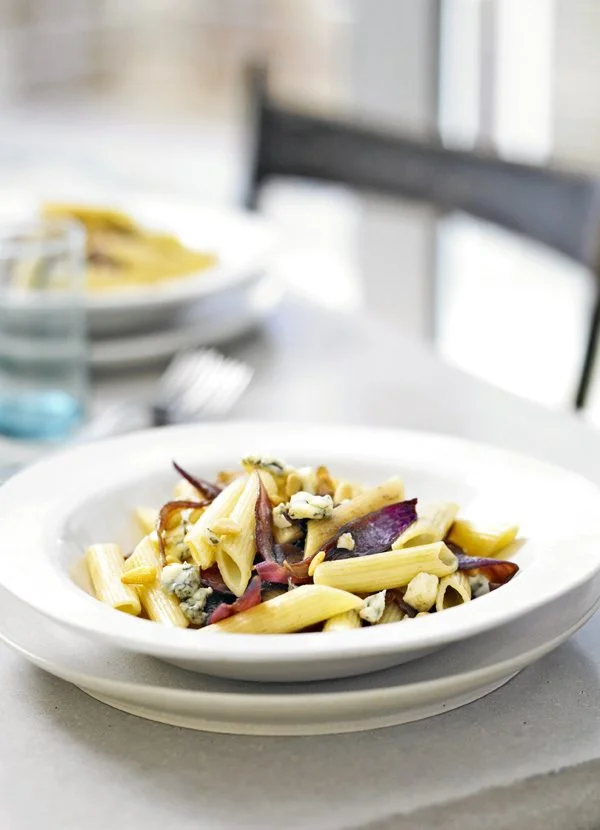
Penne is tossed with sticky balsamic red onions, creamy blue cheese and toasted pine nuts for a bold, comforting midweek meal. It comes together in about 30 minutes, with little more effort than cooking the pasta and caramelising the onions.
Ingredients
- 1 tbspolive oil
- 2 smallred onions, peeled and cut into slim wedges
- 1 tspgolden caster sugar
- 2 tbspbalsamic vinegar
- 150 gpenne or other short pasta
- 75 gcreamy blue cheese, such as Gorgonzola or Dolcelatte, crumbled
- 1 tbsppine nuts, toasted
Instructions
- 1
Caramelise the onions
Heat 1 tbsp olive oil in a large non-stick frying pan. Add the onions in a single layer and cook, turning them a few times, until tender. Sprinkle over the sugar and balsamic vinegar, then increase the heat and continue cooking until the onions are sticky and caramelised.
- 2
Cook and combine
Meanwhile, cook the pasta according to the packet instructions and drain it. Toss it with the onions and blue cheese, scatter the toasted pine nuts over the top and serve.
What is blue cheese pasta?
This is a simple pasta dish that brings together Italian-style short pasta and blue cheese, with sweet-sour caramelised onions for contrast. The recipe is built around a quick pan sauce rather than a separate prepared sauce.
Red onions soften and turn sticky with balsamic vinegar and sugar, while the cheese adds a creamy, savoury finish. Pine nuts provide a toasted note on top.
Nutrition and macros by portion
The nutrition label shows one serving as written: 513 calories, 19g protein, 67g carbs, 21g fat.
| Portion | Adjustment | kcal | Protein | Carbs | Fat |
|---|---|---|---|---|---|
| Lighter | Less cheese, more salad | 359 kcal | 13g | 47g | 15g |
| This serving | As written | 513 kcal | 19g | 67g | 21g |
| Hungry | Larger pasta portion | 770 kcal | 28g | 100g | 31g |
The pasta supplies most of the carbohydrates, while olive oil, blue cheese and pine nuts contribute much of the fat. Blue cheese also provides protein, alongside a smaller amount from the pasta and pine nuts. A green salad or a serving of vegetables makes a straightforward side.
The onion and balsamic balance
Slim wedges: cut the onions evenly so they soften at a similar pace, and arrange them in a single layer in the pan as directed.
Sugar and vinegar: add these once the onions are tender, then raise the heat to reduce the mixture until it clings to the onions. Keep turning them so the sticky coating cooks evenly.
Choosing the pasta and cheese
Short pasta: penne is suggested, but another short shape works too. Follow the packet instructions for cooking it.
Blue cheese: a creamy variety such as Gorgonzola or Dolcelatte will crumble and mingle readily with the hot pasta and onions. Its savoury flavour is balanced by the sweet, tangy onions.
Getting the texture right
Tender onions: cook them in the oil until soft before adding the sugar and balsamic. After that, look for a sticky, caramelised coating rather than a watery pan.
Creamy finish: toss the drained pasta with the onions and crumbled cheese while the pasta is hot. Scatter on the toasted pine nuts just before serving to retain their crunch.
Timing the two pans
Pasta first: start cooking it while the onions are in the pan, as the recipe directs. This lets you bring the ingredients together once the pasta is drained and the onions are caramelised.
Serve promptly: toss everything together and serve straight away, while the cheese is soft and the pine nuts remain crisp.
What to serve alongside
Fresh contrast: serve with a simple green salad or lightly dressed leaves to offset the rich cheese and sweet onions.
Keep it simple: the pasta already combines savoury, sweet and tangy flavours, so a plain vegetable side works well without competing with them.
Recipe notes & tips
- Cut the onions into slim, even wedges so they cook at a similar rate.
- Spread the onions in a single layer in the pan as they cook.
- Turn the onions a few times while softening them in the oil.
- Watch the pan closely after adding the sugar and balsamic, as the mixture is meant to become sticky.
- Toast the pine nuts before scattering them over the finished pasta.
Variations
- Try another shape: use a different short pasta in place of penne.
- Change the blue cheese: use Gorgonzola or Dolcelatte for a creamy option.
- Add leafy greens: toss a handful of spinach through the hot pasta just before serving.
- Finish with herbs: scatter chopped parsley over the dish for a fresh note.
- Add black pepper: season the finished pasta with a little freshly ground pepper.
Common mistakes to avoid
- Crowding the onions: they may cook unevenly, so keep them in a single layer as directed.
- Skipping the softening stage: add the sugar and vinegar only after the onions have become tender.
- Leaving the onions watery: keep cooking after adding the balsamic until the coating is sticky and caramelised.
- Overcooking the pasta: use the packet instructions and drain it when cooked.
- Adding pine nuts too early: scatter them on at the end so they keep their toasted texture.
How to store
Refrigerate leftovers in a covered container and eat within 2 days. Reheat gently in a pan or microwave until hot throughout; the pasta may be softer and the pine nuts less crisp after storage.
Frequently asked questions
Can I use a different pasta shape?
Yes. The recipe specifies penne or another short pasta, so choose a short shape you have to hand and cook it according to its packet instructions.
Which blue cheese works best?
A creamy blue cheese such as Gorgonzola or Dolcelatte is suggested. Crumble it before tossing it through the hot pasta.
How do I know when the onions are caramelised?
They should be tender and coated in a sticky mixture of balsamic vinegar and sugar. Continue cooking them after adding those ingredients until they reach that point.
Can I prepare the onions ahead?
You can cook them ahead and refrigerate them, then reheat gently while you cook the pasta. Toss together with the cheese once the pasta is drained.
Can I make this without pine nuts?
Yes. Leave them out if needed; the pasta will still have the onions and blue cheese for flavour. You will lose the toasted crunch they bring.
Cook it from the original
This recipe comes from olivemagazine.com. Their page has the author’s own photos, notes and tips — the best place to cook it from.
Open the recipe on olivemagazine.com