
Chicken Saltimbocca
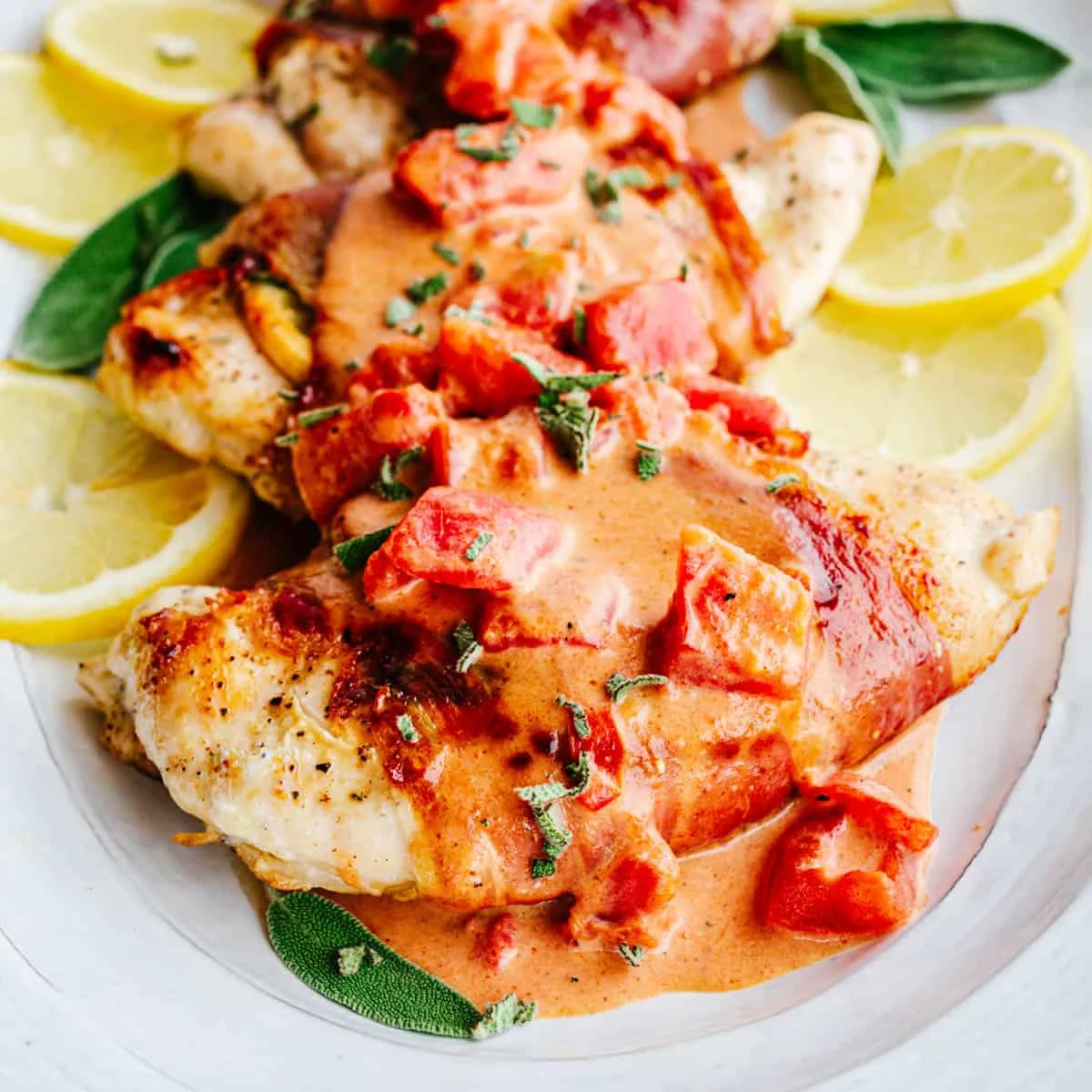
Chicken Saltimbocca wraps tender chicken breasts with lemon, sage and prosciutto, then serves them with a creamy tomato and white wine sauce. It makes a restaurant-style Italian-inspired dinner without a long cooking time.
Ingredients
- 4 × 170 g (6 oz) eachboneless, skinless chicken breasts
- 1 teaspoon, plus more for seasoning the meatkosher salt
- ¼ teaspoon, plus more for seasoning the meatfreshly ground black pepper
- 4thin lemon slices
- 5 large, dividedfresh sage leaves
- 4slices of prosciutto, large enough to wrap around the chicken breasts
- 3 tablespoonsolive oil
- 120 ml (½ cup)dry white wine
- 120 ml (½ cup)chicken broth
- 411 g (14½ oz) can, draineddiced tomatoes
- 120 ml (½ cup)heavy cream
Instructions
- 1
Flatten and season
Put one chicken breast on a work surface inside a zip-top plastic bag or between two pieces of plastic. Pound it with a meat mallet or rolling pin until it is 1.3 cm (½ inch) thick, then repeat with the other breasts. Season both sides of each with salt and pepper.
- 2
Wrap the chicken
Place a lemon slice and one sage leaf on a chicken breast. Wrap a slice of prosciutto crosswise around it, pressing to help it hold in place. Repeat with the remaining chicken, lemon, sage and prosciutto.
- 3
Chop the sage
Finely chop the remaining sage leaf.
- 4
Cook the chicken
Heat the olive oil in a large frying pan over medium-high heat. Add the chicken lemon-side up and cook for 5 minutes, lowering the heat if the prosciutto browns too quickly. Carefully turn the breasts with tongs or a thin metal spatula and cook for a further 3–5 minutes, until the chicken is just cooked through and the prosciutto has caramelised. Remove from the pan, loosely cover with foil and leave to rest for 5 minutes, or until a thermometer in the thickest part reads 74°C (165°F).
- 5
Make the sauce
Meanwhile, pour the white wine into the pan. Cook and stir with a wooden spoon, scraping up the browned bits. Add the chicken broth and boil until reduced by half, 4–5 minutes. Stir in the tomatoes, cream, 1 teaspoon of kosher salt and ¼ teaspoon of pepper. Cook and stir for 3–5 minutes, until the sauce thickens and bubbles.
- 6
Plate and serve
Arrange the chicken on a serving platter or place one breast on each of four dinner plates. Spoon the sauce over the chicken, garnish with the finely chopped sage and serve straight away.
What is chicken saltimbocca?
Saltimbocca is an Italian dish whose name is often understood as “jump in the mouth”. A familiar version pairs meat with prosciutto and sage; this recipe uses chicken instead of the traditional veal.
Here, lemon adds a bright note while the prosciutto wraps the chicken and browns in the pan. A creamy tomato and wine sauce brings the components together.
Nutrition and macros by portion
The nutrition label shows one serving as written: 466 calories, 39g protein, 6g carbs, 29g fat.
| Portion | Adjustment | kcal | Protein | Carbs | Fat |
|---|---|---|---|---|---|
| Lighter | Less cream, more vegetables | 326 kcal | 27g | 4g | 20g |
| This serving | As written | 466 kcal | 39g | 6g | 29g |
| Hungry | Add pasta or bread | 699 kcal | 59g | 9g | 44g |
The chicken provides most of the protein, while the cream, olive oil and prosciutto contribute much of the fat. The small amount of carbohydrate comes mainly from the tomatoes and cream. Serve with vegetables or salad for a balanced plate, adding a modest portion of pasta, rice or bread if desired.
The chicken and its wrapping
Even thickness: pound the breasts to about 1.3 cm so they cook more evenly and quickly. A bag or a layer of plastic helps contain splashes while you work.
Secure wrap: place the lemon and sage on the chicken before wrapping it crosswise with prosciutto. Press the prosciutto in place so it stays wrapped as the chicken cooks.
Getting the pan-cooked chicken right
Start gently: cook the chicken lemon-side up first, and watch the prosciutto as it browns. If it is colouring too quickly, lower the heat rather than letting it darken before the chicken is ready.
Check the centre: the recipe calls for chicken that is just cooked through, with a thermometer reading of 74°C. Resting the chicken under foil for 5 minutes also gives you time to finish the sauce.
Building the sauce
Deglaze first: add the wine to the hot pan and scrape up the browned bits with a wooden spoon. These bits mix into the liquid as it reduces.
Reduce, then enrich: boil the broth until it has reduced by half before adding the drained tomatoes and cream. Cook until the sauce thickens and bubbles, which the recipe estimates will take 3–5 minutes.
Timing the meal
The chicken can rest while the sauce is made, so both parts are ready close together. Have the tomatoes drained and the sage chopped before the pan comes off the heat.
Serve soon after plating so the prosciutto stays pleasantly browned and the sauce is warm. The listed total time is 40 minutes.
What to serve alongside
The creamy tomato sauce works well with pasta, rice or crusty bread, which can catch the sauce on the plate. For a fresher contrast, add a green salad or simply cooked vegetables.
Keep any side dish simply seasoned so it complements rather than competes with the savoury prosciutto, sage and lemon.
Recipe notes & tips
- Pound the chicken to an even thickness so the pieces cook at a similar pace.
- Use tongs or a thin metal spatula to turn the wrapped breasts without disturbing the prosciutto.
- Lower the heat if the prosciutto is browning too quickly.
- Drain the tomatoes before adding them so the sauce does not take on extra liquid.
- Use a thermometer in the thickest part of a breast to check that it reaches 74°C.
- Chop the last sage leaf while the chicken cooks to make the final garnish quick.
Variations
- Add extra lemon: serve with an additional lemon wedge for a sharper finish.
- Use fresh tomatoes: replace the tinned tomatoes with chopped fresh tomatoes and cook until softened.
- Swap the herbs: use a small amount of finely chopped thyme in place of the sage.
- Serve with pasta: spoon the sauce over pasta alongside the chicken.
- Skip the cream: leave it out for a less creamy tomato and wine sauce.
Common mistakes to avoid
- Uneven chicken: pound each breast to about 1.3 cm thick so the thinner parts do not overcook.
- Prosciutto browning too fast: reduce the heat and continue cooking gently.
- Loose wrapping: press the prosciutto around the chicken before it goes into the pan.
- Skipping the pan scraping: loosen the browned bits with the wine so they become part of the sauce.
- Watery sauce: drain the diced tomatoes before adding them to the pan.
- Cutting into the chicken too soon: let it rest under foil for 5 minutes before serving.
How to store
Refrigerate leftover chicken and sauce in a covered container for up to 3 days. Reheat gently in a covered pan over low heat until hot throughout; add a splash of broth or water if the sauce has thickened.
Frequently asked questions
Can I prepare the chicken ahead of time?
You can pound and wrap the chicken ahead, then keep it covered in the fridge until you are ready to cook. Cook it just before serving for the best texture.
How do I know when the chicken is cooked?
Check the thickest part with an instant-read thermometer; the recipe specifies 74°C (165°F). The chicken should be just cooked through.
Can I use chicken thighs instead of breasts?
The method is written for boneless, skinless breasts pounded to an even thickness. Thighs may differ in shape and cooking time, so check them carefully for doneness.
What can I use instead of white wine?
Use extra chicken broth in place of the wine. The flavour will be different, but you can still scrape the browned bits into the liquid.
Can I make the sauce without cream?
Yes. Leave out the cream for a lighter, less creamy tomato and wine sauce; it may not thicken in quite the same way.
What sides go well with chicken saltimbocca?
Pasta, rice or crusty bread can be served with the sauce. A green salad or simply cooked vegetables also make a good accompaniment.
Cook it from the original
This recipe comes from pinchandswirl.com. Their page has the author’s own photos, notes and tips — the best place to cook it from.
Open the recipe on pinchandswirl.com