
Pork Saltimbocca
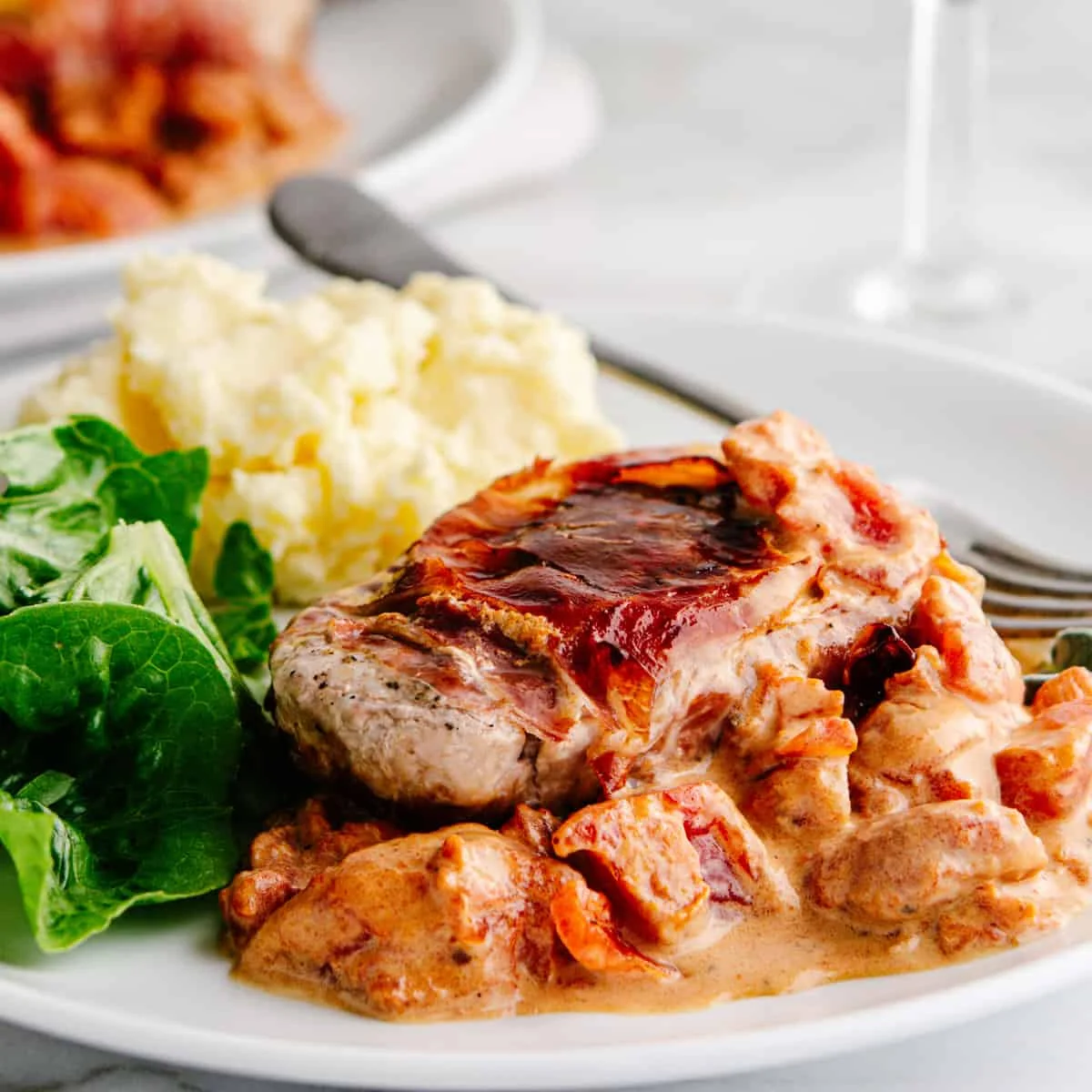
Pork saltimbocca pairs pork chops wrapped with prosciutto, lemon and sage with a creamy tomato and white wine sauce. It makes a quick Italian-inspired dinner with crisp, savoury edges and a rich pan sauce.
Ingredients
- 4 chops, 170 g each, 2 cm thickBoneless centre-cut pork loin chops
- 5 ml, plus extra for seasoningKosher salt
- 1.25 ml, plus extra for seasoningFreshly ground black pepper
- 4Thin lemon slices
- 5 large leaves, dividedFresh sage
- 4 slices, large enough to wrap around the pork chopsProsciutto
- 45 mlOlive oil
- 120 mlDry white wine
- 120 mlChicken stock
- 411 g can, drainedDiced tomatoes
- 120 mlDouble cream
Instructions
- 1
Wrap the pork
Pat each pork chop dry and season both sides lightly with salt and pepper. Place a lemon slice and a sage leaf on each chop, then wrap it crosswise with a slice of prosciutto, pressing to secure.
- 2
Chop the sage
Finely chop the remaining sage leaf.
- 3
Cook the chops
Heat the olive oil in a large frying pan over medium-high heat. Add the chops lemon-side up and cook for 6 minutes, reducing the heat if the prosciutto browns too quickly. Carefully turn them with tongs or a thin metal spatula and cook for another 2–3 minutes, until the prosciutto is caramelised and a thermometer in the centre reads 63°C. Transfer the chops to a plate and cover loosely with foil to keep warm.
- 4
Make the sauce
Pour the white wine into the pan and cook, stirring with a wooden spoon to loosen the browned bits. Add the chicken stock and boil until reduced by half, about 4–5 minutes. Stir in the tomatoes, cream, 5 ml kosher salt and 1.25 ml pepper; cook for about 3 minutes, until thickened and bubbling.
- 5
Serve the pork
Arrange the chops on a serving platter or place one on each of four dinner plates. Spoon sauce over the chops, garnish with the chopped sage and serve straight away.
What is pork saltimbocca?
Saltimbocca is an Italian preparation traditionally made with meat, sage and prosciutto. This pork version takes inspiration from the familiar combination and serves the chops with a creamy tomato and white wine sauce.
The recipe works because the prosciutto seasons the pork as it cooks, while lemon and sage bring a fragrant, savoury contrast. The sauce uses the browned bits left in the pan to connect the chops and tomatoes.
Nutrition and macros by portion
The nutrition label shows one serving as written: 462 calories, 40g protein, 7g carbs, 28g fat.
| Portion | Adjustment | kcal | Protein | Carbs | Fat |
|---|---|---|---|---|---|
| Lighter | Less cream, more greens | 323 kcal | 28g | 5g | 20g |
| This serving | As written | 462 kcal | 40g | 7g | 28g |
| Hungry | Add potatoes or bread | 693 kcal | 60g | 11g | 42g |
The pork provides most of the protein, while the cream and olive oil contribute much of the fat. The tomatoes and wine add some carbohydrate; serve with vegetables for a balanced plate, or add potato or bread if you want a more substantial meal.
Choosing the ingredients
Pork chops: Centre-cut loin chops of even thickness cook more consistently. Patting them dry helps the outside brown in the pan.
Prosciutto and sage: Thin prosciutto wraps neatly around each chop, and a sage leaf under the wrap adds flavour as it cooks. Keep the remaining leaf for the garnish.
Tomatoes and cream: Draining the diced tomatoes avoids adding excess liquid to the sauce. Cream rounds out their acidity and gives the sauce a smooth, rich texture.
Wrapping and browning
Secure the prosciutto by pressing it against the pork after wrapping; this helps it stay in place when the chops are turned. Put the lemon side upwards when the chops first go into the pan, as directed.
Watch the prosciutto as it browns: if it colours too quickly, lower the heat. Turn the chops carefully with tongs or a thin metal spatula so the wrapping is less likely to come loose.
Checking the pork
The method gives a total pan-cooking time of about 8–9 minutes, but chop thickness and pan heat can affect how quickly the meat cooks. Use an instant-read thermometer in the centre and look for 63°C.
After cooking, set the chops aside under a loose foil cover while you make the sauce. This keeps them warm without leaving them in the pan while the sauce reduces.
Building the pan sauce
Wine first: Add it to the hot pan and scrape up the browned bits with a wooden spoon. Those bits are part of the sauce's savoury flavour.
Stock and tomatoes: Reduce the stock by half before adding the tomatoes and cream. Let the sauce bubble for about 3 minutes, stirring until it thickens.
Timing the meal
With the ingredients ready to hand, the pork cooks while the pan is hot, and the sauce follows in the same pan. Keep the chops loosely covered during the 4–5 minutes of stock reduction and the final 3 minutes of sauce cooking.
Serve as soon as the sauce is ready, spooning it over the chops and adding the chopped sage at the end so its fresh aroma remains noticeable.
What to serve alongside
The creamy sauce suits a simple side that can catch its juices, such as mashed potato, soft polenta or crusty bread. These make the meal more filling without complicating the quick cooking process.
For a fresher contrast, add a green salad or simply cooked green vegetables. Serve them alongside rather than under the chops so the prosciutto stays exposed.
Recipe notes & tips
- Pat the chops dry before seasoning so they brown more readily.
- Use a large frying pan so the chops have room to cook without crowding.
- Lower the heat if the prosciutto starts browning too fast.
- Check the temperature in the centre of a chop rather than relying only on cooking time.
- Drain the diced tomatoes before adding them to the sauce.
- Have the side dishes ready so you can serve the chops as soon as the sauce is finished.
Variations
- Add mushrooms: Cook sliced mushrooms in the pan after removing the chops, then continue with the wine.
- Use chicken: Replace the pork chops with boneless chicken breasts of similar thickness and check that they are cooked through.
- Boost the lemon: Add a little lemon zest to the sauce for a brighter finish.
- Use fresh tomatoes: Swap in chopped, drained fresh tomatoes when they are ripe and flavourful.
- Make it less rich: Use less cream and add a splash more chicken stock to the sauce.
Common mistakes to avoid
- Wet pork: Pat the chops dry first, or they may not brown as well.
- Loose wrapping: Press the prosciutto against the chop after wrapping so it holds its shape.
- Over-browned prosciutto: Reduce the heat if it colours too quickly.
- Skipping the pan scraping: Stir the wine across the bottom of the pan to loosen the browned bits.
- Watery sauce: Drain the tomatoes and reduce the stock by half before adding them.
- Guessing doneness: Check the centre with an instant-read thermometer and cook to 63°C.
How to store
Refrigerate leftover pork and sauce in a covered container and use within 2 days. Reheat gently in a covered pan over a low heat until piping hot; avoid boiling the cream sauce.
Frequently asked questions
Can I prepare the pork ahead?
You can wrap the chops with the lemon, sage and prosciutto shortly before cooking. For best browning, pat them dry before seasoning and cooking.
How do I know when the pork is done?
Check the centre of a chop with an instant-read thermometer; the recipe specifies 63°C. Cooking time can vary with the thickness of the meat and the heat of the pan.
Can I use another cut of pork?
The recipe is written for centre-cut loin chops about 2 cm thick. A different cut or thickness may need a different cooking time, so check the centre with a thermometer.
Can I make the sauce without wine?
The wine is reduced in the pan to form part of the sauce. You can replace it with extra chicken stock, though the flavour will be different.
What sides go well with pork saltimbocca?
Mashed potato, soft polenta or bread work well with the sauce. Green vegetables or a salad add a fresh contrast.
Can I freeze leftovers?
The recipe does not specify freezing, and cream sauces can change texture after freezing. Refrigerating leftovers and reheating them gently is the better option.
Cook it from the original
This recipe comes from pinchandswirl.com. Their page has the author’s own photos, notes and tips — the best place to cook it from.
Open the recipe on pinchandswirl.com