
Breaded Chicken Wings
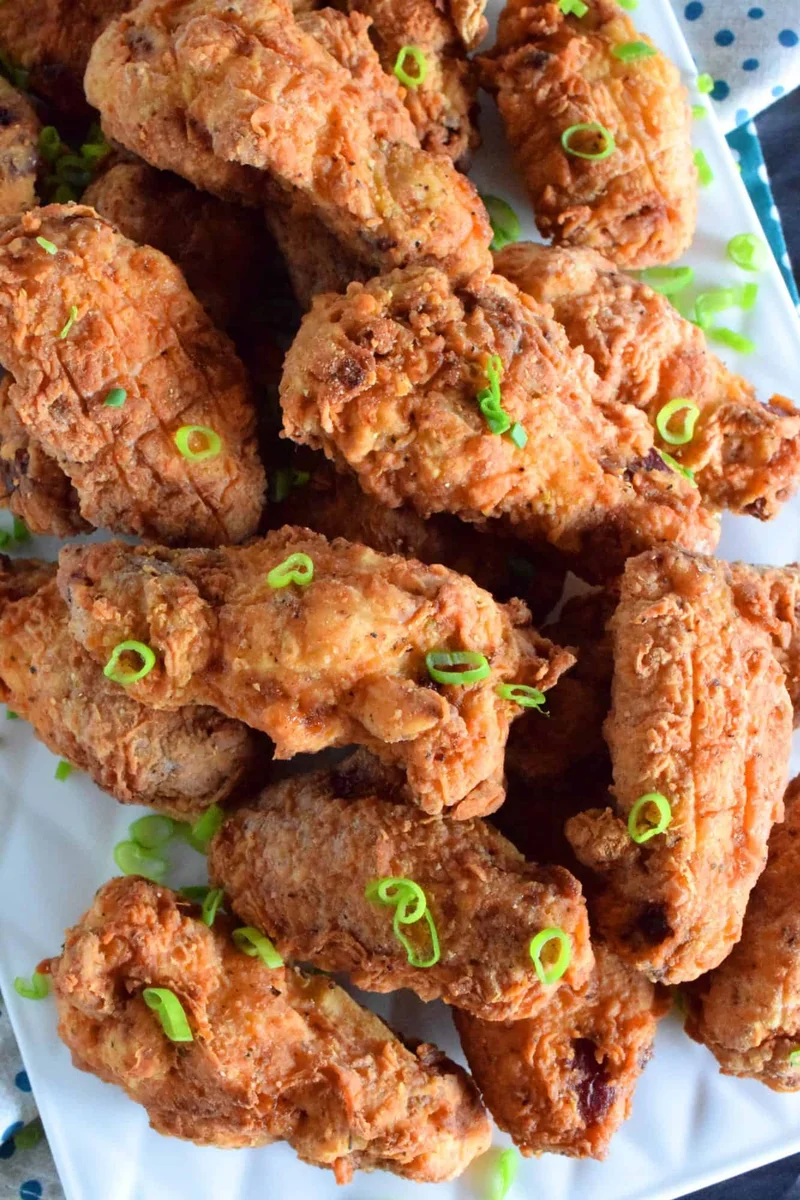
These North American-style chicken wings are double-coated in seasoned flour and fried until crisp and golden. Make them for a crowd, serve them as they are or toss them with your favourite wing sauce.
Ingredients
- 1.81 kg (4 lb)chicken wings
- 710 ml (3 cups)milk, whole or skim
- 4 largeeggs
- 500 g (4 cups)plain flour
- ½ teaspoononion powder
- ½ teaspoongarlic powder
- 1 tablespoonpaprika
- 1 teaspoonsalt
- ½ teaspoonground black pepper
- as needed for fryingvegetable or rapeseed oil
Instructions
- 1
Prepare the wings
Wash the chicken pieces and pat them dry with kitchen paper. Put them in a large bowl.
- 2
Soak the chicken
Whisk the milk and eggs together in a separate bowl, then pour the mixture over the wings. Turn the pieces so they are coated and submerged, and leave for 20–30 minutes.
- 3
Heat the oil
Pour oil into a deep Dutch oven and heat it to 163°C (325°F).
- 4
Mix the coating
While the oil heats, whisk the flour, onion powder, garlic powder, paprika, salt and pepper together in a large bowl.
- 5
Set up racks
Place a cooling rack on each of two large baking sheets.
- 6
Coat the wings
Working with one piece at a time, lift a wing from the milk and egg mixture and gently shake off the excess. Coat it thoroughly in the flour mixture, then place it on one of the prepared racks. Repeat with the remaining chicken.
- 7
Coat them again
Dip each floured piece into the milk and egg mixture again, fully submerging it. Lift it out, gently shake off the excess liquid, coat it once more in flour and return it to the rack.
- 8
Warm the oven
Once all the wings have been coated twice, preheat the oven to 93°C (200°F).
- 9
Fry in batches
Fry about 4 or 5 pieces at a time for around 7 minutes, until cooked through and browned. Transfer each batch to a clean baking sheet with a cooling rack and keep it in the oven uncovered.
- 10
Finish frying
Continue frying the remaining chicken in batches.
- 11
Serve the wings
Arrange the wings on a serving plate, garnish and serve.
What are breaded chicken wings?
Breaded chicken wings are pieces of chicken coated in seasoned flour and fried for a crisp exterior. They sit comfortably in North American home cooking, where wings are often served as a shareable appetiser or casual main.
This version uses a milk-and-egg dip between two layers of flour coating. That double coating gives the wings a substantial, craggy crust that can be served plain or paired with wing sauce.
Nutrition and macros by portion
The nutrition label shows one serving as written: 793 calories, 47g protein, 71g carbs, 34g fat.
| Portion | Adjustment | kcal | Protein | Carbs | Fat |
|---|---|---|---|---|---|
| Lighter | Smaller wing portion | 555 kcal | 33g | 50g | 24g |
| This serving | As written | 793 kcal | 47g | 71g | 34g |
| Hungry | Larger wing portion | 1190 kcal | 71g | 107g | 51g |
The flour supplies most of the carbohydrates, while the chicken contributes much of the protein and the frying oil adds fat; the eggs also contribute some protein and fat. For a more balanced plate, serve a portion with a generous helping of salad or vegetables.
The coating ingredients
Seasoned flour: Onion powder, garlic powder, paprika, salt and black pepper flavour the crust. Whisk them evenly through the flour so each piece gets a balanced coating.
Milk and eggs: The mixture helps the flour adhere to the wings. The second dip and coating build the crisp outer layer.
Why coat twice
First coating: Shake off excess liquid before adding the seasoned flour, and coat each piece thoroughly. Set the coated wings on a rack while you work through the batch.
Second coating: Dip each piece again, let excess liquid drip away, then return it to the flour. Handling one wing at a time helps keep the mixture from becoming overly wet and lumpy.
Frying in batches
Oil temperature: Heat the oil to 163°C (325°F) before frying. A thermometer helps you maintain a steady temperature as batches go in.
Batch size: Fry about 4 or 5 pieces at a time, as directed. Crowding the pot can make the oil temperature harder to manage and the coating less crisp.
Doneness and crispness
Colour and timing: The recipe allows around 7 minutes per batch and describes the finished wings as browned and cooked through. Pieces can vary in size, so check that the thickest parts are fully cooked.
Safe check: If using a food thermometer, check the thickest part of the chicken without touching bone; it should reach 74°C. Keep the thermometer clear of the hot oil.
Keeping batches warm
Rack setup: Resting fried wings on a cooling rack lets air circulate around them rather than trapping steam underneath. Use the clean prepared baking sheet and rack for the cooked batches.
Warm oven: Hold the wings in a 93°C (200°F) oven without covering them while you fry the rest. Covering can soften the coating.
What to serve alongside
Sauces: Serve the wings plain or toss them in your favourite wing sauce just before serving. Tossing at the last moment helps preserve more of the crunchy coating.
Sides: Add fresh vegetables, a crisp salad or a simple slaw for contrast. These are also easy to serve as part of a larger spread.
Recipe notes & tips
- Pat the wings dry before adding them to the milk and egg mixture.
- Shake off excess liquid before each flour coating so the crust does not become pasty.
- Use a thermometer to bring the oil to 163°C before frying.
- Fry 4 or 5 pieces at a time, keeping the pieces in a single layer in the oil.
- Use a rack to hold cooked wings uncovered in the warm oven.
- Toss the wings in sauce just before serving if you want to retain more crunch.
Variations
- Hot sauce: Toss the fried wings in your favourite wing sauce just before serving.
- Milder seasoning: Reduce the black pepper for a gentler-flavoured coating.
- Smoky paprika: Use smoked paprika in place of regular paprika for a deeper smoky note.
- Extra garlic: Increase the garlic powder slightly for a more pronounced savoury flavour.
- Sauce on the side: Serve a dipping sauce separately to keep the crust crisp for longer.
Common mistakes to avoid
- Wet wings: Pat them dry before soaking so excess water does not dilute the coating.
- Clumpy flour: Shake off excess egg mixture before dredging each piece.
- Uneven coating: Turn each wing through the flour until all sides are covered.
- Crowded pot: Fry only about 4 or 5 pieces per batch so they have room in the oil.
- Covered holding tray: Leave the wings uncovered in the warm oven to help the coating stay crisp.
- Guessing doneness: Check the thickest part of the chicken to make sure it is cooked through.
How to store
Refrigerate leftover wings in an airtight container for up to 3 days. Reheat in an oven or air fryer until hot throughout; the coating may be less crisp after storage.
Frequently asked questions
Can I use whole or skimmed milk?
Yes. The recipe allows either whole or skimmed milk for the soaking mixture.
How long should the wings soak?
Leave them in the milk and egg mixture for 20–30 minutes, with the pieces coated and submerged.
Why is the chicken coated twice?
The second dip and flour coating build the crust. Shake off excess liquid each time to help the coating adhere evenly.
How many wings should I fry at once?
The method recommends about 4 or 5 pieces per batch. Continue in batches until all the chicken is fried.
Can I make the wings ahead?
They are best freshly fried for the crispest coating. If you need to hold them while finishing the batches, keep them uncovered on a rack in the 93°C (200°F) oven.
Can I use a different frying oil?
The recipe specifies vegetable or rapeseed oil. Use enough to fry the wings in a deep Dutch oven.
Cook it from the original
This recipe comes from lordbyronskitchen.com. Their page has the author’s own photos, notes and tips — the best place to cook it from.
Open the recipe on lordbyronskitchen.com