
Japanese Salted Salmon (Shiozake)
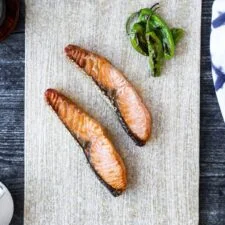
Shiozake is salmon lightly cured with salt and sake, then cooked under the grill until the skin is crisp. Serve it with rice and miso soup for a Japanese-style breakfast, or use it in onigiri or a bento.
Ingredients
- 2 × 227 g (8 oz)boneless salmon fillets, skin on
- 5 ml (1 teaspoon)sake
- 1½ teaspoons kosher salt or ¾ teaspoon table saltkosher salt or regular table salt
Instructions
- 1
Coat with sake
Put the salmon in a glass container and pour over the sake. Gently massage it into the flesh with your fingers so the fillets are evenly coated.
- 2
Pat the salmon dry
Leave the fish for 5 minutes, then pat the fillets dry with a paper towel.
- 3
Season both sides
Sprinkle equal amounts of salt over the fillets, covering both sides and the skin.
- 4
Chill the fillets
Cover the container and refrigerate for at least 12 hours and up to 36 hours.
- 5
Prepare the tray
Line a baking sheet with non-stick foil and place the salmon fillets on it.
- 6
Position the rack
Move an oven rack so it sits directly beneath the grill.
- 7
Heat the grill
Switch on the grill and place the baking sheet on the rack.
- 8
Grill the salmon
Grill the fillets for 3 to 5 minutes on each side, until the skin is slightly browned and crisp.
- 9
Serve the fish
Serve with cooked Japanese rice, miso soup and tsukemono.
What is shiozake?
Shiozake means salted salmon in Japanese. It is a simple preparation often served as part of a Japanese breakfast, and it also works well as a filling for onigiri or as the protein in a bento.
This version uses sake and salt before a short spell under the grill. The salt seasons the fish while it rests, and grilling gives the skin a crisp finish.
Nutrition and macros by portion
The nutrition label shows one serving as written: 167 calories, 28g protein, 0g carbs, 6g fat.
| Portion | Adjustment | kcal | Protein | Carbs | Fat |
|---|---|---|---|---|---|
| Lighter | Smaller salmon fillet | 117 kcal | 19g | 0g | 4g |
| This serving | As written | 167 kcal | 28g | 0g | 6g |
| Hungry | Add extra rice | 251 kcal | 42g | 0g | 9g |
The salmon supplies most of the protein and fat, while sake contributes very little carbohydrate. Serve it with rice and vegetables or tsukemono to make a more complete plate; the rice provides most of the meal's carbohydrates.
Why use sake and salt?
Sake: Massage it gently over the salmon so the surface is coated before salting. The brief 5-minute rest is part of the method; pat the fish dry afterwards.
Salt: Use either kosher salt or the smaller amount of table salt specified. Season both sides, including the skin, and divide the salt evenly between the fillets.
The curing rest
Chilling time: Cover the container and refrigerate the salmon for at least 12 hours, or up to 36 hours. This long rest is the main reason the recipe takes much longer than its brief grilling step.
Before cooking: Keep the fillets covered while they chill, then transfer them to the foil-lined baking sheet. The recipe does not call for rinsing off the salt.
Getting crisp skin
Rack position: Place an oven rack directly beneath the grill so the fish cooks close to the heat. Line the tray with non-stick foil for easier handling.
Doneness cue: Grill each side for 3 to 5 minutes, watching for slightly browned, crisp skin. Grill strength and fillet thickness can affect how quickly the surface colours, so use the stated visual cue.
Serving ideas
Traditional pairing: Serve the salmon with cooked Japanese rice, miso soup and tsukemono for a meal built around familiar Japanese breakfast accompaniments.
For a packed meal: Flake the cooked fish into onigiri, or keep it as the main protein in a bento alongside rice and other accompaniments.
Recipe notes & tips
- Use a glass container for the sake and salt rest, as directed.
- Dry the salmon after its 5-minute sake rest so the salt can be applied evenly.
- Divide the salt between the two fillets rather than concentrating it in one spot.
- Keep the fish covered in the refrigerator throughout the 12-to-36-hour rest.
- Stay close to the grill during cooking, since the skin can brown quickly.
Variations
- Use table salt: Choose ¾ teaspoon instead of 1½ teaspoons of kosher salt.
- Make onigiri: Flake the cooked salmon and use it as a rice-ball filling.
- Pack a bento: Serve a fillet with rice as the main protein in a packed meal.
- Serve breakfast-style: Pair the salmon with rice, miso soup and tsukemono.
Common mistakes to avoid
- Uneven seasoning: Divide the salt equally and cover both sides, including the skin.
- Skipping the drying step: Pat the fish dry after the 5-minute sake rest before salting.
- Short chilling time: Allow at least 12 hours in the refrigerator for the specified rest.
- Too much salt: If using table salt, use ¾ teaspoon rather than the kosher-salt amount.
- Over-grilling: Check after 3 minutes per side and look for slightly browned, crisp skin.
How to store
Keep the uncooked, seasoned salmon covered in the refrigerator and cook it within the recipe's 36-hour maximum resting time. Refrigerate cooked leftovers promptly in a covered container and use within 3 days; reheat until hot throughout.
Frequently asked questions
How long should the salmon rest in the refrigerator?
At least 12 hours and no more than 36 hours, covered.
Can I use table salt instead of kosher salt?
Yes. Use ¾ teaspoon of regular table salt instead of 1½ teaspoons of kosher salt.
Do I remove the skin before grilling?
No. The method keeps the skin on and seasons it along with both sides of the fish.
How do I know when the salmon is ready?
The recipe's cue is skin that is slightly browned and crisp after 3 to 5 minutes on each side.
What should I serve with shiozake?
Serve it with cooked Japanese rice, miso soup and tsukemono, or use it in onigiri or a bento.
Cook it from the original
This recipe comes from pickledplum.com. Their page has the author’s own photos, notes and tips — the best place to cook it from.
Open the recipe on pickledplum.com