
Spicy Braised Beef Ribs
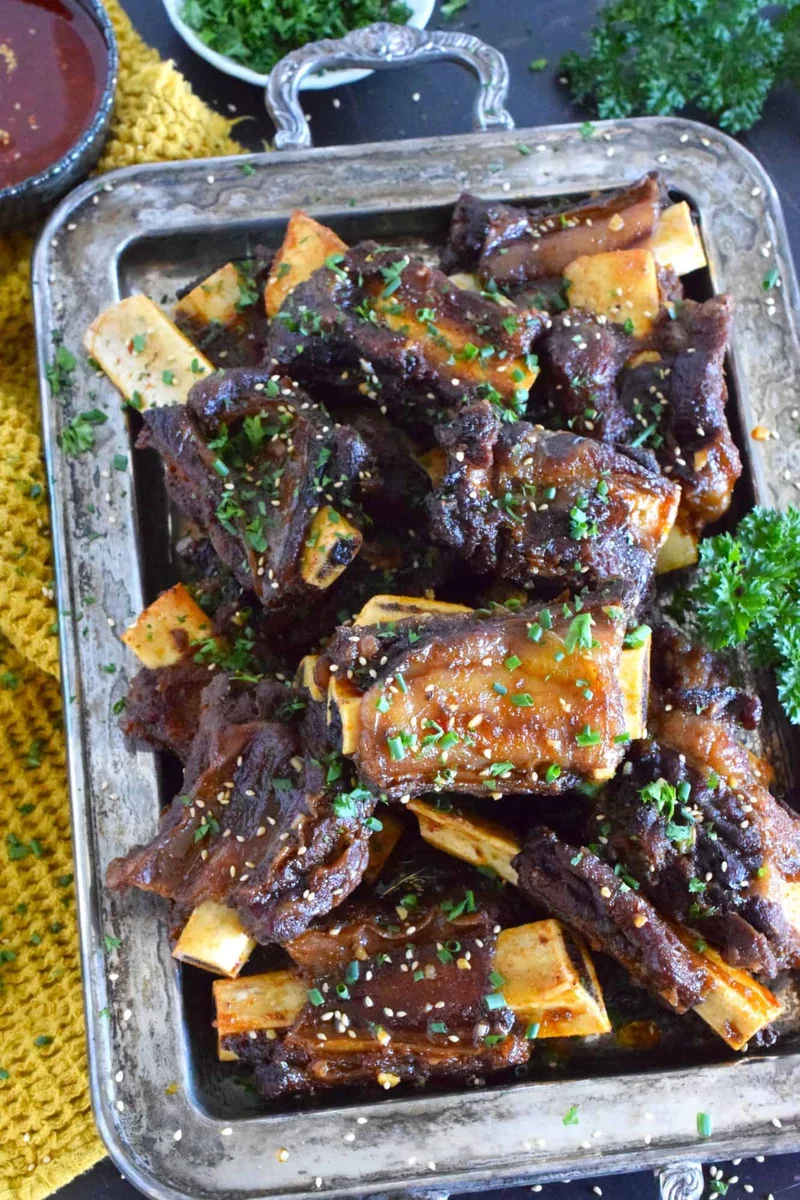
Beef ribs simmer slowly in a sweet, sticky, chilli-spiked sauce until tender, then the sauce is thickened for serving. This warming braise is a good choice for a cosy dinner, with rice or vegetables alongside to balance the rich sauce.
Ingredients
- 907 g (2 pounds)beef ribs, separated by cutting between each bone
- 710 ml (3 cups)water
- 200 g (1 cup)sugar
- 120 ml (½ cup)low-sodium soy sauce
- 60 ml (¼ cup)corn syrup (or molasses)
- 120 ml (½ cup)red pepper paste, such as gochujang
- 10 clovesgarlic, finely minced
- 15 ml (1 tablespoon)fresh ginger, grated
- 15 ml (1 tablespoon)rice vinegar
- 5 ml (1 teaspoon)onion powder
- 2.5 ml (½ teaspoon)dry mustard
- 2.5 ml (½ teaspoon)dried chilli flakes
- 2.5 ml (½ teaspoon)ground black pepper
- 32 g (¼ cup) cornstarch, whisked with 45 ml (3 tablespoons) watercornstarch slurry
- 5 ml (1 teaspoon)sesame seeds, for garnish
- To tastefinely chopped chives or spring onions
Instructions
- 1
Warm the sauce
Add the sauce ingredients to a large, heavy-based casserole and stir to combine. Set it over a medium heat and let the sauce warm.
- 2
Check the ribs
Meanwhile, rinse the ribs under cold running water. Feel each piece carefully for small bone fragments and remove any you find.
- 3
Add the beef
Once the ribs are cleaned, put them in the pot with the sauce and turn the heat up to high.
- 4
Skim the foam
As the sauce and ribs come to the boil, foam may rise to the surface. Scoop it off with a spoon and discard it.
- 5
Cover and simmer
After removing the foam, lower the heat to a simmer and cover the pot.
- 6
Cook the ribs
Simmer for 1 hour, checking at 45 minutes to stir the ribs and sauce.
- 7
Add hot peppers
Add the sliced hot peppers, cover the pot again and simmer for a further 15 minutes.
- 8
Mix the slurry
Whisk the cornstarch with 45 ml (3 tablespoons) of water to make a smooth slurry.
- 9
Thicken the sauce
Take off the lid and gradually pour in the slurry while stirring the ribs and sauce, until the sauce thickens.
- 10
Rest the ribs
Turn off the heat and leave the ribs uncovered for 5 minutes before serving.
- 11
Garnish and serve
Plate the ribs and garnish with sesame seeds and finely chopped chives or spring onions.
What are spicy braised beef ribs?
Braised beef ribs are cooked gently in liquid until the meat becomes tender. This version pairs a sweet, savoury sauce with red pepper paste and chilli for a glossy, warming finish.
The use of gochujang gives the sauce a Korean-style influence, while the recipe brings together broadly accessible Asian pantry ingredients. Slow simmering lets the flavours mingle and softens the ribs.
Nutrition and macros by portion
The nutrition label shows one serving as written: 427 calories, 24g protein, 59g carbs, 12g fat.
| Portion | Adjustment | kcal | Protein | Carbs | Fat |
|---|---|---|---|---|---|
| Lighter | More greens, less rice | 299 kcal | 17g | 41g | 8g |
| This serving | As written | 427 kcal | 24g | 59g | 12g |
| Hungry | Larger rib portion | 641 kcal | 36g | 89g | 18g |
The listed per-serving nutrition is 427 kcal, with 24 g protein, 59 g carbohydrate and 12 g fat. The ribs provide most of the protein and fat, while the sugar and corn syrup contribute much of the carbohydrate. Serve with vegetables and a measured portion of plain rice to make a balanced plate without letting the sweet sauce dominate.
Build the sauce first
Sweet and savoury: Sugar, soy sauce and corn syrup form the sauce’s sweet-salty base. Molasses can stand in for the syrup, bringing a deeper flavour.
Pepper paste: Gochujang or another thick red pepper paste adds body and heat. Different pastes vary in saltiness and spice, so taste the sauce as it cooks if you are familiar with the paste you are using.
Prepare the ribs carefully
Bone check: Rinsing and feeling each rib for bone fragments helps catch small loose pieces before cooking. Handle the ribs gently so they remain intact.
Foam removal: Skimming the surface as the pot comes to the boil clears away the foam before the long simmer. Use a spoon and discard it rather than stirring it back into the sauce.
Keep the simmer gentle
Low heat: Once the foam is skimmed, reduce the heat so the liquid simmers rather than boils vigorously. A covered pot helps the ribs cook evenly in the sauce.
Midway stir: Check the pot at 45 minutes and stir, as directed. This also gives you a chance to make sure the sauce is not catching on the bottom.
Thicken without lumps
Smooth slurry: Whisk the cornstarch with cold water until no dry patches remain before adding it. Pour it in gradually while stirring so it blends into the hot sauce evenly.
Final texture: The sauce should thicken around the ribs after the slurry is stirred through. Letting the dish rest uncovered for 5 minutes gives the sauce a moment to settle before serving.
Serve with something simple
A plain bowl of rice is a useful partner for the sticky sauce, while steamed greens or other lightly cooked vegetables bring a fresh contrast. Add them separately so they do not dilute the braising liquid.
Finish with sesame seeds and chopped chives or spring onions for a little crunch and freshness. Serve the ribs while warm, with extra sauce spooned over the top.
Recipe notes & tips
- Use a pot large enough to hold the ribs in a fairly even layer.
- Keep the heat gentle during the covered simmer to help prevent the sauce from catching.
- Stir at the 45-minute mark as instructed, and check the liquid level at the same time.
- Whisk the cornstarch thoroughly with water before it goes into the pot.
- Add the slurry slowly while stirring to help the sauce thicken smoothly.
- Garnish just before serving so the sesame seeds and chopped herbs stay distinct.
Variations
- Use molasses: Replace the corn syrup with the same amount of molasses for a darker, more robust sweetness.
- Adjust the heat: Use less dried chilli or a milder red pepper paste for a gentler sauce.
- Add fresh chilli: Include sliced hot peppers at the stage described in the method for extra heat.
- Choose a garnish: Use chopped chives or spring onions, depending on what you have available.
- Serve with greens: Add steamed or lightly cooked greens on the side for a fresh contrast.
Common mistakes to avoid
- Skipping the bone check: Feel each rib carefully and remove any loose fragments before cooking.
- Boiling hard: Lower the heat after skimming so the ribs simmer gently rather than bubble vigorously.
- Leaving the foam in: Skim it off as it rises before covering the pot.
- Adding dry cornstarch: Mix it with water first to make a smooth slurry.
- Pouring in the slurry all at once: Add it gradually while stirring to reduce the chance of lumps.
- Forgetting the midway stir: Check and stir the pot at 45 minutes so the sauce cooks evenly.
How to store
Cool leftovers promptly, then store them in a covered container in the fridge and use within 3 days. Reheat gently in a saucepan until piping hot throughout, adding a splash of water if the sauce has become too thick.
Frequently asked questions
Can I use a different red pepper paste?
Yes. The recipe allows gochujang or another thick red pepper paste. Since pastes differ in saltiness and heat, the finished sauce may taste somewhat different.
Can I replace the corn syrup?
Yes, use molasses in its place, as listed in the ingredients. It will give the sauce a deeper flavour.
When do the sliced hot peppers go in?
The method adds them after the ribs have simmered for 1 hour, then covers the pot for another 15 minutes. They are mentioned in the method but are not included in the supplied ingredient list or given a quantity.
How do I know when the ribs are done?
The recipe gives a total simmering time of 1 hour and 15 minutes, including the final 15 minutes with the sliced hot peppers. The meat should be very tender; check that it is softening from the bone before serving.
Can I make the sauce thicker?
Stir in the cornstarch slurry gradually as directed and give it a little time to thicken. Add it steadily while stirring so it combines smoothly with the sauce.
What should I serve with the ribs?
Plain rice and lightly cooked greens work well alongside the sweet, spicy sauce. Keep the sides simple so they complement rather than compete with the ribs.
Cook it from the original
This recipe comes from lordbyronskitchen.com. Their page has the author’s own photos, notes and tips — the best place to cook it from.
Open the recipe on lordbyronskitchen.com