
Spicy Potato Noodles
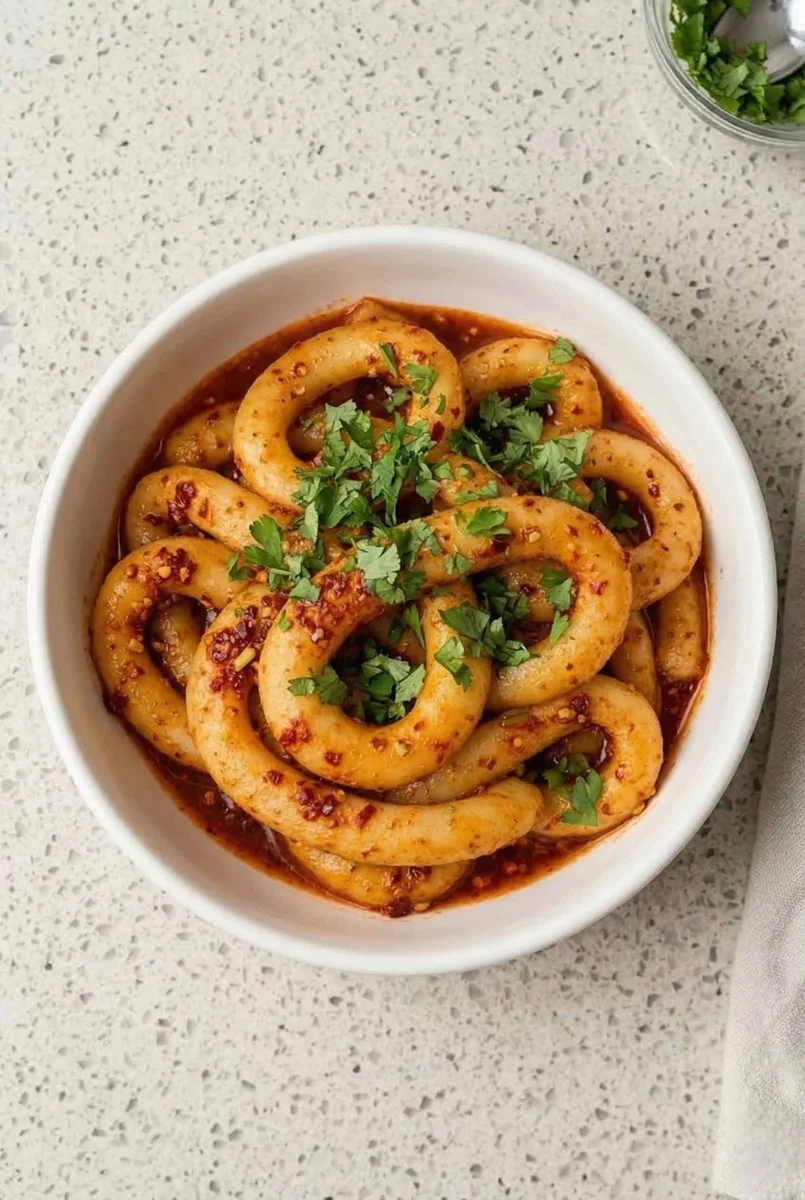
Soft, springy potato-starch noodles are coated in a savoury, tangy garlic and chilli oil, then finished with fresh coriander. They make a flavour-packed homemade meal with a pleasantly chewy texture.
Ingredients
- 500 g (1.1 lb)potatoes, peeled and cut into chunks
- 2.5 ml (½ tsp)salt
- about 190 g (1½ cups)potato starch
- 120 ml (½ cup)warm water
- 30 ml (2 tbsp)soy sauce
- 30 ml (2 tbsp)Chinese black vinegar
- 30 ml (2 tbsp)gochugaru or chilli flakes
- 6 ml (1¼ tsp)sugar
- 0.6 ml (⅛ tsp)salt
- 30 ml (2 tbsp)garlic, minced
- 1spring onion, sliced
- 45 ml (3 tbsp)neutral oil
- about 8 g (⅓ cup)coriander, chopped
Instructions
- 1
Boil the potatoes
Boil the potato chunks in water for 10–15 minutes, until a fork slides into them easily. Drain thoroughly.
- 2
Make the dough
While the potatoes are hot, mash them with ½ tsp salt until completely smooth. Add the potato starch and knead until combined.
- 3
Shape the noodles
Divide the dough into portions and roll each one into a thick rope.
- 4
Add noodles to water
Bring a pot of water to the boil and gently lower in the noodles, ensuring they are fully submerged.
- 5
Cook until floating
Cook for 2–3 minutes, until the noodles float, then cook for 1 minute more. Transfer them to cool water.
- 6
Prepare the chilli oil
In a heatproof bowl, combine the soy sauce, vinegar, chilli flakes, sugar, ⅛ tsp salt, garlic and spring onion. Pour hot oil over the mixture and stir.
- 7
Toss and serve
Drain the noodles, toss them with the sauce and coriander, and serve warm.
What are spicy potato noodles?
These chewy noodles are made from mashed potato and potato starch rather than wheat flour. Potato-based starch noodles are found in several Asian food traditions, and this version pairs their bouncy texture with a punchy chilli-oil dressing.
The recipe’s appeal is the contrast between mild, soft noodles and a sauce that brings heat, savouriness and acidity. Fresh coriander and spring onion add a bright finish.
Nutrition and macros by portion
The nutrition label shows one serving as written: 581 calories, 12g protein, 104g carbs, 15g fat.
| Portion | Adjustment | kcal | Protein | Carbs | Fat |
|---|---|---|---|---|---|
| Lighter | Use less chilli oil | 407 kcal | 8g | 73g | 11g |
| This serving | As written | 581 kcal | 12g | 104g | 15g |
| Hungry | Add a larger portion | 872 kcal | 18g | 156g | 23g |
The potatoes and potato starch supply most of the carbohydrates, while the neutral oil contributes much of the fat. The potatoes and starch provide some protein, with soy sauce adding a little more; serve the noodles with vegetables and a protein-rich side for a more balanced plate.
Getting the potato dough right
Smooth potatoes: Mash them while hot so there are no lumps that could make the dough uneven.
Potato starch: Add it to the mash and knead until the mixture comes together. The dough should be workable enough to roll into thick ropes.
Shaping and cooking
Thick ropes: Roll the portions evenly so the noodles cook at a similar pace. Handle the dough gently as you shape it.
Boiling water: Lower the noodles in carefully and make sure they are submerged. Their floating is the first doneness cue; give them the extra minute specified before cooling.
Building the chilli-oil sauce
Tangy base: Soy sauce and Chinese black vinegar give the dressing its savoury, sharp character, while a little sugar rounds the flavours.
Hot oil: Pour it over the garlic, chilli and spring onion in a heatproof bowl, then stir. This brings the aromatics together in the sauce before the noodles are added.
Texture and timing
Cool-water dip: Transfer the cooked noodles to cool water as directed to stop the cooking and help them keep their springy texture.
Serve promptly: Drain well before tossing, so the dressing clings rather than becoming diluted. The recipe takes about 35 minutes from start to finish.
What to serve alongside
Fresh sides: Serve with crisp cucumber, lightly dressed greens or steamed vegetables to balance the rich, spicy dressing.
Make it a meal: Add a protein such as tofu, egg or cooked chicken on the side if you want a more substantial plate.
Recipe notes & tips
- Drain the boiled potatoes well so excess water does not loosen the dough.
- Mash the potatoes thoroughly before adding the starch to avoid lumps in the noodles.
- Keep the noodles fully submerged while they cook.
- Use a heatproof bowl for the chilli-oil mixture.
- Drain the noodles well after cooling so the sauce stays flavourful.
Variations
- Adjust the heat: Use fewer chilli flakes for a milder sauce.
- Add sesame: Stir toasted sesame seeds into the finished noodles for a nutty note.
- Use a different herb: Swap some or all of the coriander for sliced spring onion.
- Add vegetables: Toss through thinly sliced cucumber or cooked greens just before serving.
- Boost the protein: Serve with tofu, egg or cooked chicken alongside.
Common mistakes to avoid
- Lumpy mash: Mash the potatoes until smooth before mixing in the starch.
- Wet dough: Drain the potatoes thoroughly before mashing so the dough can hold its shape.
- Uneven ropes: Roll the dough portions to a similar thickness for more even cooking.
- Crowded pot: Cook the noodles with enough room to stay submerged and move freely.
- Diluted sauce: Drain the cooled noodles well before tossing them with the dressing.
How to store
Store leftover noodles in an airtight container in the fridge for up to 2 days. Reheat gently in a pan or microwave, adding a small splash of water if they seem dry; the texture is best freshly made.
Frequently asked questions
Can I make the noodles ahead?
They are best cooked and dressed just before serving, when their texture is springiest. You can prepare the sauce ingredients in advance and keep them covered.
How do I know when the noodles are cooked?
They should float after about 2–3 minutes. Once they float, cook them for the additional minute before transferring them to cool water.
Can I use chilli flakes instead of gochugaru?
Yes. The recipe allows either gochugaru or chilli flakes; the final heat will depend on the type and amount used.
What can I use instead of Chinese black vinegar?
A different dark vinegar can work, though the flavour will change. Choose a vinegar with a rounded tang rather than a very sharp one.
Why is my dough difficult to roll?
Make sure the potatoes are mashed smoothly and drained well, then knead in the starch until combined. Shape the portions gently into thick ropes.
Can I make the dish less spicy?
Reduce the chilli flakes or gochugaru to suit your taste. Keep the other sauce ingredients the same and adjust the chilli gradually.
Cook it from the original
This recipe comes from melaniecooks.com. Their page has the author’s own photos, notes and tips — the best place to cook it from.
Open the recipe on melaniecooks.com