
Shrimp Carbonara
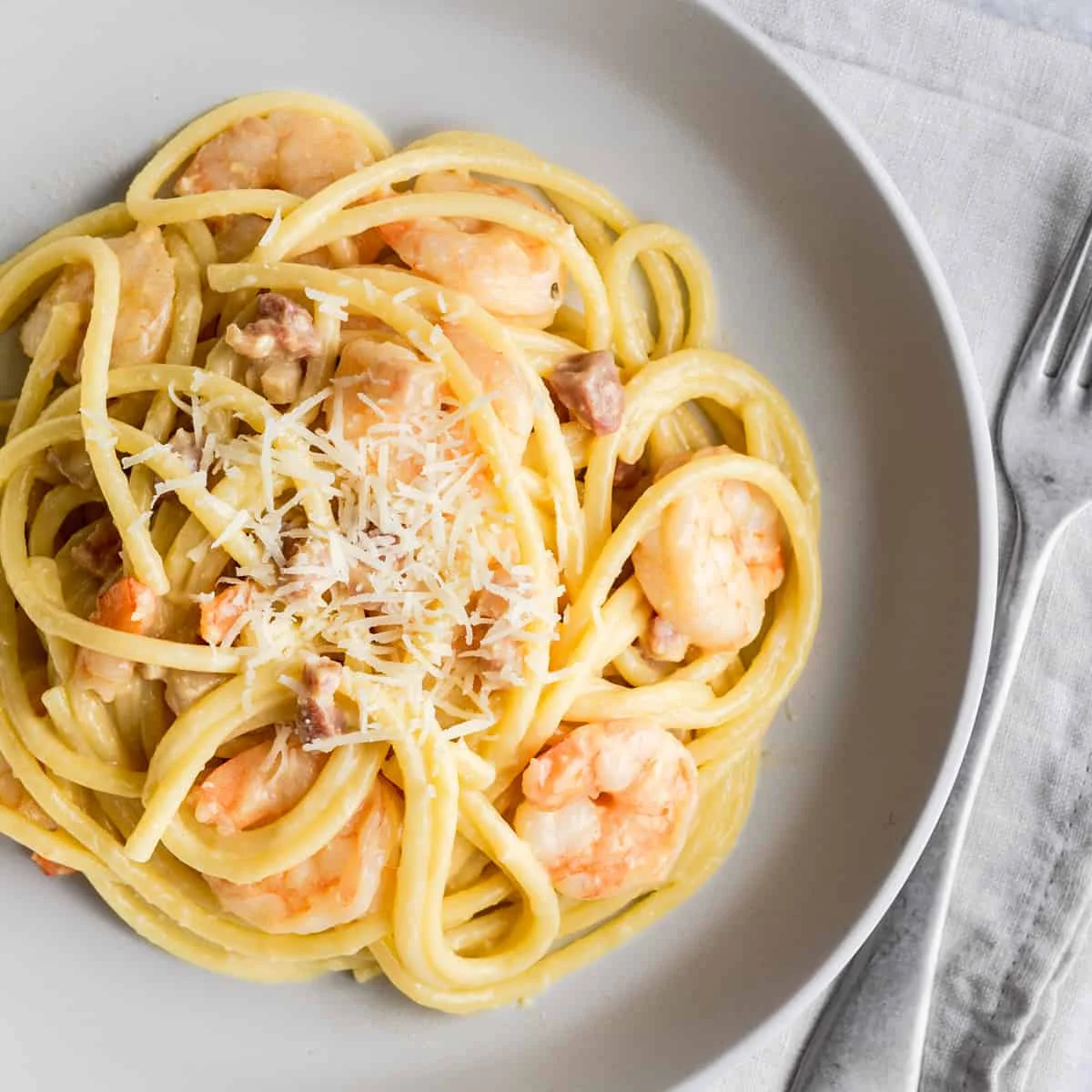
Shrimp carbonara pairs bucatini, pancetta and tender prawns with a silky sauce of egg and Pecorino Romano. Get the ingredients ready before you start: the finishing steps are quick, and the sauce comes together off the heat.
Ingredients
- 3large eggs
- 57 g (2 oz), plus extra for servinggrated Pecorino Romano
- 15 ml (1 tablespoon)olive oil
- 113 g (4 oz)diced pancetta, or guanciale or bacon
- 454 g (1 lb)medium prawns, peeled and deveined
- 340 g (12 oz)bucatini, or spaghetti
- to tastesalt and freshly ground black pepper
Instructions
- 1
Boil the water
Bring a large pot of salted water to the boil.
- 2
Mix eggs and cheese
Whisk the eggs and Pecorino Romano together in a medium bowl, then set aside.
- 3
Cook pancetta and prawns
Warm the olive oil in a large Dutch oven or other heavy pot over medium heat. Add the pancetta and cook, stirring, for 5 to 6 minutes, until its fat starts to render and the edges are just beginning to crisp. Add the prawns and cook, stirring, for 3 to 4 minutes, until just cooked through. Take the pot off the heat.
- 4
Cook the pasta
Meanwhile, cook the bucatini according to the packet directions until al dente, or firm to the bite. Reserve 240 ml (1 cup) of pasta water, then drain the pasta and transfer it straight to the pot with the pancetta and prawns. Return the pot to low heat and cook, stirring, for 1 to 2 minutes, until everything is heated through. Remove from the heat.
- 5
Finish the sauce
Whisk just under 60 ml (¼ cup) of hot pasta water into the egg and cheese mixture to temper the eggs. Pour it over the pasta in a steady stream, stirring constantly. Keep stirring until combined, adding more pasta water as needed. Season with salt and pepper to taste, and serve straight away with extra Pecorino Romano if desired.
What is shrimp carbonara?
Carbonara is an Italian pasta dish associated with Rome, traditionally made with pasta, cured pork, eggs and hard cheese. This version adds prawns for a seafood twist while keeping the rich, savoury combination at its heart.
The sauce relies on eggs, cheese and starchy pasta water rather than cream. Adding the egg mixture off the heat helps it coat the pasta without scrambling.
Nutrition and macros by portion
The nutrition label shows one serving as written: 670 calories, 47g protein, 65g carbs, 24g fat.
| Portion | Adjustment | kcal | Protein | Carbs | Fat |
|---|---|---|---|---|---|
| Lighter | More greens, less pasta | 469 kcal | 33g | 46g | 17g |
| This serving | As written | 670 kcal | 47g | 65g | 24g |
| Hungry | Larger pasta portion | 1005 kcal | 71g | 98g | 36g |
The bucatini supplies most of the carbohydrates, while the prawns and eggs contribute much of the protein. Olive oil, pancetta and cheese bring much of the fat. Pair a serving with green vegetables or salad to add freshness and balance the plate.
Get everything ready first
Pasta water: Have a cup ready to reserve before draining the bucatini. Its starch helps loosen the egg and cheese mixture into a smooth coating.
Egg mixture: Whisk the eggs and Pecorino before the pasta is cooked. The final mixing happens quickly, so setting this bowl aside in advance makes the timing easier.
Choose the cured pork
Pancetta: Diced pancetta renders fat into the pot and brings a savoury, salty flavour. Guanciale is another option; bacon can be used in its place as noted in the ingredient list.
Pecorino Romano: This sheep’s milk cheese gives the sauce a distinctly savoury, sharp edge. Grate extra for serving if you like a more pronounced cheese finish.
Cook the prawns gently
Timing: The prawns cook for just 3 to 4 minutes after the pancetta has started to crisp. Remove the pot from the heat once they are just cooked through, as they will be warmed again with the pasta.
Doneness: Look for prawns that have turned opaque and are cooked through, rather than leaving them in the pot until they become firm or rubbery.
Keep the sauce silky
Temper first: Whisking a little hot pasta water into the eggs raises their temperature gradually. Pour the mixture over the pasta in a steady stream while stirring continuously.
Off the heat: The pot is removed from the heat before the egg mixture goes in. If the sauce needs loosening, add reserved pasta water a little at a time while stirring.
Serve it straight away
Bucatini: Its thick strands hold the sauce well, while spaghetti works as the listed alternative. Cook either pasta until al dente, following the packet instructions.
At the table: Serve as soon as the sauce has coated the pasta, with extra Pecorino if desired. A simple green salad or steamed greens make a fresh side alongside the rich pasta.
Recipe notes & tips
- Grate the Pecorino finely so it mixes smoothly with the eggs.
- Keep the reserved pasta water hot for the final mixing.
- Drain the bucatini only after reserving the pasta water.
- Stir continuously as you pour in the tempered egg mixture.
- Serve promptly once the sauce has coated the pasta.
Variations
- Use spaghetti: Swap it for the bucatini and cook according to its packet directions.
- Try guanciale: Use it in place of pancetta for a different cured-pork flavour.
- Use bacon: Replace the pancetta with diced bacon as suggested in the ingredient list.
- Add extra Pecorino: Finish with more grated cheese at the table for a sharper, saltier edge.
Common mistakes to avoid
- Skipping the reserved water: Save a cup before draining so you can adjust the sauce.
- Overcooking the prawns: Take the pot off the heat when they are just cooked through.
- Adding eggs over heat: Remove the pot from the heat first to help prevent the eggs scrambling.
- Pouring in the eggs all at once: Add the tempered mixture in a steady stream while stirring.
- Leaving the pasta to wait: Transfer it straight from the colander to the pot so it stays hot for the sauce.
How to store
For the best texture, serve this dish immediately. If you have leftovers, refrigerate them in a covered container for up to 2 days and reheat gently with a splash of water; the egg-based sauce may become less silky.
Frequently asked questions
Can I use spaghetti instead of bucatini?
Yes. Spaghetti is the listed alternative; cook it until al dente according to the packet directions.
Can I make this with frozen prawns?
Yes, provided they are peeled and deveined. Thaw them first and pat them dry so they cook evenly.
Why temper the eggs with pasta water?
The hot water warms the egg mixture gradually before it meets the pasta. This helps the eggs form a sauce rather than scrambling.
How do I know the prawns are cooked?
They should be opaque and cooked through after about 3 to 4 minutes, as the method specifies. Avoid cooking them for longer than needed.
Can I prepare any part ahead?
You can measure and prepare the ingredients, and whisk the eggs with the cheese ahead of the final cooking. Cook and combine the pasta just before serving for the best sauce texture.
Cook it from the original
This recipe comes from pinchandswirl.com. Their page has the author’s own photos, notes and tips — the best place to cook it from.
Open the recipe on pinchandswirl.com