
Spiced Holiday Bread
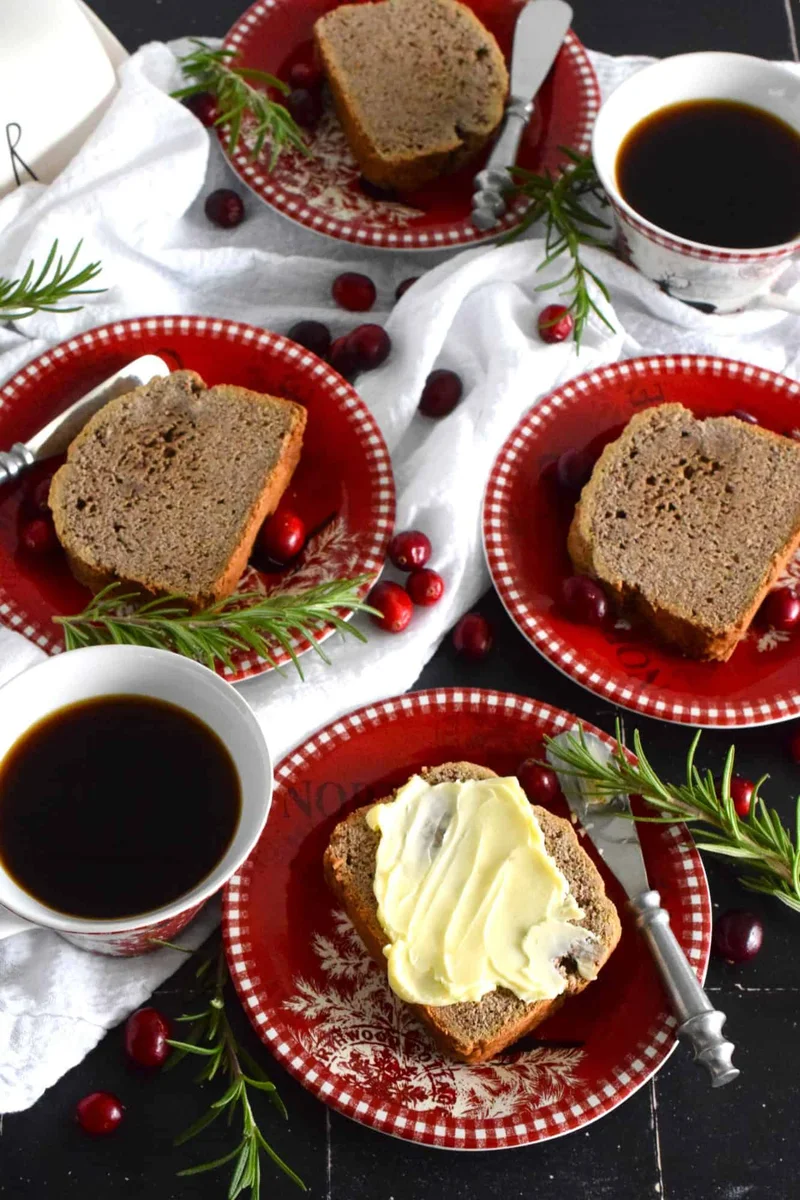
This lightly spiced quick bread brings cinnamon, ginger and other warming spices together in a simple buttermilk dough. Serve it with butter alongside hot tea, or toast slices for a crisp edge.
Ingredients
- 250 g (2 cups)plain flour
- 12 g (1 tablespoon)sugar
- 1/2 teaspoonbicarbonate of soda
- 1/2 teaspoonsalt
- 1 teaspoonground cinnamon
- 1/2 teaspoonground allspice
- 1/2 teaspoonground ginger
- 1/2 teaspoonground nutmeg
- 1/4 teaspoonground cloves
- 195 ml (3/4 cup plus 1 tablespoon)buttermilk
Instructions
- 1
Prepare the tin
Heat the oven to 190°C (375°F). Lightly grease a bread tin with non-stick cooking spray and set it aside.
- 2
Mix dry ingredients
In a large bowl, whisk together the flour, salt, bicarbonate of soda, sugar, cinnamon, cloves, nutmeg, ginger and allspice.
- 3
Add the buttermilk
Pour in 195 ml of buttermilk and stir with a fork until it has been absorbed into the flour mixture.
- 4
Shape the dough
Turn the dough out onto a lightly floured surface and knead just until it forms a rustic oval, for no more than 30 seconds.
- 5
Bake the bread
Put the oval into the greased bread tin and bake for 40 minutes.
- 6
Cool briefly
Take the bread out of the oven and leave it in the tin for 5 minutes. Turn it out onto a wire rack to cool.
- 7
Slice and serve
Wait 20 minutes before slicing. Serve warm, at room temperature or toasted.
What is spiced holiday bread?
This is a simple, soda-raised loaf rather than a yeasted bread: bicarbonate of soda provides the lift, while buttermilk brings moisture and acidity. Its cinnamon, allspice, ginger, nutmeg and cloves give it a warming flavour suited to holiday gatherings.
The recipe keeps the dough straightforward and lightly sweetened, so the spices stand out without making the loaf cake-like. Butter or a cup of tea makes an easy serving alongside it.
Nutrition and macros by portion
The nutrition label shows one serving as written: 136 calories, 4g protein, 27g carbs, 1g fat.
| Portion | Adjustment | kcal | Protein | Carbs | Fat |
|---|---|---|---|---|---|
| Lighter | Use a thinner slice | 95 kcal | 3g | 19g | 1g |
| This serving | As written | 136 kcal | 4g | 27g | 1g |
| Hungry | Serve a larger slice | 204 kcal | 6g | 41g | 2g |
The flour supplies most of the carbohydrates, while buttermilk contributes some protein; the recipe contains very little added fat. Serve a slice with yoghurt or eggs for a more substantial plate, or pair it with fruit and tea for a lighter snack.
Why the ingredients work
Buttermilk: its acidity reacts with bicarbonate of soda to help the loaf rise. Measure the full 195 ml before mixing.
Mixing and shaping
Fork mixing: stir only until the buttermilk has been absorbed; the dough does not need to become smooth. Overworking can make the finished loaf firmer.
Brief kneading: bring the dough together on a lightly floured surface, stopping within 30 seconds. Shape it into a rustic oval rather than trying to make a perfectly even ball.
Check the bake
Oven timing: bake at 190°C for 40 minutes, as directed. Ovens and tins can vary, so check that the loaf looks set and has a browned surface before taking it out.
Cooling: leave it in the tin for 5 minutes, then move it to a wire rack. Give it 20 minutes before slicing so the crumb has time to settle.
Serving ideas
Warm slices: serve with butter and hot tea for a simple seasonal snack. The modest amount of sugar leaves room for a savoury spread too.
Toast: toast slices for a crisp outside, then add butter while they are warm. It also works at room temperature if you are serving it with other holiday food.
Getting an even result
Even seasoning: whisk the dry ingredients thoroughly so the salt, bicarbonate of soda and spices are distributed throughout the flour.
Prepared tin: grease the bread tin lightly before mixing the dough, so it is ready when the loaf is shaped and less likely to stick.
Recipe notes & tips
- Measure the buttermilk before you start, including the extra tablespoon.
- Whisk the spices evenly through the flour to avoid concentrated patches.
- Flour the work surface lightly so the dough is easier to shape without adding too much extra flour.
- Keep kneading to 30 seconds or less for a tender, rustic loaf.
- Let the bread cool for 20 minutes before slicing to help it hold its shape.
Variations
- More cinnamon: Increase the cinnamon slightly if you prefer it to be the leading spice.
- Citrus note: Add finely grated orange zest to the dry mixture for a bright aroma.
- Raisin loaf: Fold a small handful of raisins into the dough just before shaping.
- Nutty addition: Add chopped walnuts for a little crunch.
- Toasted serving: Toast slices and spread with butter just before eating.
Common mistakes to avoid
- Over-kneading: The loaf can turn firm; stop as soon as the dough forms an oval, within 30 seconds.
- Skipping the tin preparation: The loaf may stick; grease the bread tin before shaping the dough.
- Uneven spices: Clumps can make some bites overpowering; whisk the dry ingredients thoroughly.
- Slicing too soon: The crumb may crumble while hot; wait 20 minutes before cutting.
- Leaving it in the tin too long: Steam can soften the sides; turn it out onto a rack after its 5-minute rest.
How to store
Once completely cool, store the loaf in an airtight container at room temperature for up to 3 days. Toast slices to reheat, or warm them briefly in the oven.
Frequently asked questions
Can I make this without buttermilk?
Buttermilk is part of the recipe's leavening balance with bicarbonate of soda. A swap may change the rise and texture, so use buttermilk for the stated result.
How do I know when the bread is baked?
Bake for 40 minutes at 190°C and look for a set, browned loaf. If it still looks doughy, give it a little more time and check again.
Why should I knead it so briefly?
This quick-bread dough only needs enough handling to come together. Kneading it longer can make the loaf tougher.
Can I serve it warm?
Yes. Rest it in the tin for 5 minutes, turn it onto a rack, then wait 20 minutes before slicing; it can still be served warm.
Is it good toasted?
Yes. Toast slices until crisp at the edges and spread with butter while warm.
Cook it from the original
This recipe comes from lordbyronskitchen.com. Their page has the author’s own photos, notes and tips — the best place to cook it from.
Open the recipe on lordbyronskitchen.com