
Bagels
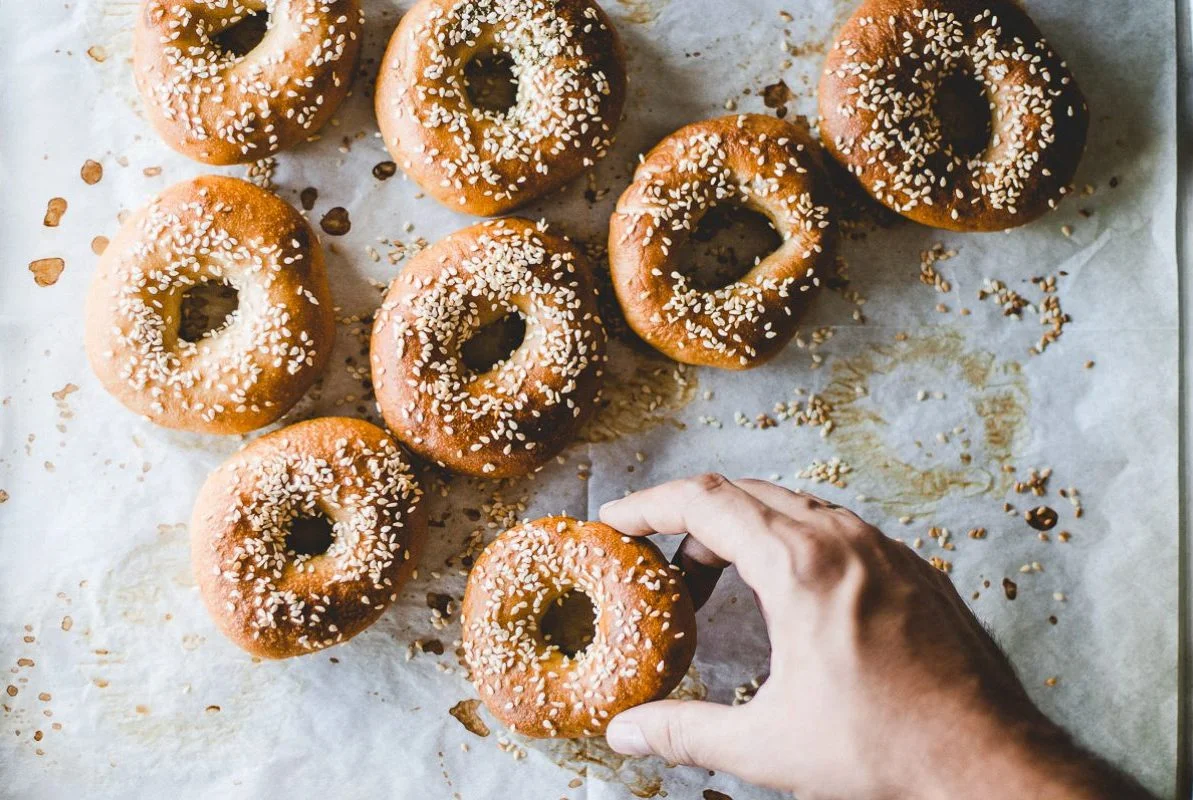
These homemade bagels have a chewy centre and a golden, lightly crisp crust, thanks to an overnight chill and a brief boil before baking. Make the batch ahead, enjoy them fresh, or freeze extras for another day.
Ingredients
- 1 tablespoon, or 1 teaspoon if using diastatic malt powdermalt syrup or honey, or diastatic malt powder
- 1 teaspooninstant yeast
- 1 1/2 tablespoons, optionalgranulated sugar
- 1 1/2 teaspoonssalt
- 255 g (1 cup plus 2 tablespoons; 9 oz)lukewarm water
- 450 g (3 1/2 cups; 16 oz)bread flour
- to tastesesame seeds, black poppy seeds or another topping of your choice
- 3 quarts (about 2.8 litres)water, for poaching
- 1 1/2 tablespoons, optionalbarley malt syrup or honey
- 1 tablespoonbaking soda
- 1 teaspoonsalt, for poaching
Instructions
- 1
Mix the dough
Stir the malt syrup, yeast, sugar and salt into the lukewarm water. Put the flour in a mixing bowl and add the liquid. With a dough hook, mix on the lowest speed for 3 minutes; by hand, stir with a sturdy spoon for about 3 minutes, until combined into a stiff, coarse ball. Add a little more water if needed, then leave the dough to rest for 5 minutes.
- 2
Knead and rise
Mix with the dough hook on low for a further 3 minutes, or knead by hand on a very lightly floured surface for about 3 minutes. The dough should feel stiff but supple, satiny and barely tacky; work in a little more flour if it is too soft or sticky. Put it in a lightly oiled bowl, cover tightly with plastic wrap and leave at room temperature for 1 hour.
- 3
Shape the bagels
Line a baking tray with parchment paper. Divide the dough into 8 pieces; each can be about 113 g for a typical bagel, or around 65 g for smaller ones. Shape each piece into a ball, poke a hole through the centre and rotate the dough with your thumbs in the hole, gradually stretching it to about 5 cm across. Arrange on the tray, mist with spray oil or brush lightly with oil, cover the tray with plastic wrap and refrigerate overnight or for up to 2 days.
- 4
Check the dough
Take the bagels out of the fridge 1 hour before baking. To do the float test, place one in a small bowl of cold water. If it sinks and does not rise to the surface, shake off the water, return it to the tray and wait another 15–20 minutes before testing again. When one floats, the batch is ready to boil.
- 5
Heat the oven
About 30 minutes before baking, preheat the oven to 230°C (450°F).
- 6
Poach the bagels
Fill a pot with water to a depth of at least 10 cm and bring it to the boil, then reduce the heat to a simmer. Stir in the malt syrup, baking soda and salt. Gently add as many bagels as will fit; they should float within a few seconds. After 60 seconds, turn each one over and poach for another 60 seconds. Lift them out with a slotted spoon and return them to the parchment-lined tray, ideally with the paper lightly oiled to prevent sticking. Add your chosen toppings.
- 7
Bake until golden
Bake for 15–20 minutes, until the bagels are golden brown. Transfer to a wire rack and cool to room temperature before serving.
- 8
Store the extras
Bagels are best eaten on the day they are made. Freeze any extras in an airtight container for up to 2 months.
What are bagels?
Bagels are ring-shaped, yeasted breads with a chewy crumb and a shiny, browned crust. They are closely associated with Jewish communities in Central and Eastern Europe and later became a familiar bakery staple in many places.
This version uses a slow, chilled rise followed by a short poach before baking. The combination develops flavour and gives the outside its characteristic chew.
Nutrition and macros by portion
The nutrition label shows one serving as written: 220 calories, 7g protein, 45g carbs, 1g fat.
| Portion | Adjustment | kcal | Protein | Carbs | Fat |
|---|---|---|---|---|---|
| Lighter | Choose a smaller bagel | 154 kcal | 5g | 31g | 1g |
| This serving | As written | 220 kcal | 7g | 45g | 1g |
| Hungry | Make a larger bagel | 330 kcal | 11g | 68g | 2g |
Most of the carbohydrates come from the bread flour, with smaller amounts from the sugar and malt syrup; the flour also supplies most of the protein. Fat is naturally low in the dough, though toppings and spreads can change the balance, so serve a bagel with eggs or another protein-rich filling and some vegetables for a more rounded plate.
Why use bread flour?
Bread flour: its higher protein content helps the dough develop the structure needed for a firm, elastic bagel. The dough is meant to be noticeably stiffer than a soft sandwich loaf dough.
Malt or honey: either adds a little sweetness and supports browning. Diastatic malt powder is more concentrated, so the recipe uses a smaller amount.
The overnight rest
Chilling: refrigerating the shaped bagels overnight, or for up to 2 days, lets you prepare them in advance. Keep the tray covered so the dough surface does not dry out.
Before boiling: allow 1 hour out of the fridge, then use the float test to check readiness. If a bagel sinks and stays down, give the dough another 15–20 minutes and test again.
Shaping an even ring
The hole: stretch it to about 5 cm across, as it will narrow as the dough puffs. Try to keep the ring an even thickness so it cooks consistently.
The portions: dividing the dough into 8 makes a standard-sized batch. For smaller bagels, the recipe suggests pieces of about 65 g.
A short, lively poach
The simmer: add the baking soda, salt and optional malt syrup or honey once the water is simmering. Work in batches if needed, leaving enough room to turn each bagel.
The timing: poach each side for 60 seconds. Lift the bagels out with a slotted spoon and let excess water drain before returning them to the tray.
How to judge doneness
Before baking: a bagel that passes the float test is ready for the poaching step. Handle the shaped dough gently when moving it into and out of the water.
In the oven: bake at 230°C for 15–20 minutes, looking for an evenly golden-brown surface. Cool on a wire rack so the bases do not become damp.
Serving ideas
Toppings: sesame seeds, black poppy seeds or another topping of your choice go on after poaching, while the surface is still damp enough for them to adhere.
To serve: split and toast a cooled bagel, then add a savoury or sweet spread. They also make a hearty base for a sandwich.
Recipe notes & tips
- Measure the water accurately so the already-stiff dough does not become difficult to mix.
- Use only a very light dusting of flour when kneading; too much can make the dough dry.
- Oil the parchment lightly before returning the poached bagels to the tray to reduce sticking.
- Poach in batches rather than crowding the pot, so each bagel can be turned easily.
- Let the bagels cool completely on a wire rack before slicing.
Variations
- Sesame topping: scatter sesame seeds over the bagels after poaching.
- Poppy topping: use black poppy seeds in place of sesame.
- Mixed seeds: choose another topping of your choice and sprinkle it on before baking.
- Smaller batch portions: divide the dough into pieces of about 65 g for smaller bagels.
- Honey option: use honey instead of malt syrup in the dough, or in the optional poaching liquid.
Common mistakes to avoid
- Dough too sticky: knead in a little flour until it feels supple and barely tacky.
- Dough too dry: add a little water during mixing if it will not come together into a ball.
- Bagels sink in the float test: return one to the tray and wait another 15–20 minutes before testing again.
- Water at a rolling boil: lower the heat to a simmer before adding the bagels.
- Bagels stick to the paper: lightly oil the parchment before arranging the poached bagels on it.
How to store
Bagels are best eaten on the day they are made. Freeze leftovers in an airtight container for up to 2 months, then reheat from frozen or after thawing until warmed through.
Frequently asked questions
Can I make the bagels ahead?
Yes. After shaping, cover the tray and refrigerate the bagels overnight or for up to 2 days. Take them out 1 hour before baking and check them with the float test.
What if a bagel fails the float test?
Shake off the water, return it to the tray and wait another 15–20 minutes before testing again. A bagel that sinks and does not float back is not ready to boil.
Can I make smaller bagels?
Yes. The recipe suggests portions of about 65 g instead of the typical 113 g. Keep an eye on them while baking, as smaller bagels may need less time.
Do I need to use malt syrup?
The dough can use honey instead, or 1 teaspoon of diastatic malt powder. The optional malt syrup or honey in the poaching water can also be left out.
How do I keep the toppings from falling off?
Add them just after the bagels come out of the poaching water, before baking. The damp surface helps the seeds adhere.
Can I freeze the baked bagels?
Yes. Once cooled, store them in an airtight container in the freezer for up to 2 months. Reheat before serving.
Cook it from the original
This recipe comes from prettysimplesweet.com. Their page has the author’s own photos, notes and tips — the best place to cook it from.
Open the recipe on prettysimplesweet.com