
Meringue Recipe
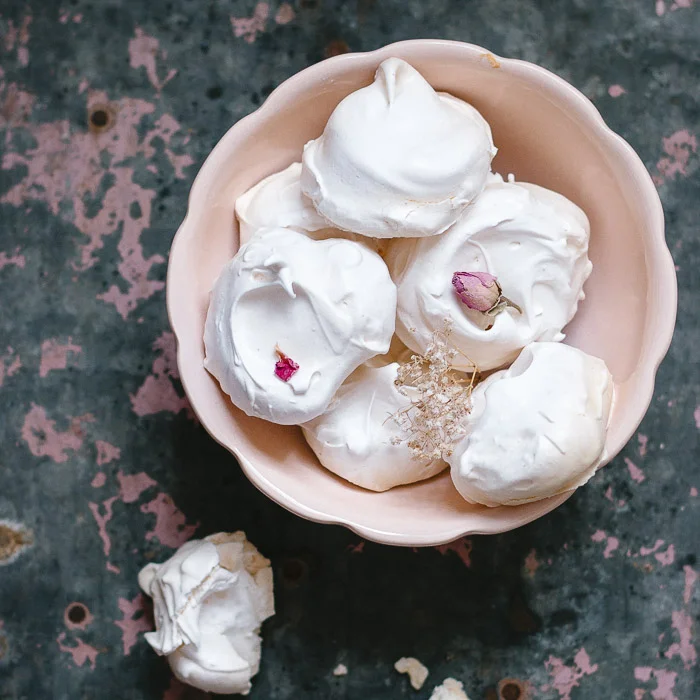
These crisp meringue cookies have a delicate shell and a light, sweet centre. They take little hands-on work, though a long, low bake and a slow cool are key to getting them dry and easy to lift from the tray.
Ingredients
- 3 (100 g)egg whites, at room temperature
- Pinchsalt
- 100 ggranulated or caster sugar
- ½ teaspoonpure vanilla extract
- 90 gicing sugar
- Optional; to tastefood colouring
Instructions
- 1
Prepare the oven
Heat the oven to 90°C. Line a baking sheet with parchment paper and set it aside.
- 2
Whisk the meringue
Make sure the mixer bowl is thoroughly clean and free from grease. Using the whisk attachment, whisk the egg whites and salt on low-medium speed until foamy and beginning to form soft peaks, about 40–50 seconds. With the mixer running, add the granulated or caster sugar one tablespoon at a time, then whisk on medium-high until the meringue is glossy, smooth, and forms stiff peaks without looking dry; the sugar should be fully dissolved, which may take 5–10 minutes. Beat in the vanilla. Stop the mixer, add the icing sugar, and fold it in gently by hand until smooth. Fold in food colouring, if using.
- 3
Bake and cool
Immediately spoon mounds about 2.5 inches (6.4 cm) across onto the lined baking sheet. The meringues do not spread much, so they can sit fairly close together. Bake on the lower part of the oven for 2–3 hours, until dry, not sticky in the centre, and easy to lift from the parchment with their bases intact. Turn off the oven and leave the meringues inside to cool completely for at least 1 hour or overnight.
- 4
Store the cookies
Keep the meringue cookies in an airtight container at room temperature for up to 2 weeks.
What are meringue cookies?
Meringue cookies are made from whipped egg whites and sugar, then baked gently until crisp. Their exact history is debated, but they are a long-established European confection.
This version combines granulated or caster sugar for the whipped base with icing sugar folded in by hand. A low oven and a gradual cool help the cookies dry without browning.
Nutrition and macros by portion
The nutrition label shows one serving as written: 80 calories, 3g protein, 19g carbs, 0g fat.
| Portion | Adjustment | kcal | Protein | Carbs | Fat |
|---|---|---|---|---|---|
| Lighter | Serve a smaller cookie | 56 kcal | 2g | 13g | 0g |
| This serving | As written | 80 kcal | 3g | 19g | 0g |
| Hungry | Larger cookie portion | 120 kcal | 5g | 29g | 0g |
Most of each serving’s energy and carbohydrates come from the granulated or caster sugar and icing sugar; the egg whites contribute most of the protein, while fat is minimal. Pair a cookie with fresh fruit for a more balanced plate.
Getting the egg whites ready
Room-temperature whites: these are easier to whip into a foamy, voluminous mixture. Separate the eggs carefully so no yolk gets into the whites.
Clean equipment: grease can interfere with whipping, so check that the bowl and whisk are clean and dry before you begin.
Building a stable meringue
Add the sugar gradually: spoon it in while the mixer runs, giving it time to incorporate rather than tipping it all in at once. The mixture is ready when it is glossy and holds stiff peaks.
Check the texture: rub a little meringue between your fingers; it should feel smooth rather than gritty, showing that the sugar has dissolved. Avoid beating until the mixture looks dry.
Folding in icing sugar
Fold gently: icing sugar is added after the mixer stops, so use a hand-folding motion to combine it without knocking out too much air. Stop once the mixture looks smooth.
Colour carefully: fold in food colouring only if you want it, and use just enough to achieve the shade you like.
Drying the cookies
Low heat: bake at 90°C on the lower part of the oven for 2–3 hours. Meringues should dry rather than take on colour.
Doneness cues: the outside should feel dry, the centre should not be sticky, and each cookie should lift from the parchment with its base intact. Leave them in the switched-off oven for at least 1 hour or overnight to cool completely.
Serving ideas
Serve the cookies on their own with tea or coffee, or alongside fresh fruit for a contrast to their sweetness. They can also be used as a crisp topping for a fruit-and-cream dessert.
Add any soft toppings just before serving, since moisture can soften the meringue.
Recipe notes & tips
- Bring the egg whites to room temperature before whipping.
- Check that the mixer bowl and whisk are clean and free of grease.
- Add the granulated or caster sugar one tablespoon at a time.
- Rub a little whipped meringue between your fingers to check that the sugar has dissolved.
- Use parchment paper so the cookies can be lifted off once dry.
- Leave the cookies in the switched-off oven until completely cool.
Variations
- Add colour: fold in food colouring after the icing sugar for tinted cookies.
- Shape as kisses: pipe the meringue into small peaked mounds instead of spooning it.
- Change the flavour: replace the vanilla with another extract, keeping the same quantity.
- Serve with fruit: add berries alongside the cookies just before serving.
- Make dessert portions: crumble a cookie over a bowl of fruit shortly before eating.
Common mistakes to avoid
- Greasy bowl: the whites may not whip properly; wash and dry the bowl and whisk thoroughly.
- Sugar added all at once: it can be harder to incorporate smoothly; add it one tablespoon at a time.
- Gritty mixture: the sugar has not dissolved; continue whisking and check again before adding the icing sugar.
- Overbeaten meringue: it can look dry; stop when it is glossy and holds stiff peaks.
- Removing cookies too soon: they may stick or remain soft inside; bake until dry and cool them in the switched-off oven.
- Storing while warm: trapped moisture can soften the cookies; cool them completely before sealing the container.
How to store
Once completely cool, store the cookies in an airtight container at room temperature for up to 2 weeks. Avoid reheating them, as warmth can soften their crisp texture.
Frequently asked questions
How can I tell when the sugar has dissolved?
Rub a small amount of meringue between your fingers. It should feel smooth rather than gritty.
Why do my egg whites not whip up?
A greasy bowl or traces of yolk can prevent the whites from whipping well. Use a clean, dry bowl and separate the eggs carefully.
Can I make these without food colouring?
Yes. Food colouring is optional, and the cookies can be made without it.
How do I know the meringues are done?
They should be dry, not sticky in the centre, and lift from the parchment with their bases intact. Allow for the full 2–3 hours of baking time.
Can I leave the meringues in the oven overnight?
Yes. After turning off the oven, the recipe allows them to cool inside for at least 1 hour or overnight.
Cook it from the original
This recipe comes from prettysimplesweet.com. Their page has the author’s own photos, notes and tips — the best place to cook it from.
Open the recipe on prettysimplesweet.com