
Chicken katsu
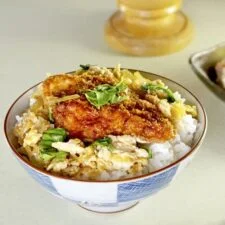
Chicken katsu pairs crisp, panko-coated chicken with soft-cooked egg and savoury onions, served over Japanese rice. It makes a satisfying introduction to Japanese-inspired comfort food, with crunchy and tender textures in one bowl.
Ingredients
- 454 g (1 pound)skinless, boneless chicken breasts
- for dustingplain flour
- 3 largeeggs
- 30 g (½ cup)panko breadcrumbs
- for deep-fryingoil
- ½ mediumonion, sliced into half-moons
- 1 handfulbasil or flat-leaf parsley, chopped
- 240 ml (1 cup)dashi stock
- 10 ml (2 teaspoons)granulated sugar
- 30 ml (2 tablespoons)sake
- 30 ml (2 tablespoons)soy sauce
- 30 ml (2 tablespoons)mirin
- 600 g (4 cups)cooked Japanese rice
Instructions
- 1
Heat the oil
Add oil to a pot and heat it over a medium setting.
- 2
Coat the chicken
Dip the chicken pieces in plain flour, then in one egg, then in the panko breadcrumbs.
- 3
Simmer the onions
Put the sliced onion, dashi, sugar, sake, soy sauce and mirin in a large pan. Simmer for about 5 minutes, until the onion is tender and translucent.
- 4
Whisk the eggs
Whisk the remaining 2 eggs in a small bowl.
- 5
Fry the chicken
When the oil reaches 175°C (350°F), carefully lower in the chicken pieces. Deep-fry until golden brown, then lift them out and rest them on paper towels to absorb excess oil.
- 6
Finish with eggs
Add the chicken to the onions, then pour the eggs around the chicken and over the onions. Cook for 1–2 minutes; scatter the basil or parsley over the top and turn off the heat once the eggs are cooked through.
- 7
Serve with rice
Serve the chicken and onion mixture with the cooked rice.
What is chicken katsu?
Katsu is a Japanese-style breaded cutlet, commonly made with chicken or pork and coated in crisp panko. This version goes beyond a simple cutlet: the fried chicken is finished with onion and egg in a savoury dashi-based sauce, then served over rice.
That saucy finish is reminiscent of katsudon, a Japanese rice bowl topped with cutlet, onion and softly cooked egg. The combination works because the crunchy coating meets tender egg, fragrant rice and a balanced salty-sweet broth.
Nutrition and macros by portion
The nutrition label shows one serving as written: 680 calories, 43g protein, 78g carbs, 20g fat.
| Portion | Adjustment | kcal | Protein | Carbs | Fat |
|---|---|---|---|---|---|
| Lighter | Less rice, more greens | 476 kcal | 30g | 55g | 14g |
| This serving | As written | 680 kcal | 43g | 78g | 20g |
| Hungry | Add extra rice | 1020 kcal | 65g | 117g | 30g |
The rice and panko provide most of the carbohydrates, while the chicken and eggs contribute much of the protein. The deep-frying oil and egg yolks account for much of the fat, with soy sauce contributing a notable share of the sodium. For a more balanced plate, serve with a generous side of steamed vegetables.
Build an even coating
Flour first: a light dusting helps the egg cling to the chicken. Shake off any excess so the coating does not become thick or patchy.
Egg and panko: use one egg for the coating, then press the panko gently onto the chicken so it adheres. Keep the remaining two eggs separate for the finish.
Fry for a crisp crust
Oil temperature: aim for 175°C before adding the chicken. If the oil is too cool, the coating can absorb more oil; if it is too hot, the outside may brown before the chicken is cooked.
Small batches: lower the pieces in carefully and avoid crowding the pot. Let excess oil drain on paper towels after frying to help preserve the crisp coating.
Watch the onion and egg
Tender onions: simmer them in the dashi, sake, soy sauce, mirin and sugar for about 5 minutes. They should look translucent and yield easily, rather than retain a raw crunch.
Cooked-through eggs: pour the whisked eggs around the chicken and over the onions, then cook for 1–2 minutes. The recipe calls for the eggs to be cooked through, so check the centre before turning off the heat.
Use the sauce well
The dashi gives the pan liquid a savoury base, while mirin and sugar add sweetness and soy sauce brings saltiness. Sake rounds out the mixture as it simmers with the onion.
Spoon the onion, egg and sauce over the rice when serving. The rice catches the cooking juices, while the chicken adds a crisp, substantial topping.
Serve it as a bowl
Divide the cooked Japanese rice among four servings and top with the chicken, onions and egg. A simple side of steamed greens or lightly dressed vegetables can add freshness alongside the rich, savoury bowl.
The chopped basil or flat-leaf parsley is scattered on at the end for a fresh herbal note. Use whichever one you have chosen, and serve soon after cooking for the best contrast of textures.
Recipe notes & tips
- Pat the chicken dry before coating so the flour and egg adhere more evenly.
- Keep the chicken pieces similar in thickness so they fry at a similar rate.
- Use a thermometer to check that the oil reaches 175°C before frying.
- Lower the chicken into the oil carefully to reduce splashing.
- Whisk the two finishing eggs just before adding them to the pan.
- Have the rice ready before finishing the eggs so you can serve the dish promptly.
Variations
- Use pork: coat thin pork cutlets in the same flour, egg and panko sequence.
- Add greens: serve steamed broccoli or leafy greens alongside the rice bowl.
- Choose parsley: use flat-leaf parsley instead of basil for a milder herbal finish.
- Use brown rice: serve the topping over cooked brown rice for a nuttier base.
- Make it spicier: add a little chilli to the finished bowl to bring gentle heat.
Common mistakes to avoid
- Crowding the pot: the oil temperature can fall and the chicken may fry unevenly, so cook in batches if needed.
- Skipping the flour: the egg may not cling well, so dust the chicken lightly before dipping it.
- Using cool oil: the coating can turn greasy, so wait until it reaches 175°C.
- Overcooking the onions: they can lose their shape, so stop simmering once they are tender and translucent.
- Adding the eggs too early: they may overcook while you prepare to serve, so cook them just before finishing.
- Leaving excess oil on the chicken: the crust can feel heavy, so rest the pieces on paper towels after frying.
How to store
Refrigerate leftovers in an airtight container for up to 2 days. Reheat gently in a pan or microwave until hot throughout; the fried coating will soften once stored with the sauce and egg.
Frequently asked questions
Is this the same as a plain chicken katsu cutlet?
It starts with a panko-coated fried chicken cutlet, but here the chicken is finished with onion and egg in a savoury sauce. That makes it closer in style to a chicken katsu rice bowl.
How do I know the chicken is cooked?
The coating should be golden brown, and the thickest part of the chicken should be cooked through with no raw centre. A food thermometer can help you check the centre.
Can I prepare the chicken ahead?
You can coat the chicken shortly before frying and keep it chilled in the meantime. For the crispest result, fry it close to serving and finish the egg mixture just before eating.
Can I use ordinary breadcrumbs instead of panko?
Yes, but the crust may be less light and crisp. Panko's coarse flakes are what give the chicken its characteristic crunchy coating.
What can I serve with chicken katsu?
Serve it over Japanese rice as directed, with steamed greens or a simple vegetable side. The rice also works well for soaking up the onion and egg sauce.
Can I make the chicken without deep-frying?
The method calls for deep-frying, which gives the coating its usual crisp texture. Baking or air-frying would change the method and may produce a different crust.
Cook it from the original
This recipe comes from pickledplum.com. Their page has the author’s own photos, notes and tips — the best place to cook it from.
Open the recipe on pickledplum.com