
Eggplant Saganaki
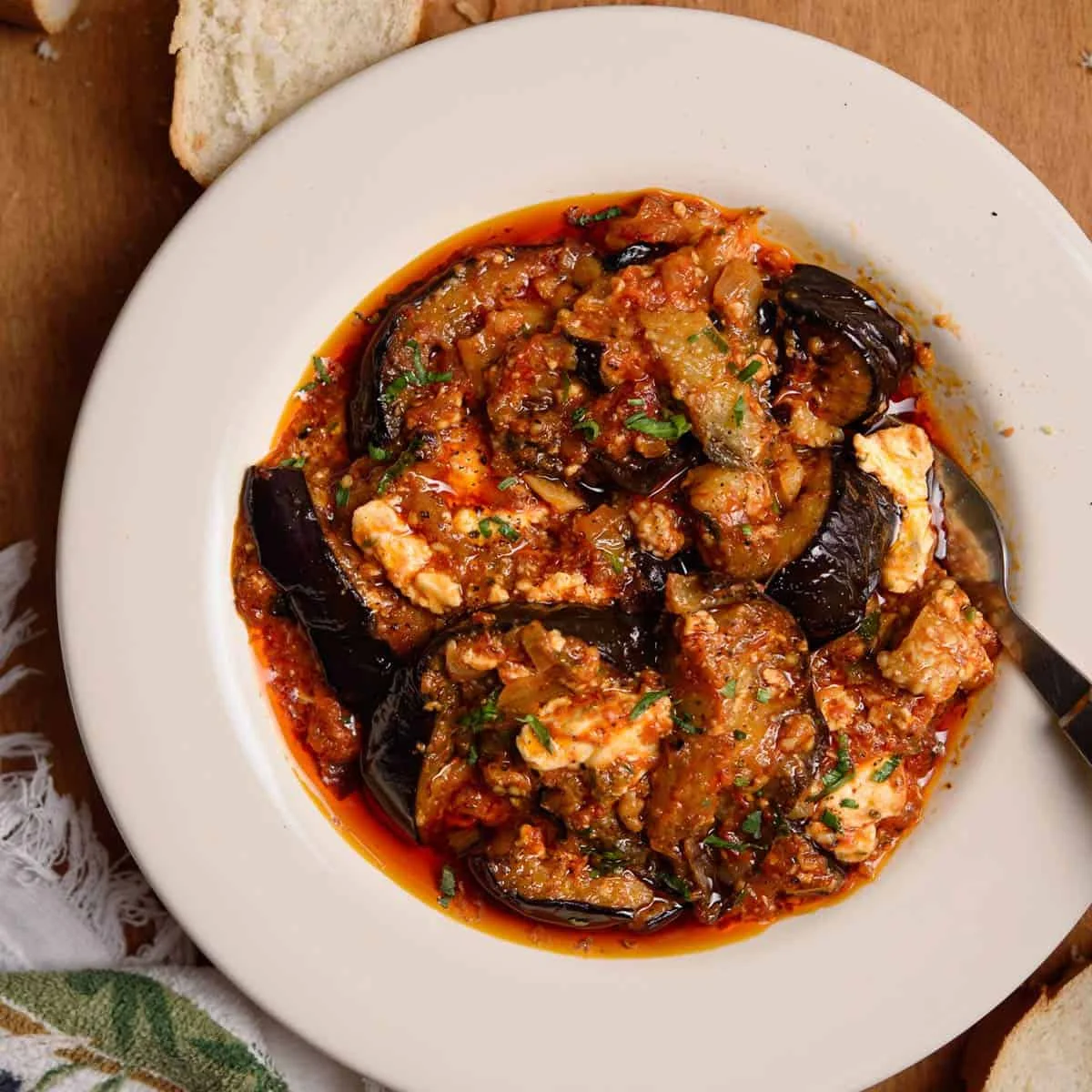
Eggplant Saganaki is a Greek-style stew of golden-fried eggplant simmered in tomato sauce and finished with feta and Kefalotyri. It makes a substantial, flavourful meal, especially with crusty bread to soak up the sauce.
Ingredients
- 1.5 kgeggplants
- 200 g (1 large)onion, minced
- 4–5 large clovesgarlic, chopped
- 500 gcrushed tomatoes
- ⅔ teaspoonsmoked paprika
- 1bay leaf
- 1 teaspoondried oregano
- 2 tablespoonsfresh parsley, minced
- 150 gfeta cheese, crumbled into large chunks
- 50 gKefalotyri cheese, grated
- 500 mlhot water or vegetable stock
- A splash, plus more as neededolive oil
- To tastesalt
- To tasteblack pepper
Instructions
- 1
Heat the oil
Warm a splash of olive oil in a cooking pot over moderate heat.
- 2
Soften the aromatics
Add the onion and garlic and sauté until golden.
- 3
Add the sauce ingredients
Pour in the crushed tomatoes and hot water or stock. Add the bay leaf and smoked paprika, then season with salt and pepper.
- 4
Simmer the sauce
Simmer the sauce over moderate heat, partly covered, until it thickens. Prepare the eggplant while it cooks.
- 5
Slice the eggplant
Trim the tops and bottoms from the eggplants. Halve them, then cut into slices 2½–3 cm thick.
- 6
Heat the frying pan
Coat the bottom of a frying pan generously with olive oil and heat it over high heat.
- 7
Fry in batches
Fry the eggplant slices until deep golden and lightly browned on each side. Keep the softening mostly to the outside, as the eggplant will cook further in the sauce. Work in batches, adding more oil before each batch if needed.
- 8
Combine with sauce
Transfer the fried eggplant to the pot with the thickened sauce.
- 9
Cook until tender
Cover and cook over moderate heat for about 20 minutes, until the eggplant softens. Add a splash of water if needed.
- 10
Finish with cheese
Stir in the dried oregano, parsley, feta and Kefalotyri. Turn off the heat and leave the pot on the hot stove for a minute or two, until both cheeses soften and melt.
- 11
Serve warm
Serve warm with plenty of crusty bread for dipping.
What is Eggplant Saganaki?
Saganaki is a Greek name associated with dishes cooked in a small pan, often featuring cheese. This version takes a more stew-like approach, pairing eggplant with a tomato sauce and two cheeses.
Frying the eggplant first gives it browned edges, while simmering it in the sauce makes the slices tender and lets them take on the garlicky tomato flavour.
Nutrition and macros by portion
The nutrition label shows one serving as written: 310 calories, 11g protein, 26g carbs, 20g fat.
| Portion | Adjustment | kcal | Protein | Carbs | Fat |
|---|---|---|---|---|---|
| Lighter | Use less frying oil | 217 kcal | 8g | 18g | 14g |
| This serving | As written | 310 kcal | 11g | 26g | 20g |
| Hungry | Add extra crusty bread | 465 kcal | 17g | 39g | 30g |
Eggplant supplies much of the carbohydrate, while the olive oil and cheeses contribute most of the fat. Feta and Kefalotyri also provide protein; serve the stew with bread for a more filling plate, or pair it with a fresh salad for contrast.
Building the tomato sauce
Aromatics: Let the onion and garlic turn golden before adding the tomatoes, so their flavour forms a savoury base.
Seasoning: Smoked paprika and a bay leaf add depth as the sauce simmers. The dried oregano goes in later with the cheeses, as specified in the method.
Frying the eggplant
Oil: Eggplant absorbs oil readily, so use enough to coat the pan and add more between batches when necessary.
Batches: Leave room around the slices rather than crowding them. This helps them brown instead of simply softening in the pan.
Getting the texture right
Before simmering: Aim for deep golden colour on the outside, but do not try to cook the slices completely through during frying.
In the sauce: After about 20 minutes covered, the eggplant should have softened. If the pot looks dry before it is tender, add a splash of water.
Melting in the cheeses
Feta: Keep it in large crumbles so it softens into the stew without disappearing entirely.
Kefalotyri: Stir in the grated cheese with the feta, then turn off the heat. The residual warmth softens and melts the cheeses without further boiling.
Serving the stew
Bread: Crusty bread is an easy match and makes good use of the rich tomato sauce.
At the table: Serve the stew warm, while the cheese is still soft. A simple salad alongside can add a fresh contrast.
Recipe notes & tips
- Prepare the eggplant while the sauce simmers to make good use of the cooking time.
- Fry the slices in batches and top up the oil between batches as needed.
- Keep the eggplant slices fairly thick so they hold their shape in the stew.
- Taste the sauce before serving, bearing in mind that both cheeses are salty.
- Leave the pot off the heat briefly after adding the cheeses so they soften in the residual warmth.
Variations
- Use vegetable stock: Choose it instead of hot water for a fuller savoury base.
- Swap the cheese: Use a suitable hard, salty Greek-style cheese in place of Kefalotyri.
- Add fresh herbs: Finish with extra parsley for a brighter herbal note.
- Adjust the paprika: Use less smoked paprika for a milder smoky flavour.
- Serve with grains: Spoon the stew over rice or another cooked grain instead of bread.
Common mistakes to avoid
- Crowding the pan: The slices can steam rather than brown; fry them in batches.
- Using too little oil: Eggplant can catch as it fries; coat the pan generously and add more between batches if needed.
- Frying until fully soft: The slices cook again in the sauce, so brown the outside while keeping the inside firmer.
- Skipping the covered simmer: The eggplant needs about 20 minutes in the sauce to soften.
- Boiling after adding cheese: Turn off the heat and let the cheeses soften in the residual warmth.
How to store
Refrigerate leftovers in a covered container and eat within 3 days. Reheat gently in a saucepan until hot, adding a splash of water if the sauce has thickened too much.
Frequently asked questions
Can I make Eggplant Saganaki ahead?
Yes. Cook it ahead and refrigerate it once cooled, then reheat gently until hot. The eggplant will be softer after resting in the sauce.
Why does eggplant need to be fried in batches?
Crowded slices are more likely to soften without browning. Batches also make it easier to adjust the oil as the eggplant absorbs it.
Can I use water instead of vegetable stock?
Yes. The method allows either hot water or vegetable stock.
What can I use instead of Kefalotyri?
The recipe refers to a substitution in its accompanying text, which is not included here. Choose a similar hard, salty cheese if you need an alternative.
How do I know when the eggplant is ready?
After about 20 minutes covered in the sauce, it should be softened. If it is still firm and the pot seems dry, add a splash of water and continue cooking.
What should I serve with Eggplant Saganaki?
Crusty bread is suggested for dipping into the sauce. A simple salad can also make a fresh accompaniment.
Cook it from the original
This recipe comes from realgreekrecipes.com. Their page has the author’s own photos, notes and tips — the best place to cook it from.
Open the recipe on realgreekrecipes.com