
Pita Bread - Greek Flatbread Recipe
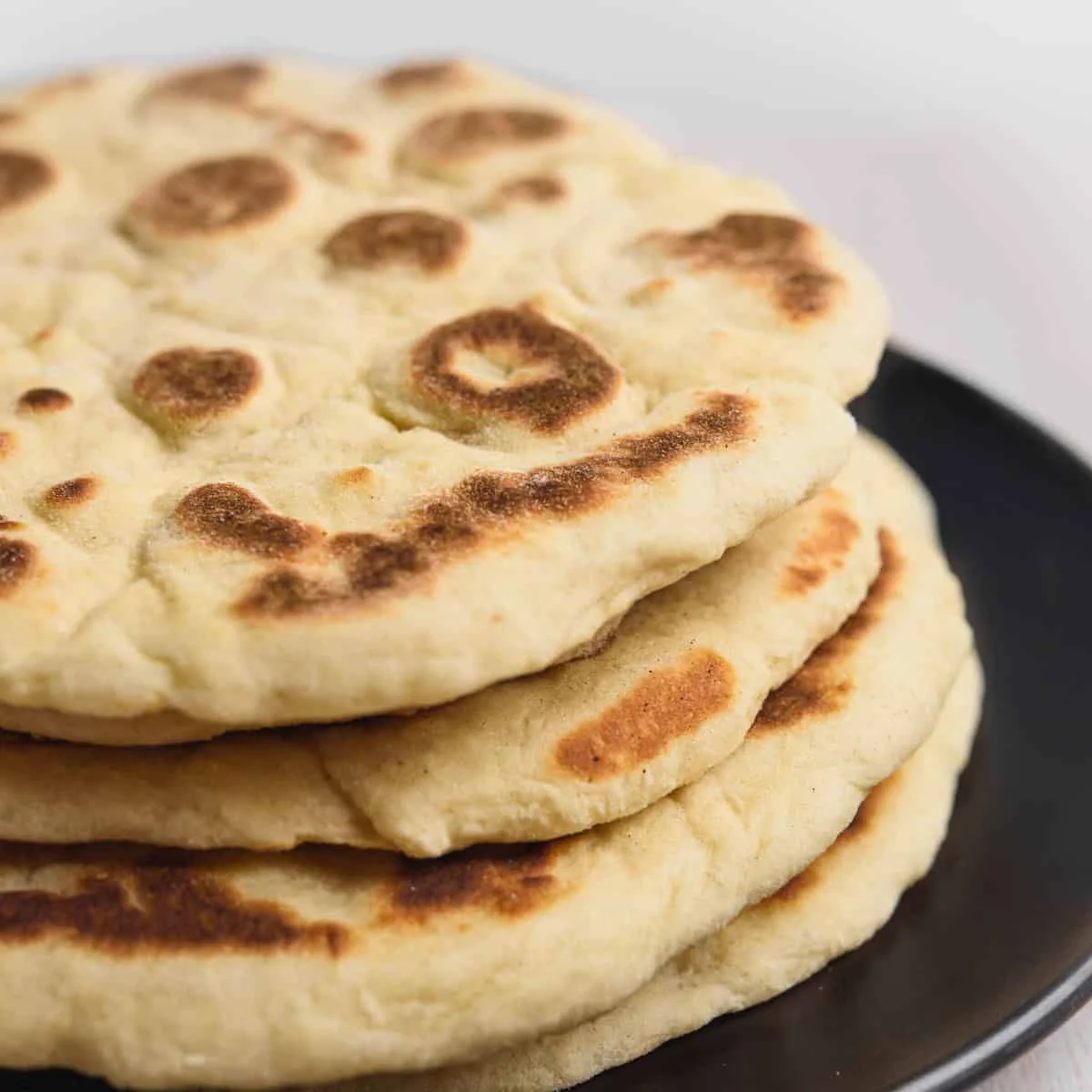
These soft Greek-style flatbreads are made with Greek yoghurt and raising agents rather than yeast. Cooked quickly in a covered frying pan, they are handy alongside dips or wrapped around a filling.
Ingredients
- 230 g (2 cups − 1 tablespoon)plain flour, plus extra for shaping
- 300 g (1 cup + 1 tablespoon)full-fat strained Greek yoghurt
- 3 tablespoonsolive oil
- ⅔ teaspoonsalt
- 1 teaspoonbicarbonate of soda
- 1½ teaspoonsbaking powder
Instructions
- 1
Mix the wet ingredients
Put the yoghurt, olive oil, salt, baking powder and bicarbonate of soda in a mixing bowl. Whisk until combined.
- 2
Make the dough
Add the flour and stir with a wooden spoon, scraping around the bowl, until a sticky dough forms.
- 3
Shape the dough
Dust your hands and the dough with flour. Turn it out onto a floured work surface and shape it into a log.
- 4
Divide into balls
Cut the dough into 6 equal pieces and roll each into a ball, adding enough flour to stop it sticking to your hands.
- 5
Flatten the rounds
Flour the work surface and one dough ball. Use your hands to press and stretch it into a round, 14–15 cm across.
- 6
Heat the pan
Set a non-stick frying pan with a lid over medium-high heat and heat it until almost smoking.
- 7
Cook the first side
Put a flatbread in the pan and cover it straight away. Cook for 1 minute.
- 8
Cook the second side
Turn the flatbread over, cover the pan again and cook for a further 1 minute.
- 9
Cool and stack
Move the flatbread to a cooling rack and leave it to cool briefly. Once all the flatbreads are cooked, stack them on a plate.
- 10
Store the flatbreads
Cover the stack with cling film and put it in the fridge.
- 11
Serve with dips
Serve with a Greek dip such as tzatziki, melitzanosalata, tarama or htipiti, or use the flatbreads to make Greek-style wraps.
What is Greek pita bread?
Pita is a familiar flatbread in Greek meals, served with dips or used to hold fillings. This version takes a shortcut from yeast dough: yoghurt and baking powder with bicarbonate of soda help the bread rise as it cooks.
The dough is divided into small rounds and cooked in a covered pan, so the method works without an oven and keeps the flatbreads soft.
Nutrition and macros by portion
The nutrition label shows one serving as written: 233 calories, 9g protein, 32g carbs, 8g fat.
| Portion | Adjustment | kcal | Protein | Carbs | Fat |
|---|---|---|---|---|---|
| Lighter | Use less olive oil | 163 kcal | 6g | 22g | 6g |
| This serving | As written | 233 kcal | 9g | 32g | 8g |
| Hungry | Serve an extra flatbread | 350 kcal | 14g | 48g | 12g |
The flour supplies most of the carbohydrates, while the Greek yoghurt contributes protein and some fat; olive oil and full-fat yoghurt also account for much of the fat. Pair a flatbread with a protein-rich filling and vegetables or salad to make a more balanced plate.
Why use strained Greek yoghurt?
Yoghurt: full-fat strained Greek yoghurt gives the dough moisture and a tender texture. Its thickness also helps bring the flour together into a workable, if sticky, dough.
Raising agents: baking powder and bicarbonate of soda provide lift without a yeast rise. Measure them carefully so their flavour does not dominate.
Handling the sticky dough
Flour: dust your hands and work surface as needed, rather than trying to knead the dough with lots of extra flour. Too much added flour can make the cooked breads firmer.
Portioning: divide the log into 6 equal pieces for rounds that cook at a similar rate. Roll each piece into a ball before flattening it.
Getting an even flatbread
Shape: press each ball into a round about 14–15 cm across. Keep the thickness as even as you can so the bread cooks consistently.
Pan: heat the non-stick pan until almost smoking, then cover it as soon as the dough goes in. The lid traps heat around the bread while it cooks.
Timing and texture cues
Cook each side for 1 minute with the pan covered, as directed. Keep an eye on the heat: the pan should be very hot, but the flatbread should not scorch before its cooking time is up.
Move each cooked round to a cooling rack briefly, then stack the finished flatbreads on a plate. Stacking after cooking keeps them together for serving.
Ways to serve
Dips: serve the flatbreads with tzatziki, melitzanosalata, tarama or htipiti, as suggested in the recipe. Tear off pieces to scoop up the dip.
Wraps: use a flatbread as a base for a Greek-style wrap with your chosen filling. Serve the breads warm or at room temperature.
Recipe notes & tips
- Keep the extra flour nearby so you can dust your hands and work surface when the dough sticks.
- Divide the dough into 6 similarly sized pieces so the flatbreads cook evenly.
- Use a pan with a lid, as covering it is part of the cooking method.
- Flatten each ball to 14–15 cm across for the size specified in the recipe.
- Transfer cooked flatbreads to a cooling rack before stacking them.
Variations
- Herb version: mix finely chopped herbs into the yoghurt mixture before adding the flour.
- Garlic pairing: serve the breads with a garlic-rich dip such as tzatziki.
- Spiced filling: use the flatbreads to wrap a warmly spiced filling of your choice.
- Dip platter: cut the cooked breads into pieces and serve them alongside a selection of Greek dips.
Common mistakes to avoid
- Adding too much flour: the dough can become firm, so dust only enough to handle it.
- Uneven portions: different-sized pieces will cook at different rates, so divide the dough into 6 equal parts.
- Skipping the lid: the covered pan is specified for cooking each side, so keep it covered as the bread cooks.
- A cool pan: the recipe calls for a pan heated until almost smoking, so allow it to get properly hot first.
- Overcooking: each side needs 1 minute, so watch the time to avoid drying out the flatbreads.
How to store
As directed, cover the stack with cling film and refrigerate it. Reheat briefly in a dry frying pan until warmed through, or serve at room temperature.
Frequently asked questions
Does this pita dough need to rise?
No yeast is used, and the method does not include a rising period. The baking powder and bicarbonate of soda provide the lift.
Can I use low-fat Greek yoghurt?
The recipe specifies full-fat strained Greek yoghurt. A lower-fat yoghurt may change the dough's texture and softness.
How large should I make each flatbread?
Flatten each piece into a round 14–15 cm across, as given in the method.
Can I cook these without a lid?
The method calls for a non-stick pan with a lid and covers it while each side cooks. Use a pan with a lid for the closest result to the recipe.
What can I serve with Greek pita?
The recipe suggests tzatziki, melitzanosalata, tarama or htipiti. You can also use the flatbreads for Greek-style wraps.
Cook it from the original
This recipe comes from realgreekrecipes.com. Their page has the author’s own photos, notes and tips — the best place to cook it from.
Open the recipe on realgreekrecipes.com