
Chocolate Sugar Cookies
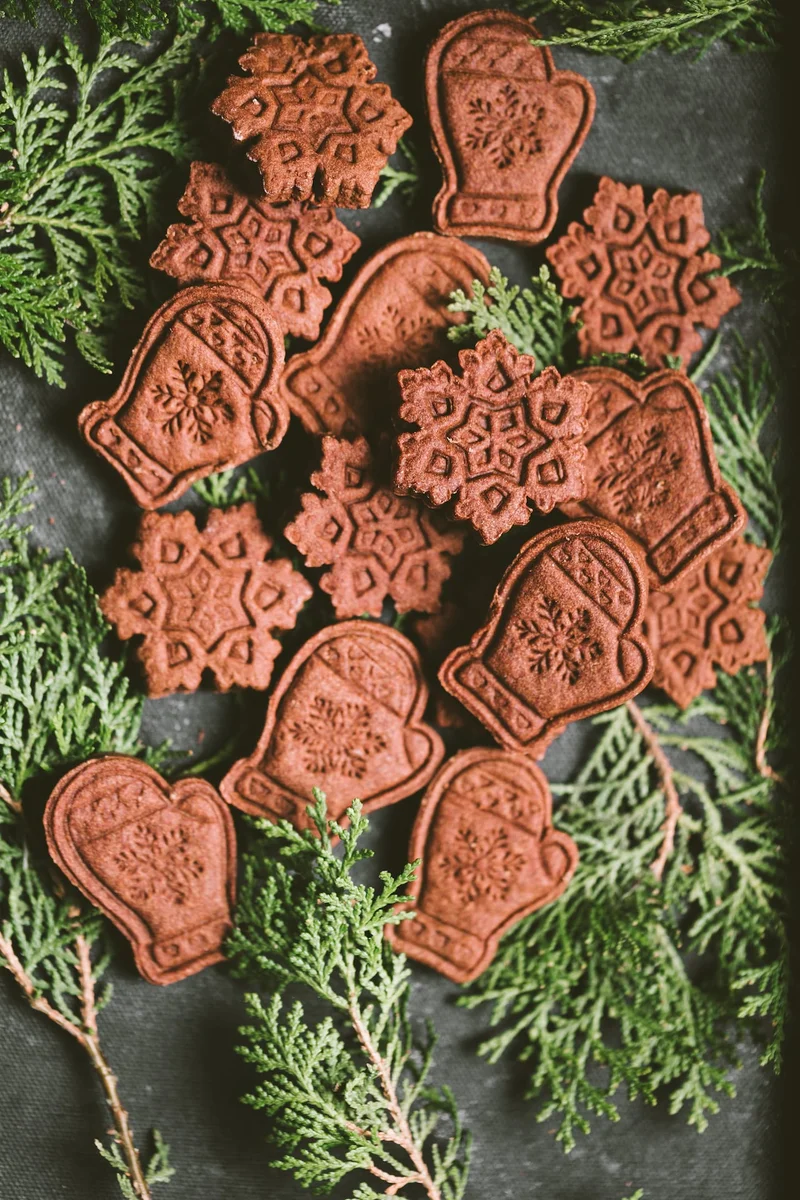
These chocolate sugar cookies are cocoa-rich, lightly scented with orange zest and cut into shapes before baking. They are made without icing, so a cookie stamp or cutter can give them a simple, finished look.
Ingredients
- 170 gunsalted butter, softened (not melted)
- 150 g (¾ cup)white granulated sugar
- 1egg, at room temperature
- 30 ml (2 tablespoons)orange zest
- 190 g (1½ cups)plain flour
- 43 g (½ cup)cocoa powder
- 5 ml (1 teaspoon)baking powder
- A pinchsalt
Instructions
- 1
Whisk butter and sugar
In a mixing bowl, whisk the softened butter with the sugar.
- 2
Add egg and zest
Add the salt, orange zest and egg, then whisk until combined.
- 3
Mix dry ingredients
In a separate bowl, whisk together the flour, cocoa powder and baking powder.
- 4
Form the dough
Sift the dry ingredients into the butter mixture. Fold with a rubber spatula just until a dough forms; do not overmix or knead.
- 5
Chill the dough
Wrap the dough and refrigerate it for 2 hours.
- 6
Roll the dough
Dust the work surface with a little cocoa powder and gently roll the dough to 6 mm (¼ inch) thick.
- 7
Cut the shapes
Cut out shapes with a biscuit cutter and place them on a baking sheet. Return the sheet to the fridge while the oven heats.
- 8
Bake the cookies
Preheat the oven to 175°C (350°F). Bake the cookies on the middle shelf for 10 minutes.
- 9
Cool on the sheet
Take the baking sheet out of the oven and leave the cookies on it for 2 minutes.
- 10
Cool completely
Transfer the cookies to a wire rack and let them cool completely.
What are chocolate sugar cookies?
Sugar cookies are a familiar American-style bake, often cut into shapes and decorated for holidays or other occasions. This version adds cocoa and orange zest to the dough and leaves off the icing.
The method keeps the dough simple: mix, chill, roll and cut. Chilling helps the dough firm up before shaping, while the cocoa and orange bring a chocolate-and-citrus flavour.
Nutrition and macros by portion
The nutrition label shows one serving as written: 62 calories, 1g protein, 8g carbs, 3g fat.
| Portion | Adjustment | kcal | Protein | Carbs | Fat |
|---|---|---|---|---|---|
| Lighter | Smaller cookies | 43 kcal | 1g | 6g | 2g |
| This serving | As written | 62 kcal | 1g | 8g | 3g |
| Hungry | Larger portion | 93 kcal | 2g | 12g | 5g |
The flour and sugar provide most of the carbohydrates, while butter contributes most of the fat; the egg and flour provide a little protein. Pair a cookie with fruit or yoghurt for a more varied snack.
Choosing the ingredients
Soft butter: use butter that yields when pressed but has not melted, so it can be whisked with the sugar. The egg is added at room temperature as specified in the recipe.
Cocoa and orange: cocoa gives the cookies their chocolate flavour, while orange zest adds a fragrant citrus note. Measure the zest and cocoa as listed for a balanced dough.
Making the dough
Dry ingredients: whisk the flour, cocoa powder and baking powder together before sifting them into the butter mixture. This helps distribute them through the dough.
Gentle mixing: fold with a rubber spatula only until the ingredients come together. Overmixing or kneading can make the cookies less tender.
Why the dough chills
Chill time: the recipe calls for 2 hours in the fridge, which firms the dough and makes it easier to roll and cut. Allow for this resting time even though the listed total time is 20 minutes.
Keep the cut shapes cold: return the baking sheet to the fridge while the oven preheats. This gives the shaped cookies a brief chill before baking.
Rolling and cutting
Cocoa dusting: use only a little cocoa powder on the work surface to help prevent sticking without adding a heavy coating.
Even thickness: roll the dough to 6 mm (¼ inch) so the cookies bake at a similar rate. A cookie cutter or stamp press can make the shapes; handle the dough gently.
Checking the bake
Oven position: bake the sheet on the middle shelf at 175°C (350°F) for 10 minutes, as directed. Keep the cookies on the baking sheet for 2 minutes after baking before moving them.
Cooling: transfer them to a wire rack to cool completely. The recipe gives a fixed baking time rather than a visual doneness cue, so avoid extending it without checking the cookies.
Serving the cookies
These cookies are designed to be served plain, without icing, so their cut or stamped shapes remain visible. They work well alongside tea, coffee or a glass of milk.
For a simple dessert plate, serve them with fresh orange segments or berries. Keep any accompaniments separate so the cookies stay crisp.
Recipe notes & tips
- Bring the butter to a soft, workable temperature, but do not melt it.
- Use a little cocoa powder to dust the surface when rolling.
- Roll the dough evenly to 6 mm (¼ inch) for consistent cookies.
- Chill the cut shapes while the oven preheats, as the method directs.
- Leave the cookies on the hot baking sheet for 2 minutes before transferring them.
Variations
- Use a stamp press: imprint the cut shapes before baking for a patterned finish.
- Add more citrus: include a little extra orange zest for a brighter orange note.
- Change the citrus: use finely grated lemon zest in place of the orange zest.
- Serve with icing: add icing after the cookies have cooled if you prefer a decorated finish.
Common mistakes to avoid
- Melting the butter: use softened butter instead, so it can be whisked with the sugar.
- Overworking the dough: stop mixing as soon as it comes together to avoid a tough texture.
- Skipping the chill: refrigerate the dough for the stated 2 hours so it is easier to roll.
- Using too much dusting cocoa: apply only a little to keep the dough from sticking.
- Moving cookies too soon: leave them on the baking sheet for 2 minutes, then transfer to a rack.
How to store
Once completely cool, store the cookies in an airtight container at room temperature. For best texture, eat them within a few days; if they soften, briefly warm them in a low oven and let them cool before serving.
Frequently asked questions
Can I skip chilling the dough?
The method calls for chilling it for 2 hours. This firms the dough and makes it easier to roll and cut, so skipping the rest may make shaping more difficult.
Can I use a cookie stamp?
Yes. The dough can be shaped with a stamp press or a cutter; press the pattern into the cut shapes before baking.
How thick should I roll the dough?
Roll it to 6 mm (¼ inch) thick, as directed. Try to keep the thickness even so the cookies bake consistently.
Why is cocoa powder used on the work surface?
A little cocoa powder helps prevent the chocolate dough from sticking while rolling. Use just enough to make handling easier.
Do these cookies need icing?
No. They are intended to be served plain, with the stamped or cut shapes providing the decoration.
How long do I bake them?
Bake for 10 minutes at 175°C (350°F) on the middle shelf, then leave them on the baking sheet for 2 minutes before transferring them to a rack.
Cook it from the original
This recipe comes from playfulcooking.com. Their page has the author’s own photos, notes and tips — the best place to cook it from.
Open the recipe on playfulcooking.com