
The Softest Pumpkin Rolls
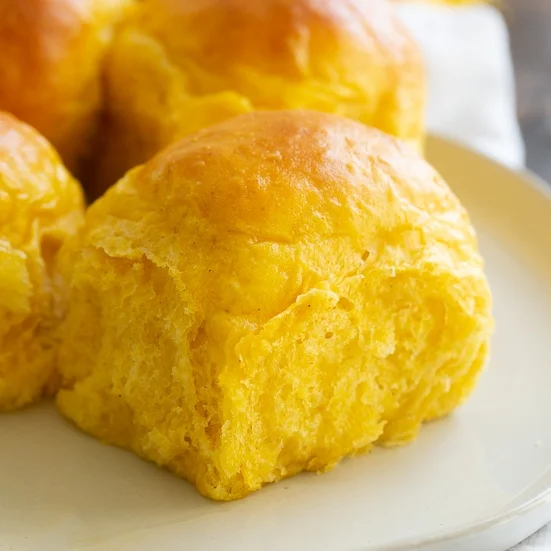
These soft pumpkin rolls are enriched, lightly spiced yeast rolls with a tender, slightly sweet crumb. Make them for a family gathering or a batch of homemade rolls to share; the dough can be shaped as knots, crescents or filled rolls.
Ingredients
- 150 g (¾ cup)sugar
- 170 g (1½ sticks; ¾ cup)unsalted butter
- 710 ml (3 cups)milk
- 245 g (1 cup)pumpkin purée
- 2.5 g (½ teaspoon)cinnamon
- 15 g (1 tablespoon)salt
- 9 g (1 tablespoon) instant yeast, or 2 tablespoons regular yeastyeast
- 4eggs
- 1–1.25 kg (8–10 cups)flour
- 113 g (½ cup)butter, softened, for rolling out the rolls
Instructions
- 1
Scald the milk
Warm the milk in a medium saucepan over medium heat until the edges begin to foam and froth. Do not let it boil; a thin skin may form on the surface.
- 2
Add flavourings
Take the pan off the heat and stir in the sugar, 170 g butter, pumpkin purée, cinnamon and salt. Mix thoroughly and leave the mixture until it is lukewarm.
- 3
Mix in yeast
Stir in the yeast, then add the eggs and mix until combined.
- 4
Make the dough
Put the flour in a large bowl. Pour in the milk mixture and stir until a soft dough comes together. Start with about 1 kg flour if needed, reserving some for shaping; the dough should remain slightly sticky rather than firm like bread dough.
- 5
Let it rise
Cover the bowl with a towel or cling film and leave the dough to rise for 1 hour.
- 6
Divide and flour
Press down the dough and divide it into 2 portions. Flour the work surface generously with the remaining 125–250 g flour, turn the dough out onto it and turn it over so it is coated on all sides and no longer sticky.
- 7
Shape the rolls
Work with one portion at a time. For knots, roll the dough to 1.5 cm thick, spread softened butter over half, fold the unbuttered half over it and press to seal. Cut into 2.5 cm-wide strips and tie each into a knot. For crescents, divide the dough into 4 pieces and roll each into a circle; butter 2 circles, place an unbuttered circle on each, press gently and cut into wedges, then roll each wedge tightly from the wide end. Alternatively, cut the dough into balls, flatten them, add a small dot of butter, pinch the edges together and roll into balls.
- 8
Proof the rolls
Place the shaped rolls on a lightly greased baking sheet and cover with a towel. Leave them to rise for 1–2 hours, or until doubled in size.
- 9
Bake until golden
Bake at 175°C (350°F) for 18–20 minutes, until golden brown.
What are pumpkin rolls?
Pumpkin rolls are soft, enriched yeast rolls flavoured with pumpkin purée and cinnamon. This home-style version uses a tender, slightly sticky dough and gives you a choice of knot, crescent or filled-ball shapes.
The method builds on familiar yeast-roll techniques: scalded milk enriches the dough, while a rise before and after shaping gives it time to become airy.
Nutrition and macros by portion
The nutrition label shows one serving as written: 188 calories, 5g protein, 30g carbs, 5g fat.
| Portion | Adjustment | kcal | Protein | Carbs | Fat |
|---|---|---|---|---|---|
| Lighter | Use less butter | 132 kcal | 4g | 21g | 4g |
| This serving | As written | 188 kcal | 5g | 30g | 5g |
| Hungry | Serve two rolls | 282 kcal | 8g | 45g | 8g |
The flour and sugar provide most of the carbohydrate, while butter contributes much of the fat. Eggs and milk supply some protein, alongside a smaller amount from the flour. Pair a roll with a protein-rich main and vegetables for a more balanced plate.
Why scald the milk?
Warm the milk until it froths at the edges, but stop before it boils. The recipe then has you stir in the sugar, butter, pumpkin, cinnamon and salt while the milk is still hot.
Let the mixture cool to lukewarm before adding yeast and eggs. This helps keep the yeast from meeting a very hot liquid, and makes the mixture easier to combine.
Keep the dough soft
Flour choice: the recipe gives a broad range of 8–10 cups, and notes that some of the flour may be saved for shaping. Add enough to bring the mixture together, but avoid making the dough firm.
Sticky dough: a little tackiness is expected here. Flour your hands and work surface during shaping rather than adding all the reserved flour to the bowl.
Choose a shape
Knots: fold butter between two layers of rolled dough, cut strips and tie them into knots. Press the folded edge to seal before cutting.
Crescents: layer buttered and unbuttered dough circles, cut them into wedges and roll from the wide end. For a simpler shape, pinch a small piece of butter inside each flattened dough ball.
Watch the rises
First rise: cover the bowl and leave the dough for 1 hour. It should have time to expand before you press it down and divide it.
Second rise: the shaped rolls need another 1–2 hours, or until doubled in size. The dough’s appearance is the cue given by the recipe, so allow for the longer end of the range if needed.
Check for doneness
Bake the rolls at 175°C (350°F) for 18–20 minutes, following the recipe’s timing. Look for a golden-brown surface as the doneness cue.
The rolls are shaped in several ways, so arrange them on a lightly greased baking sheet with enough room to rise without touching.
What to serve alongside
Serve the rolls warm with a savoury meal such as soup or a roast dinner, where their gentle sweetness complements the rest of the plate.
They also work at breakfast or as a snack with a little extra butter. Since the recipe makes 32 rolls, they are convenient for sharing or serving across several meals.
Recipe notes & tips
- Begin with the lower end of the flour range and keep some back for the work surface.
- Wait until the milk mixture is lukewarm before mixing in the yeast and eggs.
- Butter the dough evenly when making knots or crescents so the layers are easy to fold.
- Cover the shaped rolls during their second rise to prevent the surface from drying out.
- Set a timer for 18 minutes and check for a golden-brown finish before extending the bake.
Variations
- Make knots: use the folded, buttered dough method and tie each strip loosely.
- Make crescents: layer circles of dough, cut into wedges and roll from the wide end.
- Make filled balls: add a small dot of softened butter to each flattened dough piece before sealing.
- Use instant yeast: follow the recipe’s preferred option of 1 tablespoon instant yeast.
- Use regular yeast: substitute 2 tablespoons regular yeast as specified in the ingredient list.
Common mistakes to avoid
- Boiling the milk: stop when the edges froth so the milk does not boil over.
- Adding yeast to hot liquid: let the milk mixture cool until lukewarm first.
- Adding too much flour: keep the dough slightly sticky and reserve flour for shaping.
- Skipping the second rise: wait until the shaped rolls have doubled before baking.
- Overbaking: check at 18 minutes and take the rolls out when golden brown.
How to store
Let the rolls cool, then store them in an airtight container at room temperature for up to 2 days. Reheat briefly in a low oven until warmed through; freeze extra rolls in a sealed freezer-safe bag for longer storage.
Frequently asked questions
Can I use active dry yeast?
Yes. The recipe specifies 2 tablespoons of regular yeast in place of 1 tablespoon of instant yeast.
How much flour should I use?
The recipe gives 8–10 cups, roughly 1–1.25 kg depending on the flour. Add enough for a soft, slightly sticky dough and keep some for rolling and shaping.
Can I choose just one shape?
Yes. Use whichever shaping option suits you: knots, crescents or butter-filled balls. The recipe’s dough and proofing method applies to all three.
How do I know the rolls have risen enough?
After shaping, leave them covered for 1–2 hours, until they have doubled in size.
What temperature and time should I bake them?
Bake at 175°C (350°F) for 18–20 minutes, until golden brown.
Can I make these ahead?
You can bake the rolls ahead and freeze them once cool. Thaw and warm them before serving.
Cook it from the original
This recipe comes from ohsweetbasil.com. Their page has the author’s own photos, notes and tips — the best place to cook it from.
Open the recipe on ohsweetbasil.com