
Grilling Fish in Foil
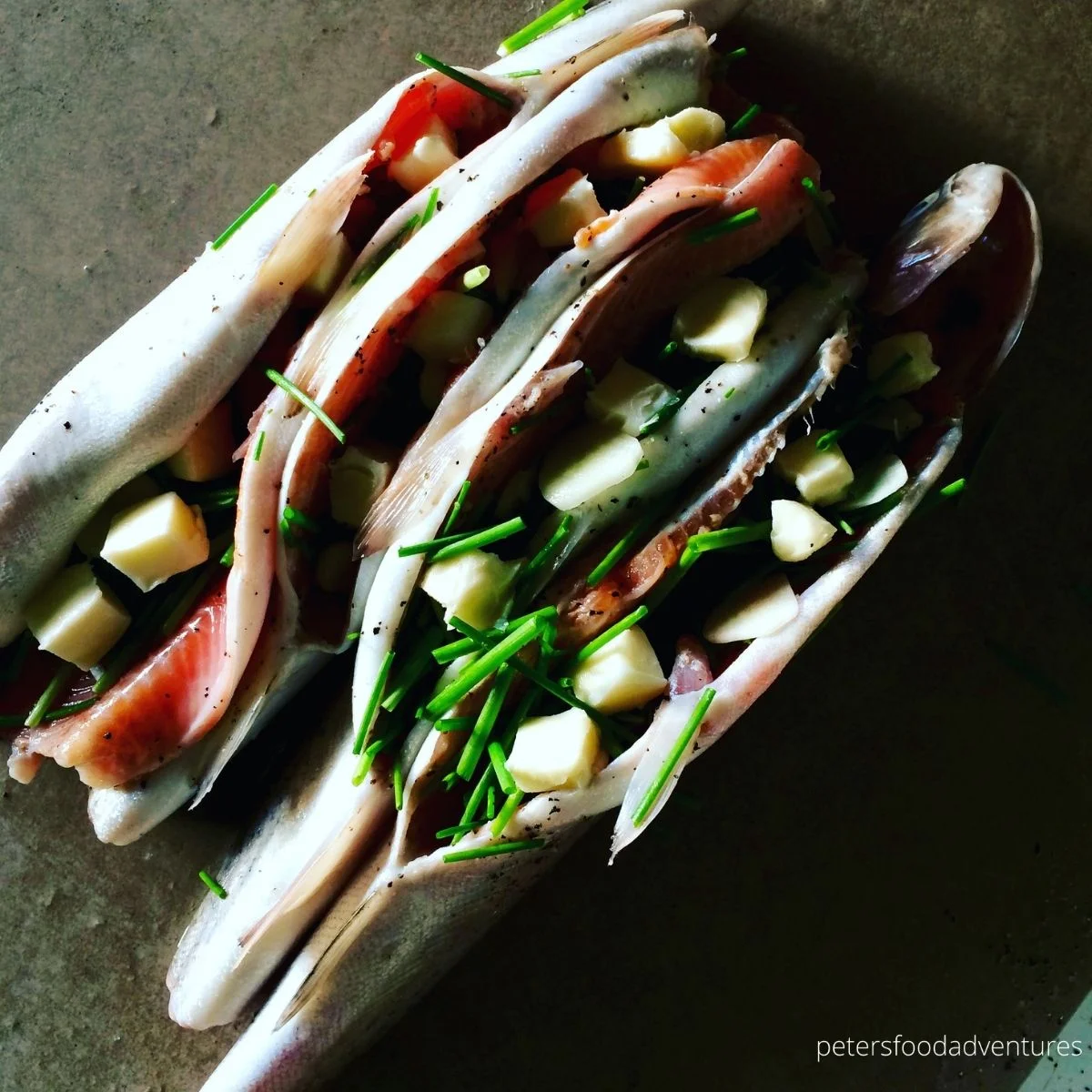
Fish and vegetables cook in separate foil parcels with lemon, garlic and butter, over hot coals or in the oven. The parcels make a straightforward meal for camping or a barbecue, with minimal washing-up.
Ingredients
- 4–6 smalltrout (or fish fillets)
- 2lemons (1 sliced and 1 for squeezing)
- 113 g (½ cup)butter, cubed
- 2 clovesgarlic, sliced
- 1fresh chives (or fresh dill)
- to tastesalt and pepper
- 1 mixcourgette, carrots, onion and red pepper, chopped
- 2–3 mediumpotatoes, cut into thin wedges
- 3 clovesgarlic, sliced
- 113 g (½ cup)butter, cubed
- to tastesalt and pepper
Instructions
- 1
Prepare the heat
For charcoal cooking, arrange the briquettes in a pyramid and light them according to the instructions. After about 15 minutes, when they are white, spread them evenly for cooking. Alternatively, preheat the oven to 200°C (400°F).
- 2
Prepare the aromatics
Thinly slice 1 lemon and keep the other for squeezing. Cut the garlic into slivers and chop the chives.
- 3
Cube the butter
Cut the butter into small cubes to put inside whole fish or on top of fillets.
- 4
Prepare the foil
Cut foil sheets larger than the fish. Use thick foil for grilling, or double up the foil if it is thin.
- 5
Season the fish
Squeeze lemon juice into the cavity of whole fish or over the fillets. Season lightly with salt and pepper.
- 6
Add the flavourings
Put chives and garlic slices inside the trout cavities, then add several cubes of butter to each fish.
- 7
Seal the parcels
Place one fish in the centre of each foil sheet and lay 2–3 lemon slices on the skin side of the trout. Fold the long sides loosely together and crimp the edges, then fold and wrap the short ends to seal each parcel.
- 8
Cook the fish
Cook the parcels on the grill or on a baking sheet in the oven for about 15–20 minutes. The fish is ready when the flesh is opaque and flakes easily with a fork.
- 9
Prepare the vegetables
Chop the vegetables and cube the butter. Cut the potatoes into thin wedges so they have time to cook through.
- 10
Prepare more foil
Cut large pieces of foil for the vegetables. Use thick foil for grilling, or double the layers if the foil is thin.
- 11
Seal the vegetables
Put a mixture of vegetables and garlic in the centre of each piece of foil. Add several cubes of butter and season with salt and pepper. Fold the long sides loosely together and crimp the edges, then fold and wrap the short ends to seal the parcels.
- 12
Cook the vegetables
Cook the parcels on the grill or on a baking sheet in the oven for about 30 minutes. Cooking time depends on the thickness and firmness of the vegetables; check them after 20 minutes to see whether they need more time.
What is fish grilled in foil?
This is a simple Canadian-style outdoor meal: fish and vegetables are wrapped separately in foil and cooked over coals, on a barbecue or in the oven. Foil parcels are handy for camping because the ingredients cook together and the fish is easy to serve.
The fish parcel combines lemon, garlic, herbs and butter, while the vegetables get their own seasoning and butter. Keeping them separate lets you check the fish and vegetables on their different cooking schedules.
Nutrition and macros by portion
The nutrition label shows one serving as written: 640 calories, 35g protein, 30g carbs, 45g fat.
| Portion | Adjustment | kcal | Protein | Carbs | Fat |
|---|---|---|---|---|---|
| Lighter | Use less butter | 448 kcal | 25g | 21g | 31g |
| This serving | As written | 640 kcal | 35g | 30g | 45g |
| Hungry | Add another potato | 960 kcal | 53g | 45g | 68g |
The fish provides most of the protein, while the potatoes and vegetables contribute most of the carbohydrates and fibre. Butter supplies much of the fat, so a practical way to balance the plate is to serve a generous amount of the vegetables alongside the fish.
Choose the fish and herbs
Whole trout can be filled with garlic, chives and butter; fish fillets can be seasoned and topped instead. Fresh dill is offered as an alternative to chives, so use whichever herb you have.
Cut the vegetables evenly
Potato wedges: slice them thinly so they cook in time alongside the other vegetables.
Mixed vegetables: chop the courgette, carrots, onion and red pepper into similar-sized pieces where possible, so they soften at a similar pace.
Seal the parcels loosely
Leave a little space around the fish rather than wrapping the foil tightly against it. Crimp the long edges together, then fold in the short ends to make a closed parcel that can be opened carefully for checking.
Check for doneness
Fish: begin checking after 15 minutes of cooking. It is ready when the flesh has turned opaque and separates easily with a fork.
Vegetables: check the parcels after 20 minutes, as the time depends on how thickly the vegetables are cut and how firm they are. The recipe allows about 30 minutes in total.
Plan the cooking time
The fish cooks in about 15–20 minutes, while the vegetables may need about 30 minutes. Start the vegetables first if you want both parcels ready together, and check each parcel independently rather than relying on one timing for everything.
Serve from the parcels
Open the parcels carefully, as steam will escape. Serve the fish with the buttery vegetable and potato mixture, spooning any juices from the foil over the food.
Recipe notes & tips
- Use foil larger than the fish so there is enough room to fold and seal the edges.
- Double thin foil for grilling to reduce the chance of the parcel tearing.
- Keep the potato wedges thin, as thicker pieces may need more cooking time.
- Use separate parcels for fish and vegetables so you can check each one without disturbing the other.
- Open a parcel away from your face and hands to avoid the escaping steam.
Variations
- Try dill: use fresh dill instead of chives in the fish parcel.
- Use fillets: place the butter and aromatics over the fillets rather than filling a fish cavity.
- Change the vegetables: use a different mixture while keeping the potato wedges thin.
- Add extra lemon: serve the cooked fish with more lemon juice squeezed over it.
- Cook in the oven: place the sealed parcels on a baking sheet and use the stated oven temperature.
Common mistakes to avoid
- Thick potato wedges: they may not cook in time; slice them into thin wedges.
- Thin foil on the grill: it can tear more easily; use thick foil or double the layers.
- Overfilled parcels: they are harder to seal; leave room to fold the foil edges together.
- Cooking fish by time alone: thickness can affect doneness; check for opaque flesh that flakes easily.
- Skipping the vegetable check: the mixture may need longer than 20 minutes; check then and continue cooking if needed.
How to store
Refrigerate leftover fish and vegetables in covered containers within 2 hours and use within 2 days. Reheat until steaming hot, using a covered dish in the oven or a microwave-safe container; the fish may become drier when reheated.
Frequently asked questions
Can I use fish fillets instead of whole trout?
Yes. The recipe allows fish fillets; squeeze lemon over them, season, then add the butter and aromatics on top before sealing the parcels.
Can I cook these parcels in the oven?
Yes. Preheat the oven to 200°C (400°F) and place the parcels on a baking sheet. Cook the fish for about 15–20 minutes and the vegetables for about 30 minutes, checking the vegetables after 20 minutes.
How do I know when the trout is cooked?
The flesh should be opaque and flake easily when tested with a fork. Start checking after about 15 minutes.
Why do the vegetables need longer than the fish?
The potatoes and other vegetables can take longer to soften than the fish takes to cook. Their cooking time also depends on how thickly they are cut and how firm they are.
Can I use dill instead of chives?
Yes. Fresh dill is given as an alternative to chives for the fish parcels.
Cook it from the original
This recipe comes from petersfoodadventures.com. Their page has the author’s own photos, notes and tips — the best place to cook it from.
Open the recipe on petersfoodadventures.com