
How to Boil Eggs
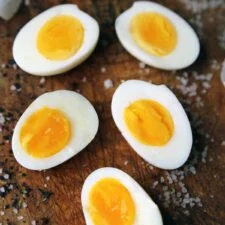
Boiled eggs are cooked in their shells until the yolks reach your preferred consistency, from runny to firm. This simple stovetop method uses residual heat and an ice bath to make the timing easier to control.
Ingredients
- 4 to 6large eggs
- enough to cover the eggswater
- 15 ml (1 tablespoon)white vinegar or apple cider vinegar
Instructions
- 1
Cover the eggs
Place the eggs gently in a medium-sized pot and pour in enough cool water to come just above them.
- 2
Bring to boil
Add the vinegar and set the heat to medium-high. Bring the water to a boil.
- 3
Cover the pot
As soon as the water boils, switch off the heat and put a lid on the pot.
- 4
Set the timing
Leave the eggs in the covered pot for 10 minutes for hard-boiled eggs, 6 to 7 minutes for medium-soft yolks, or 4 to 5 minutes for runny yolks.
- 5
Cool the eggs
Move the eggs to a bowl of ice and cold water. Leave them for 5 minutes, or until they have cooled to room temperature.
- 6
Peel and serve
Peel the eggs and serve.
What are boiled eggs?
Boiled eggs are eggs cooked in their shells in hot water, with the yolk texture determined by the cooking time. Although this recipe is labelled French, the technique is a simple preparation used in kitchens across many cuisines.
This version brings the water to a boil, then relies on the covered pot's residual heat to cook the eggs. An ice bath cools them promptly so they are easier to handle and the cooking slows.
Nutrition and macros by portion
The nutrition label shows one serving as written: 72 calories, 6g protein, 0g carbs, 5g fat.
| Portion | Adjustment | kcal | Protein | Carbs | Fat |
|---|---|---|---|---|---|
| Lighter | Serve with extra vegetables | 50 kcal | 4g | 0g | 3g |
| This serving | As written | 72 kcal | 6g | 0g | 5g |
| Hungry | Add another egg | 108 kcal | 9g | 1g | 7g |
The eggs provide most of the protein and fat, with only a small amount of carbohydrate. To make a more filling plate, serve an egg with wholemeal toast and vegetables such as tomatoes or leafy greens.
Choosing the eggs and vinegar
Egg size: The recipe calls for large eggs, and the timing is written for that size. If using a different size, the yolk may not set at quite the same rate.
Vinegar: White vinegar or apple cider vinegar both work here. It is added to the water as the pot heats.
Getting the timing right
Runny yolks: Leave the eggs in the covered pot for 4 to 5 minutes after switching off the heat.
Medium-soft yolks: Allow 6 to 7 minutes for a less liquid centre.
Firm yolks: Leave the eggs for 10 minutes for hard-boiled results. Start timing as soon as the heat is turned off and the pot is covered.
Why the ice bath matters
Cool the eggs in a bowl filled with ice and cold water for 5 minutes, or until they reach room temperature. The rapid cooling helps stop the cooking and makes the shells more comfortable to handle.
Use a bowl large enough to keep the eggs submerged. If the water warms noticeably, add more ice.
Peeling and serving
Peel the eggs once they have cooled enough to handle. Work carefully around the shell, especially if you have made runny or medium-soft eggs.
Serve them on their own, or alongside toast, salad or cooked vegetables for a more complete meal.
Recipe notes & tips
- Arrange the eggs in a single layer so they are easy to cover with water.
- Use cool water to start, as directed, rather than adding the eggs to already boiling water.
- Have the ice bath ready before the cooking time ends.
- Choose one of the listed timings based on how firm you want the yolk.
- Cool the eggs before peeling to make them easier to handle.
Variations
- Runny yolks: Use the 4 to 5 minute resting time for a soft centre.
- Medium-soft yolks: Leave the covered eggs for 6 to 7 minutes.
- Firm yolks: Choose the 10 minute timing for hard-boiled eggs.
- Apple cider vinegar: Use it in place of white vinegar.
- White vinegar: Choose it instead if that is what you have to hand.
Common mistakes to avoid
- Starting with boiling water: Begin with cool water as the method specifies.
- Guessing the timing: Set a timer as soon as you cover the pot.
- Lifting the lid early: Keep the pot covered while the eggs rest.
- Skipping the ice bath: Transfer the eggs to ice and cold water to cool them promptly.
- Peeling while too hot: Wait until the eggs have cooled enough to handle.
How to store
Keep unpeeled boiled eggs in the refrigerator and use them within a few days. Store them in a covered container; peeled eggs should also be refrigerated. Serve cold or warm gently in hot water rather than microwaving them in their shells.
Frequently asked questions
How long should I leave the eggs for a runny yolk?
Leave them in the covered pot for 4 to 5 minutes after turning off the heat.
How do I get a medium-soft yolk?
Use the 6 to 7 minute resting time, then cool the eggs in the ice bath.
How long does it take to make hard-boiled eggs?
The method calls for 10 minutes in the covered pot after the water has boiled and the heat is off.
Do I need to add vinegar?
The recipe includes 15 ml of white vinegar or apple cider vinegar. Either option can be used.
Why put the eggs in ice water?
The ice bath cools the eggs after cooking and helps slow further cooking. Leave them in it for 5 minutes or until they reach room temperature.
Can I use fewer than six eggs?
Yes. The ingredient list gives a range of 4 to 6 large eggs; keep them in a single layer and cover them with water.
Cook it from the original
This recipe comes from pickledplum.com. Their page has the author’s own photos, notes and tips — the best place to cook it from.
Open the recipe on pickledplum.com