
Pibil Picadillo
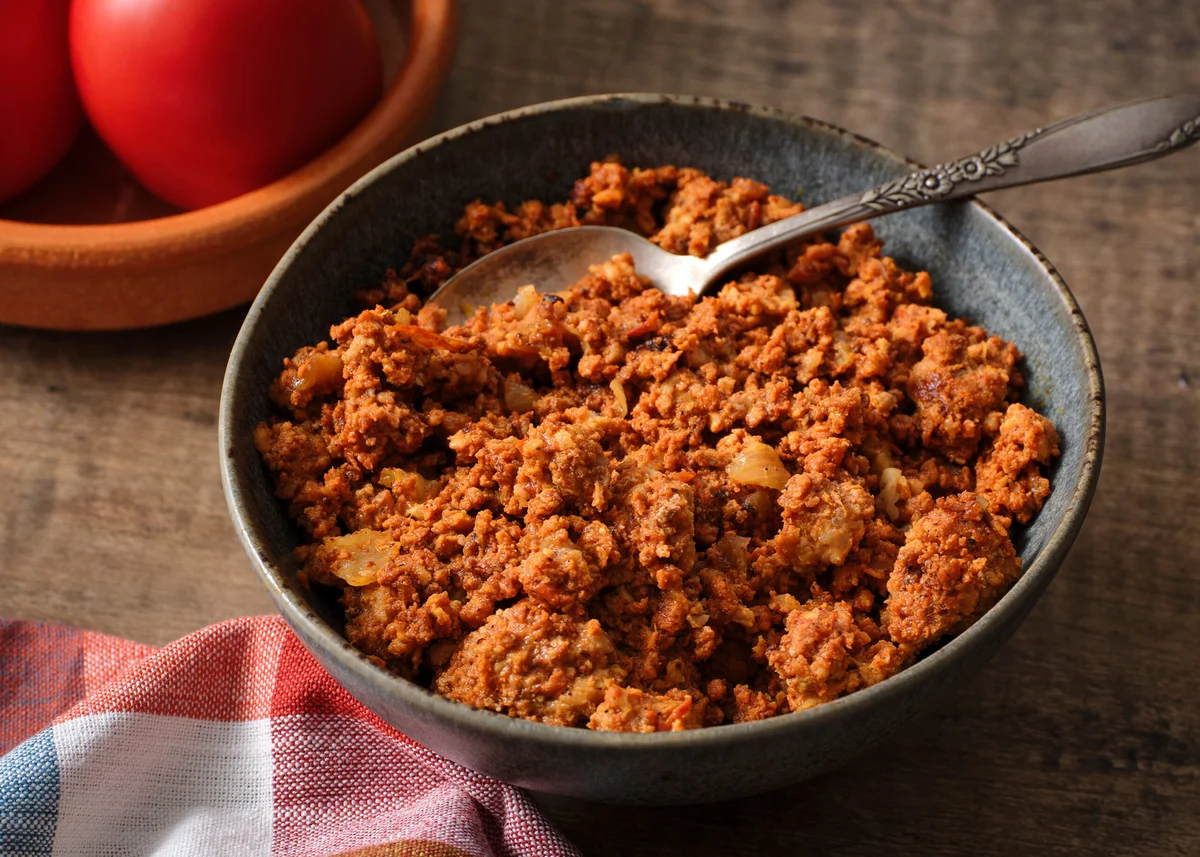
Pibil picadillo is minced pork cooked with a smooth, tangy achiote sauce, onion and garlic. Make it as a quick filling for tacos or tortas, or serve it over rice and beans.
Ingredients
- 1ripe Roma tomato
- 1 tablespoon (15 ml)achiote paste, cut or broken into small pieces
- 3 tablespoons (45 ml)bitter orange juice, or 1 tablespoon (15 ml) each lime juice, orange juice and white distilled vinegar
- 1 teaspoonkosher salt or coarse sea salt
- 454 g (1 pound)ground pork, or finely chopped pork loin or tenderloin
- 2 tablespoons (30 ml)vegetable oil
- About 110 g (3/4 cup)white onion, finely chopped
- 1garlic clove, peeled and finely chopped
Instructions
- 1
Cook the tomato
Put the tomato in a small saucepan and cover it with water. Bring to the boil, then cook over medium heat for 7 to 8 minutes, until softened and cooked through but still holding its shape. Lift it out with a slotted spoon and put it in a blender with the achiote paste, bitter orange juice or its substitute, and salt. Blend until completely smooth.
- 2
Coat the pork
Put the pork in a bowl, pour over the achiote mixture and mix until evenly combined. Set aside.
- 3
Cook the picadillo
Heat the oil in a large frying pan over medium-high heat. When hot, add the onion and cook for a couple of minutes, until softened and beginning to brown. Add the garlic, stir and cook for 10 to 15 seconds, until fragrant. Add the pork mixture and cook for about 6 to 8 minutes, breaking it up with one or two wooden spatulas. Let the pork release its juices, then continue cooking until the liquid has evaporated and the meat begins to brown. Turn off the heat and set aside.
- 4
Choose how to serve
Use the picadillo as a topping for salbutes, tuck it into tortas or tacos, or spoon it over rice and/or beans.
What is pibil picadillo?
Pibil refers to a style of cooking associated with the Yucatán Peninsula, where achiote and citrus are familiar partners in richly coloured, savoury dishes. Picadillo is a minced or finely chopped mixture; here, pork is coated in an achiote sauce and cooked in a frying pan.
This version keeps the method practical by blending a softened tomato with achiote and bitter orange, then reducing the pork mixture on the hob. The result can be used in several ways, from a taco filling to a topping for rice.
Nutrition and macros by portion
The nutrition label shows one serving as written: 245 calories, 14g protein, 4g carbs, 19g fat.
| Portion | Adjustment | kcal | Protein | Carbs | Fat |
|---|---|---|---|---|---|
| Lighter | Use lean pork, less oil | 172 kcal | 10g | 3g | 13g |
| This serving | As written | 245 kcal | 14g | 4g | 19g |
| Hungry | Add rice and beans | 368 kcal | 21g | 6g | 29g |
The pork supplies most of the protein and fat, while the onion and tomato contribute a small amount of carbohydrate. Oil adds further fat, and the achiote mixture and added salt provide much of the sodium. Serve it with beans and vegetables, or with a modest portion of rice and a fresh salad, to make a more rounded plate.
Making the achiote sauce
Soft tomato: cook it until tender, then blend it with the other sauce ingredients. It should be soft enough to puree smoothly but not so overcooked that it falls apart in the pan.
Citrus: bitter orange gives the sauce its distinctive tang. If it is unavailable, the stated mix of lime juice, orange juice and white distilled vinegar provides a substitute.
Coating the pork
Even coverage: mix the achiote puree thoroughly through the pork before it goes into the pan. This helps distribute the seasoning and colour throughout the meat.
Pork choice: ground pork is convenient, while finely chopped loin or tenderloin gives a different, more distinct texture. Keep the pieces small enough to cook through evenly.
Getting the texture right
Break it up: use a wooden spatula or two to separate the pork as it cooks. Smaller pieces make the picadillo easier to spoon into tacos or onto salbutes.
Watch the liquid: the meat releases juices as it cooks, so the pan may look wet at first. Keep cooking until that liquid has dried out and the pork starts to brown.
Timing the aromatics
Onion first: give the onion a couple of minutes over medium-high heat, until softened and starting to brown. This lays a savoury base for the pork.
Garlic briefly: stir it in just before the meat and cook for only 10 to 15 seconds, until fragrant. Adding it at this stage helps it flavour the oil without giving it a long time to scorch.
Serving the picadillo
Salbutes and tacos: spoon the picadillo into or over them for a warm, savoury filling. Tortas are another option when you want a sandwich-style meal.
Rice and beans: serve it over either or both for a simple plate. The mild, starchy sides work well with the tangy achiote sauce.
Recipe notes & tips
- Break the achiote paste into small pieces before blending so it incorporates evenly.
- Use a slotted spoon to transfer the tomato, leaving its cooking water behind.
- Scrape down the blender if any achiote paste sticks to the sides.
- Preheat the frying pan before adding the oil and onion.
- Cook off the meat juices before deciding whether the pork needs more browning.
- Prepare the tortillas, salbutes or rice while the picadillo cooks.
Variations
- Use tenderloin: finely chop it for a leaner, more defined meat texture.
- Make the citrus substitute: combine lime juice, orange juice and white distilled vinegar in equal amounts.
- Serve in tacos: spoon the hot picadillo into warm tortillas.
- Pair with beans: add a side of beans for a more substantial meal.
- Top salbutes: use the picadillo as a savoury topping.
Common mistakes to avoid
- Undercooking the tomato: blend only after it has softened for 7 to 8 minutes.
- Leaving achiote lumps: blend the sauce until completely smooth.
- Adding garlic too early: cook it only for 10 to 15 seconds before adding the pork.
- Stopping while the pan is wet: continue cooking until the released liquid has dried out.
- Leaving the pork in large clumps: break it up as it cooks so it browns more evenly.
How to store
Cool leftovers promptly and refrigerate in a covered container for up to 3 days. Reheat in a frying pan over medium heat until steaming hot throughout, stirring occasionally; add a small splash of water if it seems dry.
Frequently asked questions
Can I use a different cut of pork?
Yes. The recipe allows finely chopped pork loin or tenderloin instead of ground pork. Chop it finely so it cooks evenly.
What can I use instead of bitter orange juice?
Use 1 tablespoon each of lime juice, orange juice and white distilled vinegar, as specified in the recipe.
How do I know when the picadillo is done?
The released liquid should have cooked away, and the pork should begin to brown. Make sure the pork is cooked through before serving.
What should I serve with pibil picadillo?
Use it on salbutes, in tortas or tacos, or spoon it over rice and/or beans.
Can I make the sauce ahead?
You can blend the tomato, achiote, citrus and salt ahead and keep the mixture covered in the refrigerator. Mix it with the pork when you are ready to cook.
Cook it from the original
This recipe comes from patijinich.com. Their page has the author’s own photos, notes and tips — the best place to cook it from.
Open the recipe on patijinich.com