
Roasted Pork Shoulder (brined + orange flavored)
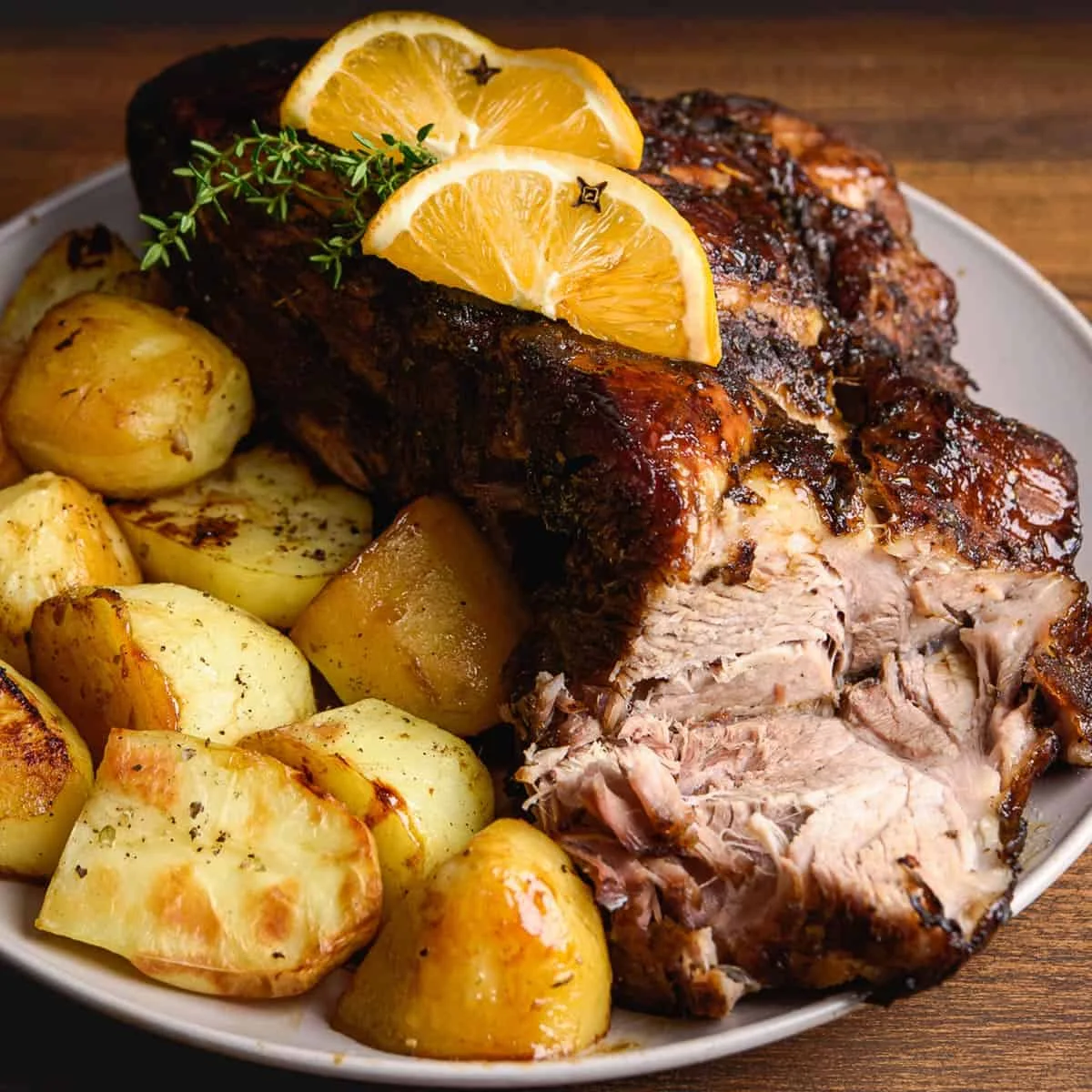
This Greek-style pork shoulder is brined overnight, then slow-roasted beneath a cover with wine, orange and herbs. A short, hotter finish adds a glossy balsamic-orange glaze and crisp-edged potatoes.
Ingredients
- 2 kg (4.4 lb)boneless pork shoulder
- 3–4 sprigsthyme
- 3–4 sprigssage
- 100 mlred wine
- 1 orangeorange, juiced (keep the squeezed halves)
- 2 tablespoonsbalsamic vinegar
- 1 tablespoonhoney
- 55 mlfresh orange juice
- 1 litre (4 cups)lukewarm water
- 375 ml (1½ cups)white wine
- 4 tablespoonskosher salt
- 6allspice berries
- 6cloves
- 5bay leaves
- 6–7peppercorns
- 1 stickcinnamon
- 2–3 sprigsthyme
- 20 g (0.7 oz)grape molasses or molasses
- 1 teaspoonbalsamic vinegar
- ½ teaspoonground allspice
- ½ teaspoongarlic powder
- 1 teaspoonmustard powder
- 1 teaspoondried marjoram, or thyme instead
- 800 g (28 oz)potatoes, peeled and cut into 5 cm (2-inch) pieces
- 1 teaspoondried marjoram
Instructions
- 1
Trim the pork
The night before cooking, trim most of the surface fat from the pork, leaving a little.
- 2
Prepare the brine
Put the pork in a glass or plastic bowl that fits it fairly snugly. Add all the brine seasonings except the salt. Dissolve the salt in 1 litre of lukewarm water, pour it over the pork, then add the white wine.
- 3
Chill overnight
Refrigerate the pork in the brine overnight, or for up to 2 days.
- 4
Heat the oven
Remove the pork from the brine and pat it dry with paper towels. Preheat the oven to 160°C (320°F).
- 5
Season the pork
Put the pork in a roasting pan, on its rack if it has one. Mix the rub ingredients in a small bowl, then spread the mixture over the top and sides of the meat.
- 6
Add aromatics
Put the thyme and sage sprigs and the squeezed orange halves in the pan. Pour in the red wine and orange juice.
- 7
Cover the pan
Cover with the roasting-pan lid, if available. Otherwise, cover with a large piece of parchment paper and secure foil over it, sealing the sides well.
- 8
Roast slowly
Bake, covered, for 2 hours.
- 9
Boil the potatoes
Meanwhile, if serving potatoes, boil them in salted water for 10 minutes. Lift them out with a slotted spoon and set aside in a bowl.
- 10
Raise the heat
Take the covered pan out of the oven and raise the temperature to 220°C (428°F). Leave the oven to heat for 10 minutes.
- 11
Drain the juices
Uncover the pork, keeping the parchment and foil. Carefully drain most of the liquid from the pan into a bowl, leaving only a very thin layer across the pan.
- 12
Add the potatoes
Arrange the potatoes around the pork, or beneath the rack if the pan has one. Skim some fat from the surface of the drained liquid and spoon about 6–7 tablespoons over the potatoes. Season them very lightly with table salt, pepper and 1 teaspoon of dried marjoram.
- 13
Roast the potatoes
Return the pan to the oven and roast for 10 minutes.
- 14
Mix the glaze
Meanwhile, stir together the 2 tablespoons of balsamic vinegar, 1 tablespoon of honey and 55 ml of fresh orange juice.
- 15
Glaze the pork
Take the pan out of the oven and drizzle half of the glaze over the pork. Return it to the oven and roast for 6 minutes.
- 16
Finish the glaze
Remove the pan again and drizzle the remaining glaze over the meat. Roast for another 6 minutes, then take the pan out.
- 17
Rest the pork
If you added potatoes, carefully move the pork to a serving plate with two large spatulas, or lift it gently using the parchment and foil. Cover the meat again. If you did not add potatoes, leave the pork in the pan and cover it there. Rest for 30 minutes.
- 18
Crisp the potatoes
Lower the oven to 200°C (392°F). Return the pan with the potatoes to the oven and roast until their edges are crisp. Toss and press them with a spatula if you wish to crisp them further.
- 19
Slice and serve
Cut the pork into thin slices and serve with the potatoes. A red wine sauce also goes well with the dish.
What is Greek-style roasted pork shoulder?
Pork shoulder is a well-marbled cut that suits a long, gentle roast. In this Greek-inspired version, an overnight brine seasons the meat, while wine, orange and herbs perfume the roasting pan.
The method finishes the pork with a sweet-sour balsamic and orange glaze. Potatoes roast alongside it in some of the pan fat, making a substantial one-pan accompaniment.
Nutrition and macros by portion
The nutrition label shows one serving as written: 705 calories, 96g protein, 30g carbs, 14g fat.
| Portion | Adjustment | kcal | Protein | Carbs | Fat |
|---|---|---|---|---|---|
| Lighter | More greens, fewer potatoes | 493 kcal | 67g | 21g | 10g |
| This serving | As written | 705 kcal | 96g | 30g | 14g |
| Hungry | Larger pork portion | 1058 kcal | 144g | 45g | 21g |
Pork shoulder supplies most of the protein, while the potatoes, honey and molasses contribute carbohydrates. The pork and the fat spooned over the potatoes are the main sources of fat. Balance a serving with a generous portion of green vegetables or salad.
Why brine the pork?
Salt and time: the pork sits in a salt, water and white wine brine with whole spices and aromatics. Use a close-fitting glass or plastic bowl so the meat is immersed; refrigerate it overnight or for up to 2 days.
Before roasting: take the pork out of the brine and pat it dry. Leaving just a little fat on the surface gives the meat some protection as it cooks.
Build flavour in the pan
Orange and herbs: the squeezed orange halves go into the pan with thyme and sage, while orange juice and red wine add liquid around the meat. The result is fragrant cooking liquid that can be drained and used for the potatoes.
The rub: grape molasses, balsamic, allspice, garlic, mustard and dried herbs bring sweet, tangy and savoury notes to the surface. Spread it over the top and sides for even coverage.
Keep the roast covered
A well-sealed cover holds moisture in during the 2-hour roast at 160°C. Use the lid if your pan has one; otherwise, make a parchment-and-foil cover and secure it around the edges.
After the covered roast, save the parchment and foil when uncovering the pan. The recipe uses the cover again to protect the meat while it rests.
Glaze in two rounds
The pork cooks uncovered at a higher temperature after the pan liquid is mostly drained. Brush or drizzle on half of the balsamic, honey and orange mixture, roast for 6 minutes, then add the rest and roast for 6 minutes more.
Staging the glaze this way gives it two chances to coat the meat during the final roast. Take care when handling the hot pan and liquid.
Get crisp-edged potatoes
Parboil: boil the potato pieces for 10 minutes before adding them to the roasting pan. This gives them a head start while the pork finishes.
Roast: toss the potatoes with about 6–7 tablespoons of skimmed pan fat and a light seasoning of salt, pepper and marjoram. Arrange them around the pork or beneath the rack, then roast at 220°C until the edges are crisp.
Rest and serve
Rest the pork for 30 minutes, loosely covered, before slicing it thinly. This pause also gives you time to finish crisping the potatoes at 200°C.
Serve the slices with the potatoes and, if you like, a red wine sauce. A simple green vegetable or salad would add freshness alongside the rich roast.
Recipe notes & tips
- Choose a bowl that holds the pork snugly so it stays immersed in the brine.
- Pat the meat dry after brining so the rub adheres to its surface.
- Seal the roasting cover well for the slow-cooking stage.
- Drain most of the pan liquid carefully, leaving only a thin layer before adding the potatoes.
- Skim the fat before spooning it over the potatoes, and use about 6–7 tablespoons as directed.
- Use two large spatulas to move the cooked pork safely, and let it rest covered for 30 minutes.
Variations
- Use thyme: replace the dried marjoram in the rub with dried thyme, as suggested in the ingredient list.
- Use molasses: swap grape molasses for regular molasses if grape molasses is unavailable.
- Skip the potatoes: leave them out and keep the pork covered in the pan while it rests.
- Serve with sauce: add a red wine sauce at the table for a more festive meal.
Common mistakes to avoid
- Using an oversized bowl: the pork may not stay submerged; choose a bowl only a little wider than the meat.
- Leaving the pan loosely covered: moisture can escape during the slow roast; secure the cover around the sides.
- Discarding the cover: keep the parchment and foil to cover the pork again while it rests.
- Adding the potatoes raw: boil them for 10 minutes first, then drain and add them to the pan.
- Pouring on all the glaze at once: divide it in half, adding the second portion after the first 6-minute roast.
- Slicing straight away: rest the pork, covered, for 30 minutes before cutting.
How to store
Refrigerate leftover pork and potatoes in an airtight container within 2 hours of serving and eat within 3 days. Reheat until steaming hot throughout; cover the pork to help keep it from drying out.
Frequently asked questions
How long should I brine the pork?
Brine it overnight in the refrigerator, or for up to 2 days. The brining time is additional to the stated 155-minute total cooking time.
Can I skip the potatoes?
Yes. The method says to add them only if you wish; leave the pork covered in the pan while it rests if you do not transfer it to a serving plate.
What can I use instead of grape molasses?
Use regular molasses, as listed as an alternative in the ingredients.
Can I use thyme instead of marjoram?
Yes. The rub ingredient allows dried thyme instead of dried marjoram.
When is the pork ready to slice?
After the final glazing roast, let it rest covered for 30 minutes before slicing it thinly.
What should I serve with the pork?
Serve it with the crisp-edged potatoes. The recipe also suggests red wine sauce; a green vegetable or salad can make a fresh side.
Cook it from the original
This recipe comes from realgreekrecipes.com. Their page has the author’s own photos, notes and tips — the best place to cook it from.
Open the recipe on realgreekrecipes.com