
Fried Feta Cheese Saganaki
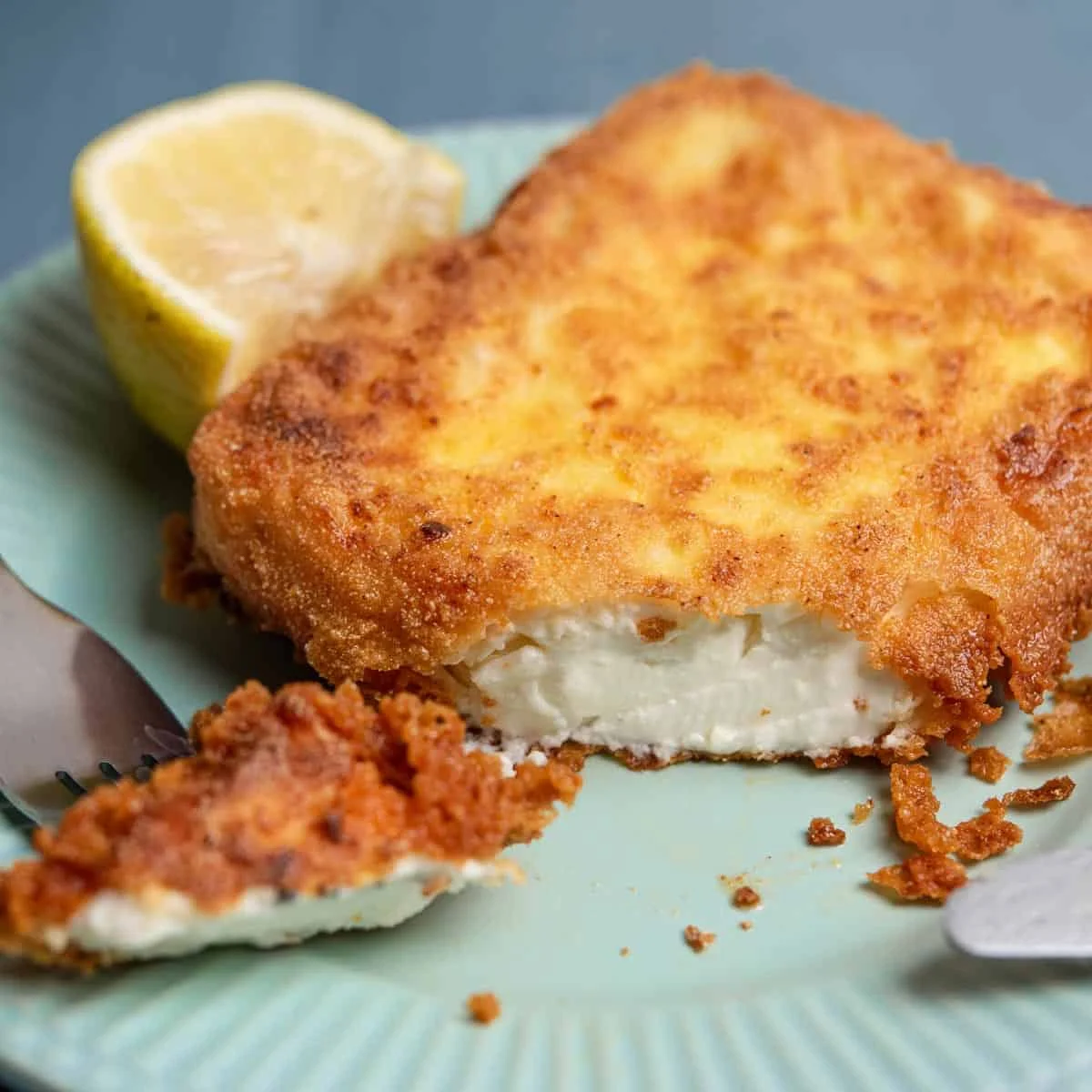
Feta saganaki is a Greek-inspired fried cheese dish with a crisp, floury coating and a soft, salty centre. This quick single-serving version is ready in five minutes and is best eaten straight from the pan with a squeeze of lemon.
Ingredients
- 1 block (180 g)feta cheese
- 1egg, beaten
- 90 ml (6 tablespoons)plain flour (or fine millet flour for a gluten-free version)
- 90 ml (6 tablespoons)maize flour (not cornflour)
- as neededfrying oil
- to servelemon
Instructions
- 1
Mix the flours
Combine the plain flour and maize flour in a deep plate or a food container wide enough to hold the feta block.
- 2
Add the oil
Pour frying oil into a non-stick frying pan to a depth of about 2 cm. Canola, sunflower or corn oil are suitable.
- 3
Heat the pan
Heat the oil over a high heat.
- 4
Coat in egg
Dip the feta block into the beaten egg, coating both sides.
- 5
Coat with flour
Turn the feta in the flour mixture and pat the coating on. Leave it for 1 minute, then turn it in the flour once more so all sides are coated.
- 6
Fry the feta
When the oil is sizzling hot, or reads 175°C on an instant-read thermometer, carefully add the feta. Deep-fry for 1½ to 2 minutes on each side, turning it only once with two forks.
- 7
Drain briefly
Move the fried feta to paper towels for a couple of seconds to absorb excess oil.
- 8
Serve straight away
Serve immediately, with a few drops of fresh lemon squeezed over the top if you like.
What is feta saganaki?
Saganaki takes its name from the small, two-handled pan traditionally used for Greek dishes cooked and served in it. The name is now also associated with fried cheese, often brought to the table hot.
This version uses a block of feta rather than a firmer cheese. A double coating of plain flour and maize flour gives it a crisp shell while the salty cheese softens inside.
Nutrition and macros by portion
The nutrition label shows one serving as written: 706 calories, 39g protein, 20g carbs, 67g fat.
| Portion | Adjustment | kcal | Protein | Carbs | Fat |
|---|---|---|---|---|---|
| Lighter | Use less frying oil | 494 kcal | 27g | 14g | 47g |
| This serving | As written | 706 kcal | 39g | 20g | 67g |
| Hungry | Add bread and salad | 1059 kcal | 59g | 30g | 101g |
Feta supplies most of the protein and fat, while the flour coating contributes most of the carbohydrates; the egg adds some protein and fat, and frying oil adds fat. Balance the rich cheese with a generous green salad or fresh vegetables.
Choosing the coating
Plain flour: it helps create the base of the coating and gives the egg something to hold on to.
Maize flour: use maize flour, not fine cornflour or cornstarch. Its coarser texture helps the crust turn crisp as it fries.
Gluten-free option: the recipe suggests fine millet flour in place of the plain flour; keep the maize flour as listed.
Getting an even crust
Egg first: coat both broad sides of the feta so the flour mixture can cling evenly.
Two passes: pat the first layer of flour onto the cheese, leave it for 1 minute, then turn it in the flour again. That short rest helps the coating settle before frying.
Frying without breaking the feta
Oil depth: about 2 cm gives the block enough oil to fry in the pan. Heat it over a high heat, and look for a lively sizzle or a temperature of 175°C before adding the cheese.
One turn: use two forks to flip the feta just once after 1½ to 2 minutes. Handling it less helps keep the coating intact.
Knowing when it is ready
The outside should be golden and crisp after the stated frying time, while the inside becomes warm and soft. The block may soften quickly, so have a plate ready before it leaves the pan.
A thermometer gives a clear oil-temperature cue; without one, wait until the oil is sizzling hot before frying.
Serving it hot
Serve the feta straight away, while the crust is at its crispest. A few drops of fresh lemon cut through the salty richness without needing an additional sauce.
For a fuller plate, pair it with a green salad or sliced tomatoes and bread. These are serving suggestions rather than part of the stated recipe.
Recipe notes & tips
- Choose a feta block that fits comfortably in the pan and flour dish.
- Beat the egg in a dish wide enough to coat the whole block.
- Pat the flour mixture onto the feta so it adheres instead of falling away.
- Let the first flour coating sit for the full 1 minute before the second pass.
- Prepare the serving plate before frying, as the feta is best served immediately.
- Squeeze the lemon over the feta just before eating.
Variations
- Herb finish: scatter chopped fresh oregano over the hot feta before serving.
- Peppery finish: add a little freshly ground black pepper to the flour mixture.
- Chilli finish: sprinkle chilli flakes over the feta for a touch of heat.
- Salad plate: serve it with tomatoes, cucumber and leafy greens for a fresher meal.
- Gluten-free coating: replace the plain flour with fine millet flour as suggested in the recipe.
Common mistakes to avoid
- Using cornstarch: it is not the maize flour specified here; check the pack before mixing the coating.
- Skipping the second flour pass: the crust may be patchy; rest the first coating for 1 minute, then coat again.
- Adding the feta before the oil is hot: the coating may not crisp properly; wait for sizzling oil or 175°C.
- Flipping repeatedly: the softening feta can break; turn the block only once with two forks.
- Leaving it on the paper towels: drain for only a couple of seconds so the crust stays crisp.
How to store
This dish is best eaten immediately, when the crust is crisp and the feta is soft. If needed, refrigerate leftovers in a covered container and reheat in a hot oven or air fryer until warmed through; the coating may not stay as crisp.
Frequently asked questions
Can I make this gluten-free?
The recipe suggests replacing the plain flour with fine millet flour. Check that the maize flour and any other ingredients are labelled gluten-free if needed.
Is maize flour the same as cornflour?
No. This recipe specifies maize flour and explicitly says not to use cornstarch, which is often called cornflour in British English.
How hot should the frying oil be?
Heat it until it is sizzling hot, or to 175°C on an instant-read thermometer.
How long should I fry the feta?
Fry it for 1½ to 2 minutes on each side, turning the block only once.
Can I prepare the feta ahead?
You can coat it shortly before frying, but it is best fried and served right away so the crust stays crisp.
What can I serve with feta saganaki?
A squeeze of lemon is the suggested finish. Salad, tomatoes or bread also make useful accompaniments.
Cook it from the original
This recipe comes from realgreekrecipes.com. Their page has the author’s own photos, notes and tips — the best place to cook it from.
Open the recipe on realgreekrecipes.com