
Greek Vegetable Stew
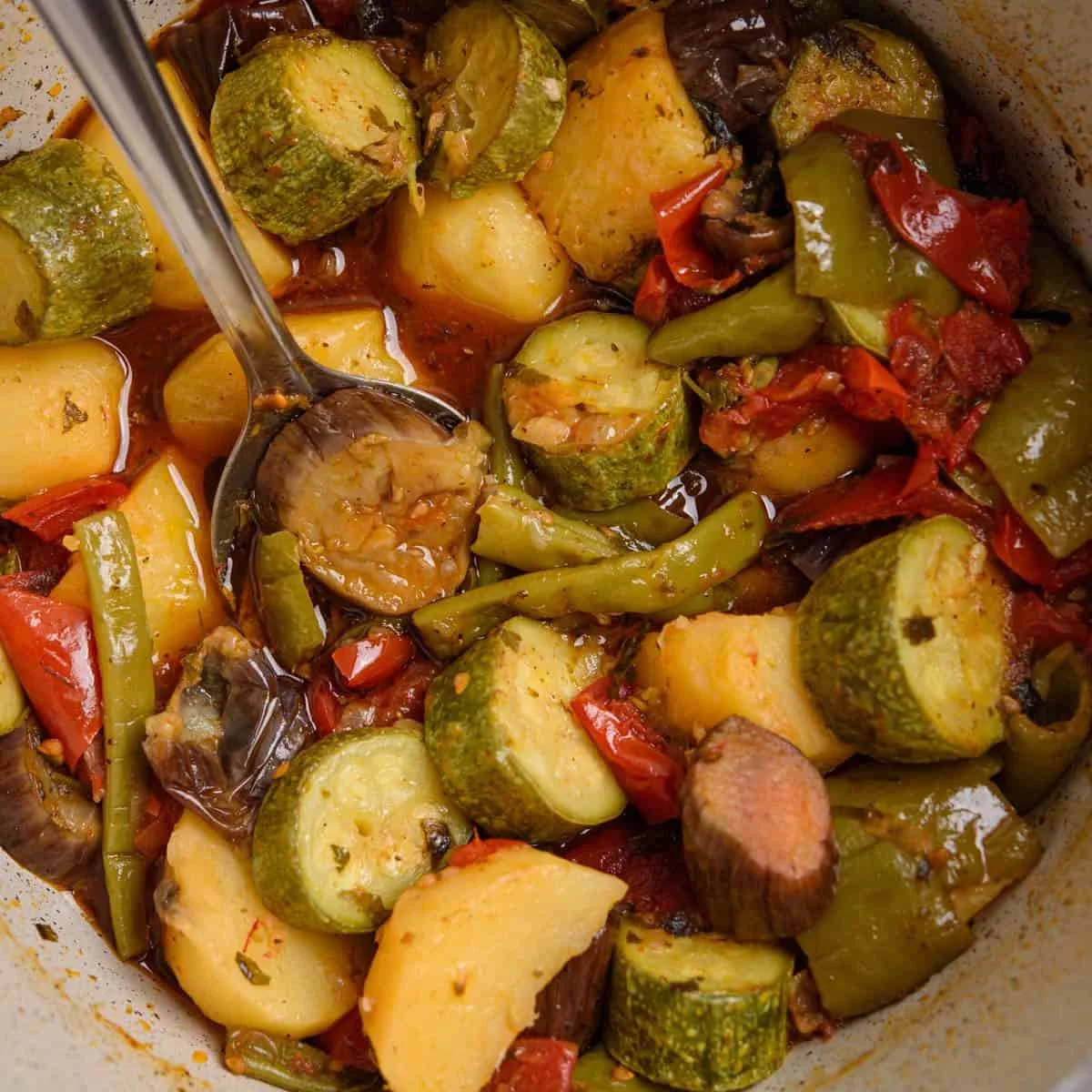
Greek vegetable stew brings potatoes, green beans, aubergine, courgette, peppers and tomatoes together in an olive-oil-rich pot with fresh herbs. Slow simmering softens the vegetables and leaves a thick, savoury sauce for soaking up with bread.
Ingredients
- 120 mlextra virgin olive oil
- 120 g (1 medium)onion, finely chopped
- 4 clovesgarlic, chopped
- 650 g (1.4 lb)potatoes, cut into 5 cm pieces
- 200 g (7 oz)green beans, halved
- 500 g (2 medium-large)ripe tomatoes, coarsely diced
- 2 teaspoonstomato paste
- 450 g (2 medium-large)courgettes, cut into 2–3 cm pieces
- 450 g (1 lb)aubergines, cut into 2–3 cm pieces
- 200 g (7 oz)green peppers, any type, cut into 2–3 cm pieces
- 3 tablespoonsfresh parsley, chopped
- 2 tablespoonsfresh basil, chopped
- 2 teaspoonsdried oregano
- to tastecoarse sea salt and freshly ground black pepper
Instructions
- 1
Warm the oil
Heat a good splash of the olive oil in a cooking pot over a moderate heat.
- 2
Soften aromatics
Add the onion and garlic and sauté them.
- 3
Add green beans
Stir the green beans into the pot.
- 4
Add potatoes
Add the potatoes and cook for 1 minute.
- 5
Stir in vegetables
Mix in the tomato paste, aubergines and courgettes.
- 6
Add remaining ingredients
Add the peppers, tomatoes, fresh herbs, dried oregano and remaining extra virgin olive oil.
- 7
Season and add water
Season with sea salt and pepper, then pour in 180 ml hot water. Make sure the potatoes are submerged so they cook properly.
- 8
Simmer until tender
Cover and simmer over a moderate heat for about 40 minutes. Remove the lid and cook for a further 5–10 minutes, until a thickened, oily sauce remains in the pot. If needed, raise the heat slightly towards the end.
- 9
Let it rest
Leave the stew in the pot until it is close to room temperature but still warm.
- 10
Serve with sides
Serve with a large piece of feta on the side and some crusty bread.
What is Greek vegetable stew?
This is a Greek-style summer vegetable stew, built from potatoes, green beans, tomatoes, courgettes, aubergines and peppers. It belongs to a tradition of home cooking that lets seasonal produce soften together with olive oil and herbs.
Here, potatoes make the dish substantial, while tomatoes and tomato paste create a rich base. The generous olive oil and slow simmer bring the vegetables together into a glossy, spoonable stew.
Nutrition and macros by portion
The nutrition label shows one serving as written: 475 calories, 9g protein, 52g carbs, 29g fat.
| Portion | Adjustment | kcal | Protein | Carbs | Fat |
|---|---|---|---|---|---|
| Lighter | Use less olive oil | 333 kcal | 6g | 36g | 20g |
| This serving | As written | 475 kcal | 9g | 52g | 29g |
| Hungry | Serve with extra bread | 713 kcal | 14g | 78g | 44g |
Potatoes and the other vegetables provide most of the carbohydrates, while the generous olive oil supplies most of the fat. Protein is modest in the stew itself; feta on the side adds some, and a serving of beans or another protein-rich accompaniment can make the meal more filling.
The vegetables and their order
Aromatics first: briefly sautéing the onion and garlic starts the flavour base without needing to brown them deeply.
Firm vegetables: green beans and potatoes go in before the softer vegetables, giving them a head start in the pot.
Soft vegetables: aubergine, courgette, peppers and tomatoes are added afterwards. Cutting them into similarly sized pieces helps them cook at a similar pace.
Why the oil matters
Extra virgin olive oil is a defining part of this stew, not just a little finishing drizzle. It carries the flavours of the herbs and vegetables and helps form the rich sauce as the ingredients cook.
The recipe adds the oil in stages: start with a splash for the onion and garlic, then add the rest with the vegetables. Keep the heat moderate so the oil and aromatics do not scorch.
Managing the simmer
Water level: the 180 ml of hot water is a small amount compared with the vegetables, which also release moisture as they cook. Check that the potatoes are submerged as directed when you add it.
Covered cooking: simmer with the lid on for about 40 minutes so the potatoes and beans have time to become tender. Avoid frequent stirring, which can break up the softer vegetables.
Finishing: uncover for 5–10 minutes to reduce the liquid into a thick, oily sauce. Raise the heat slightly if needed, while keeping an eye on the bottom of the pot.
How to judge when it is ready
Check a potato with the tip of a knife; it should be tender rather than firm in the centre. The green beans should also be cooked through, while the softer vegetables will be very tender.
Look for a thickened sauce rather than a watery broth before taking the pot off the heat. The recipe then rests the stew until it is close to room temperature but still warm.
Herbs, feta and bread
Parsley and basil add a fresh note, while dried oregano gives the pot a savoury, aromatic backbone. Add them with the tomatoes as directed so their flavours mingle during the simmer.
Serve with feta on the side and crusty bread, as the recipe suggests. The bread is particularly useful for scooping up the olive-oil-rich sauce.
Recipe notes & tips
- Cut the potatoes and other vegetables to the stated sizes so they cook as intended.
- Use ripe tomatoes for a fuller-flavoured base.
- Have the 180 ml hot water ready before you begin the simmer.
- Check that the potatoes are submerged when you add the water.
- Keep the pot covered for the main 40-minute simmer, then uncover it to reduce the sauce.
- Let the stew rest in the pot until it is still warm but close to room temperature.
Variations
- Herb balance: use the parsley, basil and oregano as listed, or adjust their proportions to suit your taste.
- Pepper choice: choose any type of green pepper, as the recipe allows.
- More feta: serve a larger piece of feta alongside the stew for a saltier, creamier contrast.
- Bread on the side: choose crusty bread for dipping into the sauce.
- Extra ripe tomatoes: use tomatoes at peak ripeness for a more pronounced tomato flavour.
Common mistakes to avoid
- Adding the water without checking: make sure the potatoes are submerged so they cook properly.
- Leaving the lid on throughout: uncover for the final 5–10 minutes so the sauce can thicken.
- Using high heat from the start: keep the pot at a moderate heat to avoid scorching the oil and aromatics.
- Cutting vegetables unevenly: keep the pieces close to the specified sizes for more even cooking.
- Expecting a thin soup: allow the uncovered finishing time for the sauce to reduce and become thick.
How to store
Cool leftovers and store them in a covered container in the fridge for up to 3 days. Reheat gently in a saucepan until hot throughout, adding a small splash of water if the sauce has become too thick.
Frequently asked questions
Can I make this stew ahead?
Yes. The recipe includes a rest in the pot until the stew is close to room temperature but still warm. Refrigerate any leftovers once cooled, then reheat gently before serving.
How do I know the potatoes are cooked?
Test one with a knife; it should be tender in the centre. They should also be submerged in the hot water during cooking, as the method directs.
Why does the recipe use so much olive oil?
Olive oil is a central part of the stew's rich sauce and carries the flavour of the vegetables and herbs. The recipe adds it during cooking rather than using it only as a garnish.
Can I use a different green pepper?
Yes. The ingredient list allows any type of green pepper; cut it into pieces around 2–3 cm.
What should I serve with Greek vegetable stew?
Serve it with a large piece of feta and crusty bread, as suggested in the recipe. The bread is good for mopping up the thick sauce.
Can I freeze the leftovers?
The cooked vegetables are likely to soften further after freezing and thawing. For the best texture, keep leftovers refrigerated and reheat them gently.
Cook it from the original
This recipe comes from realgreekrecipes.com. Their page has the author’s own photos, notes and tips — the best place to cook it from.
Open the recipe on realgreekrecipes.com