
Orange and Piloncillo Adobo Pork Roast
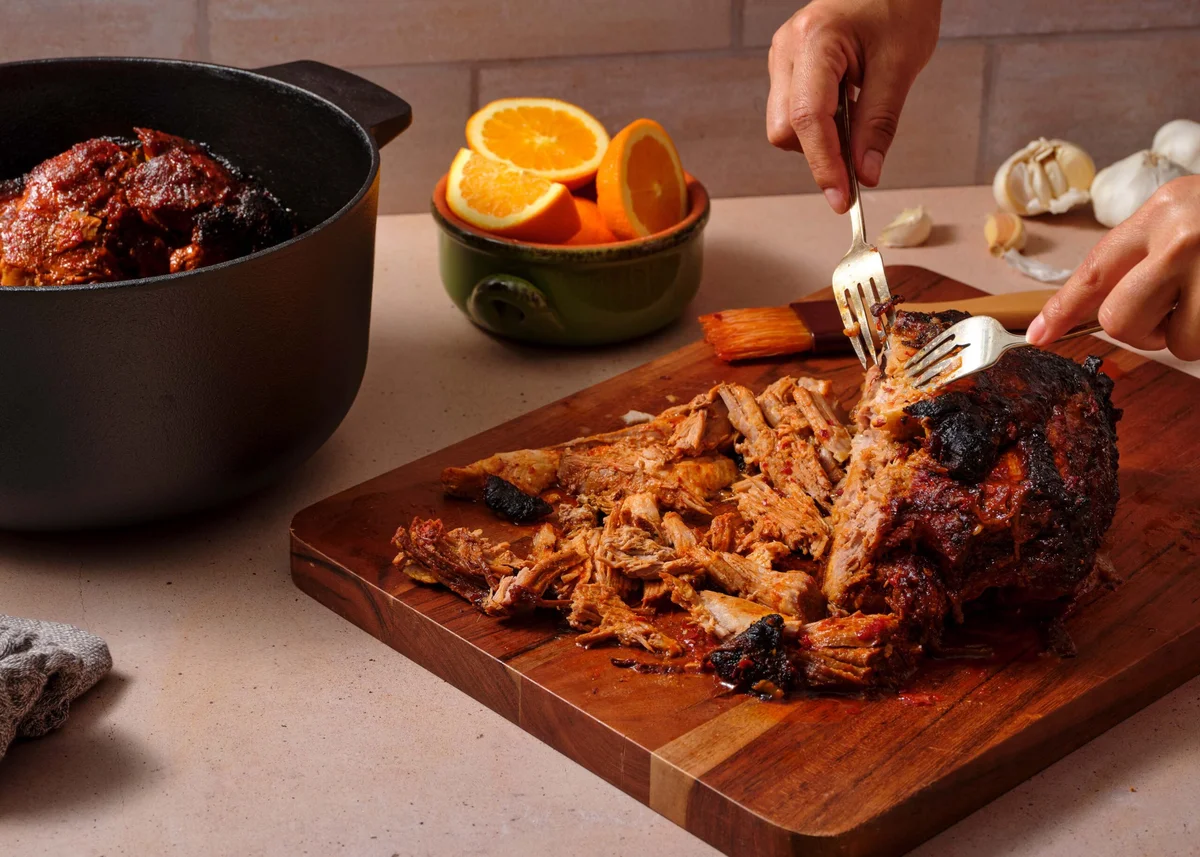
This Mexican-style pork shoulder is slow-roasted in a sweet, gently spiced adobo of guajillo chiles, orange and piloncillo. The long, covered roast turns a large bone-in cut into tender meat that can be served in tacos, over rice or in several other ways.
Ingredients
- 4.54 kg (10 lb)pork picnic shoulder, bone in, with skin and fat
- 8guajillo chiles, stemmed and seeded
- 170 g (6 oz)piloncillo
- 480 ml (2 cups)freshly squeezed orange juice
- ¼white onion, coarsely chopped
- 4garlic cloves
- 8whole cloves, stems discarded
- 2 teaspoonsdried oregano
- 1 teaspooncumin seeds
- 1 teaspooncoriander seeds
- ½ teaspoonwhole allspice
- ½ teaspoonwhole black peppercorns
- 1 tablespoonkosher salt or coarse sea salt
- 2dried bay leaves
- 240 ml (1 cup) for the syrup; enough to cover the chileswater
Instructions
- 1
Toast the chiles
Heat a comal over medium-low heat. Toast the guajillos for about 1 minute per side, then put them in a medium saucepan and cover with water. Bring to the boil over medium-high heat and cook for 8–10 minutes, until plump and rehydrated. Set aside.
- 2
Make the syrup
Put the piloncillo in a small saucepan and pour over 240 ml (1 cup) water. Cover and simmer over low heat for 6–8 minutes, until the piloncillo has dissolved into a syrup. Set aside.
- 3
Blend the adobo
Put the chiles and 480 ml (2 cups) of their cooking liquid in a blender with the orange juice, piloncillo syrup, onion, garlic, cloves, oregano, cumin, coriander, allspice, peppercorns and salt. Blend until completely smooth.
- 4
Heat the oven
Preheat the oven to 230°C (450°F), with a rack in the lowest position.
- 5
Prepare the pork
With a very sharp knife, score the pork skin and fat in a diamond pattern, stopping short of the meat. Set the shoulder skin-side up in a large Dutch oven or braiser. Pour over the adobo, including underneath the meat, and add the bay leaves.
- 6
Roast until tender
Roast uncovered for 1 hour. Take the pork out, turn it skin-side down and cover with a lid. Lower the oven to 175°C (350°F), return the pork and cook for 2 hours. Take it out, turn it skin-side up again, cover and roast for another 2 hours.
- 7
Check the meat
The meat should come away from the bone when tested with a fork or lifted with tongs. If it is not tender yet, return it to the oven for another 30 minutes. Remove from the oven, uncover and let it cool slightly; skim off 4 tablespoons of fat and set aside for the Orange Adobo Pizza Sauce.
- 8
Remove the bone
When cool enough to handle, transfer the pork to a large chopping board, leaving the adobo in the braiser. Set aside 240 ml (1 cup) of adobo for the Orange Adobo Pizza Sauce and discard the bay leaves.
- 9
Slice and coat
Use a meat fork and sharp knife to thinly slice the tender pork. Discard the bone, return all the meat to the adobo left in the braiser and toss to coat.
- 10
Choose how to serve
Serve the meat in tacos, enchiladas, tostadas or nachos, over rice, or as a pizza topping.
What is adobo pork?
Adobo is a seasoned sauce or marinade used in several Latin American and Spanish cooking traditions; this version takes a Mexican approach with guajillo chiles, spices and orange. Piloncillo adds a deep, molasses-like sweetness that balances the chile and citrus.
The picnic shoulder is roasted whole, then sliced and tossed back into its cooking sauce. That method gives the meat time to become tender while keeping the serving meat richly coated.
Nutrition and macros by portion
The nutrition label shows one serving as written: 640 calories, 48g protein, 14g carbs, 43g fat.
| Portion | Adjustment | kcal | Protein | Carbs | Fat |
|---|---|---|---|---|---|
| Lighter | Smaller pork portion | 448 kcal | 34g | 10g | 30g |
| This serving | As written | 640 kcal | 48g | 14g | 43g |
| Hungry | Extra pork with rice | 960 kcal | 72g | 21g | 65g |
Most of the protein and fat come from the pork shoulder, while the piloncillo and orange juice contribute carbohydrates and sugars. Guajillos add a little fibre, and the salt contributes most of the sodium. Pair a portion with vegetables or a fresh salad, and serve rice or tortillas according to appetite.
The guajillo and piloncillo
Guajillos: toasting them briefly brings out their aroma, while simmering rehydrates them so they blend smoothly. Keep the heat moderate on the comal and turn them promptly; scorched chiles can make the sauce taste bitter.
Piloncillo: dissolving it separately makes a syrup that blends evenly into the adobo. The orange juice and spices keep its sweetness from dominating.
Scoring the skin
Shallow cuts: score through the skin and fat in a diamond pattern, but stop before cutting into the meat. This makes the surface easier to portion after roasting without slicing deeply into the shoulder.
Sauce underneath: make sure some adobo reaches the base of the pork as well as the top. The braiser should hold the meat and sauce snugly enough for the covered roasting stages.
Why the roast changes temperature
Initial heat: the uncovered hour at 230°C (450°F) starts the roast with strong heat. The skin faces upwards during this stage.
Gentler finish: the pork is then covered and cooked at 175°C (350°F), first skin-side down and later skin-side up. The lid and lower temperature help the shoulder cook until tender in its sauce.
How to judge doneness
Fork test: the pork is ready when a fork pulls meat from the bone easily, or a piece lifts away with tongs. If it still feels firm, give it the specified extra 30 minutes and check again.
Rest before handling: let the roast cool slightly before moving it to the board. This makes it easier to handle the large shoulder and separate the bone.
Serving the pork
Tacos and tostadas: spoon the sauced meat into tortillas or onto crisp tostadas, adding fresh toppings to contrast with the rich, sweet-spiced pork.
Rice or pizza: serve it over rice for a simple plate, or use it as a pizza topping. The recipe also names enchiladas and nachos as serving options.
Recipe notes & tips
- Use a comal or heavy frying pan to toast the chiles if you do not have a comal.
- Keep the chile toasting brief and turn each chile so it does not scorch.
- Blend the sauce until fully smooth before pouring it over the shoulder.
- Use a large, heavy Dutch oven or braiser with a lid for the long covered roast.
- Check tenderness with a fork or tongs rather than relying on the clock alone.
Variations
- Taco filling: serve the sauced pork in warm tortillas with fresh toppings.
- Rice bowl: spoon the pork and adobo over cooked rice.
- Enchiladas: use the pork as a filling and serve with the remaining adobo.
- Tostadas: pile the meat onto crisp tostadas for a crunchy contrast.
- Pizza topping: reserve the specified adobo and skimmed fat for the Orange Adobo Pizza Sauce.
Common mistakes to avoid
- Scorching the chiles: toast them over medium-low heat and turn after about a minute per side.
- Cutting too deeply: score the skin and fat only, stopping before the meat.
- Skipping the sauce underneath: pour adobo around and beneath the shoulder as well as over it.
- Leaving the lid off: cover the pork for both lower-temperature roasting stages.
- Stopping while the meat is firm: continue roasting in 30-minute increments until it comes away from the bone.
How to store
Refrigerate leftover pork with its adobo in a covered container and use within 3–4 days. Reheat gently in a covered pan or microwave until hot throughout, adding a little sauce to keep the meat moist.
Frequently asked questions
Can I make the adobo ahead?
Yes. The sauce can be blended before the roast is assembled; refrigerate it in a covered container and bring it back to a pourable state before using.
Can I use boneless pork shoulder?
The recipe is written for a bone-in picnic shoulder with its skin and fat. A boneless cut may cook differently, so use the fork-tenderness test rather than assuming the same timing.
What if I do not have a comal?
Toast the guajillos in a dry, heavy frying pan over medium-low heat, turning them after about a minute per side.
How do I know when the pork is done?
It should be tender enough to come away from the bone with a fork or lift apart with tongs. If it is still firm after the listed cooking time, roast it for another 30 minutes and check again.
Can I serve the pork without making pizza sauce?
Yes. The pork can be served in tacos, enchiladas, tostadas or nachos, over rice, or as a pizza topping. The sauce and fat reservations are only needed for the named pizza sauce.
Cook it from the original
This recipe comes from patijinich.com. Their page has the author’s own photos, notes and tips — the best place to cook it from.
Open the recipe on patijinich.com