
Tuna Pasta
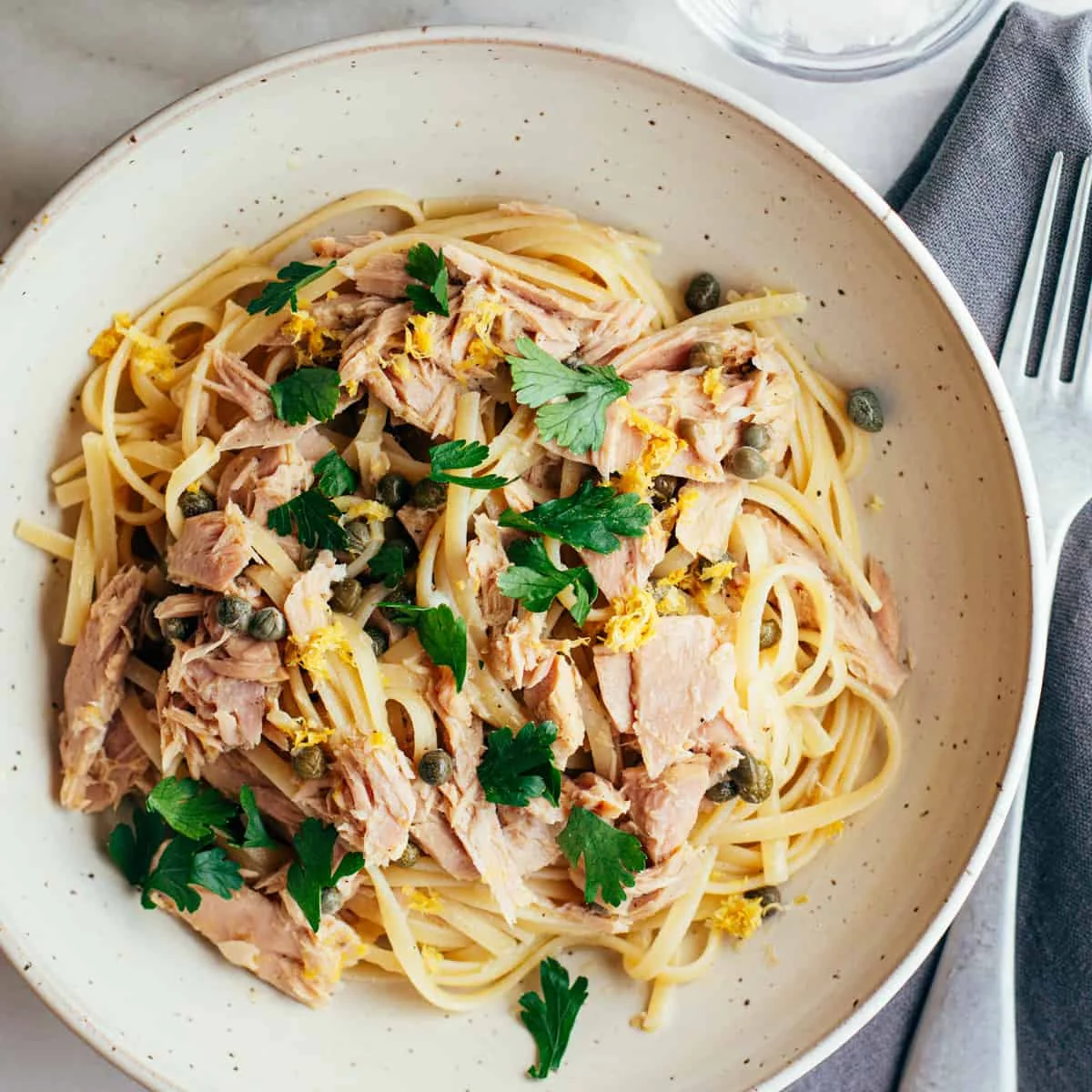
Tuna pasta pairs linguine with a bright, savoury sauce made by gently warming tuna, lemon, capers and olive oil over the pasta water. It is a simple way to make a satisfying meal without cooking the sauce in a separate pan.
Ingredients
- 170 g (6 oz)good-quality canned tuna, ideally in olive oil, drained
- 1 large clovegarlic, minced
- 2.5 ml (½ teaspoon), plus more to tastekosher salt
- 1.25 ml (¼ teaspoon), plus more to tastefreshly ground black pepper
- ½ mediumlemon, juiced and zested
- 60 ml (¼ cup)extra-virgin olive oil
- 30 ml (2 tablespoons)capers, drained
- 15 g (¼ cup)fresh parsley, finely chopped
- 140 g (5 oz)linguine
Instructions
- 1
Mix the sauce
In a heatproof serving bowl large enough to sit over your pasta pot, break the drained tuna into bite-size chunks. Add the garlic, salt, pepper, lemon juice and zest, olive oil and capers, then stir gently to combine.
- 2
Warm the sauce
Put a large pot of water over medium-high heat to bring it to a boil for the pasta. Set the heatproof bowl containing the tuna mixture over the pot, making sure its base stays above the water. When the water boils, lift off the bowl and set it aside. Add the pasta to the boiling water and cook according to the packet directions until al dente.
- 3
Toss and serve
Drain the pasta and add it to the sauce in the bowl. Toss gently to coat, scatter over the parsley and serve straight away.
What is tuna pasta?
Tuna pasta is a familiar Italian-style combination of pasta, canned tuna, olive oil and sharp, savoury accents such as lemon and capers. This version is adapted from Joie Warner’s No Cook Pasta Sauces and uses the heat from the pasta water to gently warm the sauce ingredients.
The method keeps the sauce simple and avoids a separate cooking pan. Linguine catches the oil and lemon while the tuna stays in distinct, tender pieces.
Nutrition and macros by portion
The nutrition label shows one serving as written: 685 calories, 35g protein, 57g carbs, 35g fat.
| Portion | Adjustment | kcal | Protein | Carbs | Fat |
|---|---|---|---|---|---|
| Lighter | Use less olive oil | 479 kcal | 25g | 40g | 25g |
| This serving | As written | 685 kcal | 35g | 57g | 35g |
| Hungry | Add more linguine | 1028 kcal | 53g | 86g | 53g |
The linguine supplies most of the carbohydrates, while olive oil contributes much of the fat. Tuna provides most of the protein, with some additional fat coming from the oil-packed fish. Pair a portion with a green salad or other vegetables for a more balanced plate.
Choosing the ingredients
Tuna: Good-quality tuna packed in olive oil brings a rich flavour and flakes easily into the sauce. Drain it before measuring out the other ingredients.
Warming the sauce gently
Bowl position: Choose a heatproof bowl that sits securely over the pot, with its base above the water. The water’s heat gently takes the chill off the mixture without boiling the tuna and oil together.
Getting the pasta right
Al dente: Follow the packet timing and test a strand near the end; it should be cooked through but still offer a little resistance. Drain it promptly so it does not soften further while being tossed.
Balancing the flavours
Lemon and capers: The lemon’s juice and zest bring freshness, while capers add a salty, tangy note. Taste the sauce before adding extra salt, since the capers and tuna can already be quite savoury.
Serving the linguine
Timing: Toss the pasta with the sauce as soon as it is drained, then add the parsley and serve immediately. The warmth of the pasta helps the oil coat the strands.
What to serve alongside
A crisp green salad or simply dressed leaves make a fresh contrast to the oily, savoury sauce. You can also serve bread alongside to mop up any lemony olive oil left in the bowl.
Recipe notes & tips
- Use a bowl that is stable over the pot and large enough to toss the pasta in.
- Keep the bowl base above the boiling water so the sauce warms gently rather than sitting in the water.
- Drain the tuna well before adding it to the bowl.
- Taste before adding extra salt because capers and tuna can both be salty.
- Have the parsley ready so you can finish and serve the pasta promptly.
Variations
- Add chilli: Stir in a pinch of chilli flakes with the garlic for a little heat.
- Use another pasta shape: Swap the linguine for spaghetti or another long pasta, cooking it according to its packet directions.
- Add olives: Stir in a few chopped olives with the capers for a more briny flavour.
- Include vegetables: Toss in cooked peas or finely sliced cooked greens with the drained pasta.
- Try a different herb: Replace some or all of the parsley with chopped fresh basil.
Common mistakes to avoid
- Bowl touching the water: The sauce may heat too aggressively; use a bowl that rests above the waterline.
- Adding salt too soon: Capers and tuna may already season the sauce; taste before adding more.
- Overcooking the linguine: It continues to soften as you toss it; drain it when just al dente.
- Letting the pasta sit: The strands can cool and clump; toss with the sauce and serve straight away.
- Roughly mixing the tuna: Vigorous stirring can break it into tiny pieces; fold the ingredients together gently.
How to store
For the best texture, serve this pasta immediately. Refrigerate leftovers in a covered container for up to 2 days and reheat gently in a pan or microwave, adding a small splash of water if needed.
Frequently asked questions
Can I use tuna packed in water?
Yes. Drain it well, then use the olive oil listed in the recipe to make the sauce.
Does the bowl need to touch the pasta water?
No. The bowl should sit over the pot with its base above the water so the ingredients warm gently.
Can I prepare the sauce ahead?
You can mix the sauce ingredients in advance and keep them covered in the refrigerator. Warm them over the pasta pot as directed, then toss with freshly cooked pasta.
How do I know when the linguine is al dente?
Use the packet timing as a guide and taste a strand near the end. It should be tender but still have a slight firmness in the centre.
Can I make this with spaghetti?
Yes. Use the same amount and cook it according to the packet directions until al dente.
Cook it from the original
This recipe comes from pinchandswirl.com. Their page has the author’s own photos, notes and tips — the best place to cook it from.
Open the recipe on pinchandswirl.com