
Green Beans with Caramelized Shallots
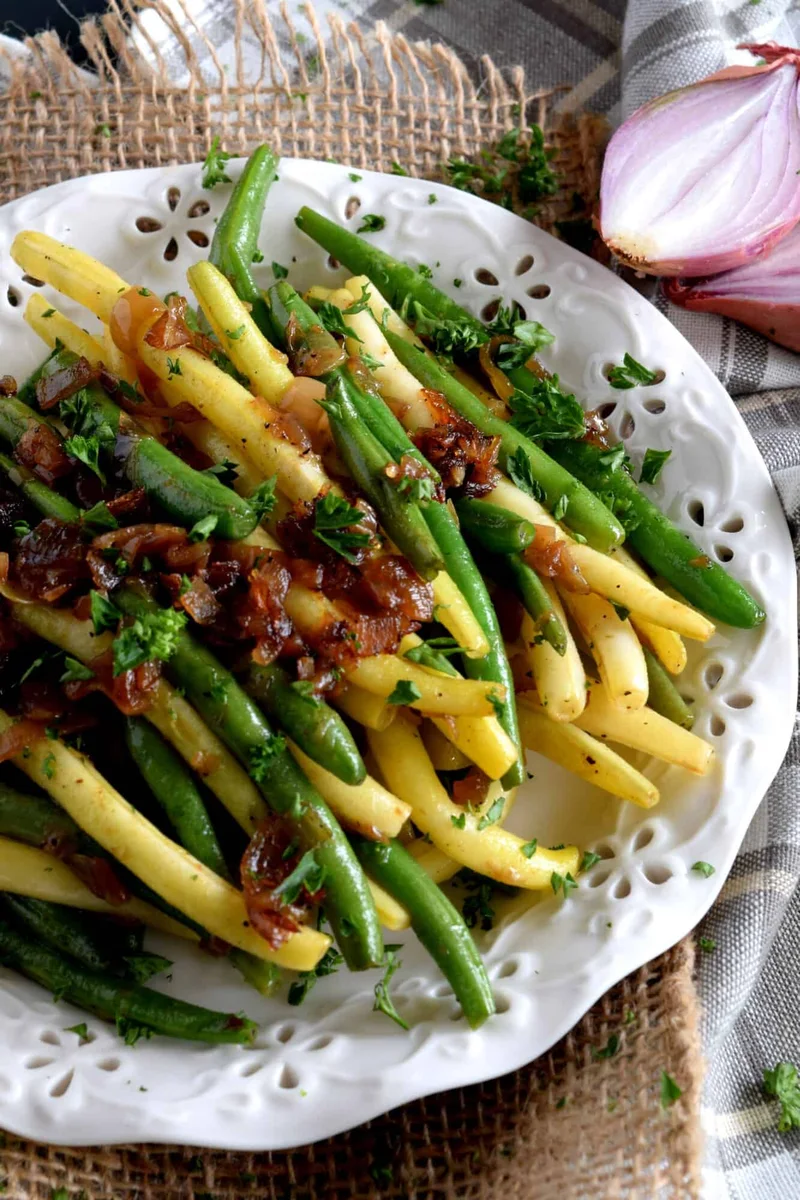
Green beans are tossed with slowly softened, caramelised shallots for a simple, savoury side dish. It is a lighter alternative to creamy green bean casserole and fits neatly into a Thanksgiving spread.
Ingredients
- 907 g (2 pounds)green or yellow beans, tips trimmed
- 4 largeshallots, thinly sliced
- 15 ml (1 tablespoon)olive oil
- 14 g (1 tablespoon)butter
- 2.5 g (1/2 teaspoon)salt
- 0.6 g (1/4 teaspoon)ground black pepper
Instructions
- 1
Warm the shallots
Set a large frying pan over a medium heat. Add the butter, olive oil, sliced shallots and salt.
- 2
Caramelise slowly
Cook the shallots gently until caramelised, allowing about 30 minutes. A slow cook gives them time to soften and develop their sweetness.
- 3
Add the beans
Add the beans and black pepper to the pan. Toss so the beans are coated with the caramelised shallots.
- 4
Cook until crisp
Sauté the beans for 5 minutes, until heated through but still slightly crunchy. For softer beans, cook for a few minutes longer.
- 5
Serve straight away
Transfer to a serving dish and serve immediately.
What are green beans with caramelised shallots?
This is a straightforward vegetable side: beans are briefly sautéed with shallots cooked slowly in butter and olive oil. It is presented as an alternative to the creamy green bean casserole often served at Thanksgiving.
The recipe does not rely on a detailed regional tradition; its appeal is in the contrast between sweet, soft shallots and beans that retain a little bite. Using either green or yellow beans keeps the dish simple and colourful.
Nutrition and macros by portion
The nutrition label shows one serving as written: 63 calories, 2g protein, 8g carbs, 3g fat.
| Portion | Adjustment | kcal | Protein | Carbs | Fat |
|---|---|---|---|---|---|
| Lighter | Use less butter | 44 kcal | 1g | 6g | 2g |
| This serving | As written | 63 kcal | 2g | 8g | 3g |
| Hungry | Serve a larger portion | 95 kcal | 3g | 12g | 5g |
The beans provide most of the carbohydrates, while the butter and olive oil account for most of the fat; the shallots contribute a little of both. Protein is modest, so serve a portion alongside a protein-rich main and a starchy side if you want a more complete plate.
Why cook the shallots first?
Shallots: their smaller size and mild flavour make them a good match for green beans. Thin slices help them soften evenly in the pan.
Slow cooking: allow about 30 minutes for the shallots to caramelise. This is the longest part of the recipe, so keep the heat moderate and give them time rather than rushing them.
Getting the beans right
Trim the tips before cooking so the beans are ready to serve. The method adds them only after the shallots have caramelised, helping preserve their fresher flavour.
Doneness: after 5 minutes, the beans should be hot through but still have a little crunch. If you prefer a softer texture, continue cooking for a few more minutes.
Timing and pan space
The stated total time is 40 minutes, including about 30 minutes to cook the shallots and 5 minutes for the beans. Allow a little extra time if you want the beans softer.
Use a large frying pan so you can toss the beans with the shallots. If the pan feels crowded, turn them in batches within the pan rather than letting them sit untouched.
Serving the side dish
Serve the beans immediately, while they are warm and still have their crisp texture. They work well alongside a Thanksgiving main course and other vegetables.
For a balanced plate, pair them with a source of protein and a starchy side. The beans bring vegetables and flavour without a creamy sauce.
The finishing flavours
Butter and olive oil form the cooking base, while salt seasons the shallots and pepper is added with the beans. Together they give the dish a savoury finish without masking the vegetables.
The shallots should be softened and browned before the beans go in; they are the main source of sweetness and depth in this short ingredient list.
Recipe notes & tips
- Slice the shallots thinly so they cook evenly.
- Keep the heat moderate while the shallots cook, and allow the full 30 minutes for caramelisation.
- Stir the shallots from time to time so they cook evenly.
- Add the beans only after the shallots are caramelised.
- Taste a bean after 5 minutes and cook longer if you prefer it softer.
- Serve the dish as soon as it is ready for the best crunch.
Variations
- Yellow beans: use them instead of green beans, as allowed in the recipe.
- Softer texture: sauté the beans for a few extra minutes.
- More pepper: adjust the ground black pepper to suit your taste.
- Shallot-forward: keep the same bean quantity and make sure every serving gets some of the caramelised shallots.
Common mistakes to avoid
- Rushing the shallots: they need about 30 minutes to caramelise, so cook them slowly.
- Adding beans too soon: wait until the shallots are caramelised before adding the beans.
- Overcooking the beans: start checking at 5 minutes if you want them to retain a little crunch.
- Skipping the toss: coat the beans with the shallots so the flavour is distributed through the pan.
- Serving late: plate the beans promptly to preserve their texture.
How to store
Refrigerate leftovers in a covered container and use within 3 days. Reheat gently in a frying pan until hot; the beans may soften further on reheating.
Frequently asked questions
Can I use yellow beans instead of green beans?
Yes. The recipe allows green or yellow beans, so use either or a mixture.
How long should I cook the shallots?
Allow about 30 minutes over a moderate heat. Cooking them slowly gives them time to soften and caramelise.
Can I make the beans softer?
Yes. After the initial 5 minutes, sauté them for a few more minutes until they reach the texture you like.
Can I prepare this dish ahead?
It is best served immediately for the freshest texture. You can trim the beans and slice the shallots ahead, then cook the dish shortly before serving.
How do I reheat leftovers?
Warm them gently in a frying pan until hot. Avoid cooking them for much longer than needed, as they will become softer.
Cook it from the original
This recipe comes from lordbyronskitchen.com. Their page has the author’s own photos, notes and tips — the best place to cook it from.
Open the recipe on lordbyronskitchen.com