
Chinese Sweet and Sour Pork with Pineapple
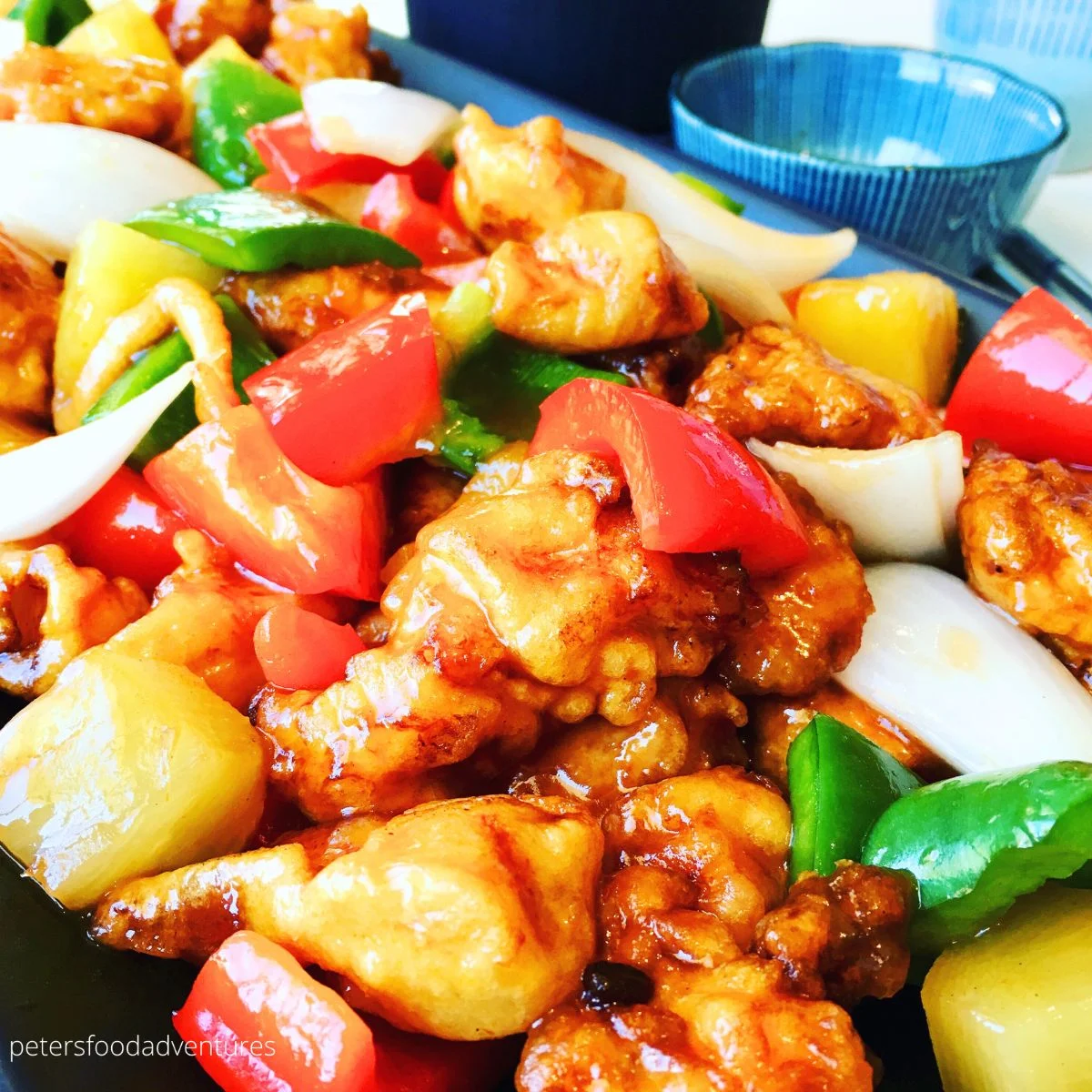
Crispy battered pork is tossed with pineapple, peppers, onion and a tangy-sweet sauce. This American-style take-away favourite makes a colourful dinner, with the sauce and vegetables coming together quickly while the pork fries in batches.
Ingredients
- 120 ml (1/2 cup)Ketchup
- 45 ml (3 tablespoons)Rice wine vinegar
- 150 g (3/4 cup)Sugar
- Juice from the tinPineapple juice
- 5 ml (1 teaspoon)Soy sauce
- 4 teaspoonsCornflour, for the slurry
- 4 teaspoonsWater, for the slurry
- 500 g (1 lb)Boneless pork, sliced into strips
- 1 teaspoonSoy sauce
- 1 teaspoonChinese cooking wine or dry sherry
- 1 clove, mincedGarlic
- 1/2 teaspoonCornflour
- 125 g (1 cup)Plain flour
- 2Eggs
- 4 teaspoonsCornflour
- 1/2 teaspoonSalt
- 1 1/2 teaspoonsBaking powder
- 30–45 ml (2–3 tablespoons)Water, to adjust the batter
- 240 ml (1 cup) for frying, plus 1 tablespoon for the vegetablesOil
- 1/2, cut into small cubesGreen pepper
- 1/2, cut into small cubesRed pepper
- 1 tin, juice reservedPineapple chunks
- 1/2, cut into wedgesWhite onion
Instructions
- 1
Make the sauce
Put the ketchup, rice wine vinegar, sugar, pineapple juice and 1 teaspoon of soy sauce in a saucepan. Bring the mixture to a simmer.
- 2
Mix the slurry
Stir the 4 teaspoons of cornflour together with the 4 teaspoons of water until smooth.
- 3
Thicken the sauce
Stir the slurry into the simmering sauce and cook for 2 minutes. Take the pan off the heat, cover it and set the sauce aside.
- 4
Marinate the pork
Put the pork strips in a bowl and mix with 1 teaspoon of soy sauce, the Chinese cooking wine, garlic and 1/2 teaspoon of cornflour. Leave to marinate for at least 30 minutes.
- 5
Prepare the batter
In a bowl, mix the flour, eggs, 4 teaspoons of cornflour, salt and baking powder until the batter is thick, smooth and lump-free. Add extra water from the measured 30–45 ml if needed.
- 6
Coat the pork
Toss the marinated pork pieces in the batter until coated.
- 7
Fry the pork
Heat 240 ml (1 cup) of oil in a wok until hot. Fry the battered pork in small batches for about 4–5 minutes, adding the pieces one at a time so they do not stick together, until golden brown and cooked through.
- 8
Drain the pork
Lift the pork onto a plate lined with kitchen paper to drain. Repeat with the remaining pieces.
- 9
Toss and serve
Heat 1 tablespoon of oil in the wok. Fry the onion, peppers and pineapple chunks for about 2 minutes. Return the battered pork to the wok, pour over the sweet and sour sauce and toss to coat. Serve straight away over steamed white rice.
What is sweet and sour pork?
Sweet and sour pork pairs crisp, battered pieces of pork with a sharp, sugary sauce, often alongside pineapple and vegetables. This version reflects the American-style Chinese restaurant favourite rather than claiming to be a traditional regional Chinese preparation.
The sauce is made separately, so it can be thickened before the pork and vegetables are tossed through it. That helps keep the coating crisp for as long as possible.
Nutrition and macros by portion
The nutrition label shows one serving as written: 790 calories, 28g protein, 82g carbs, 36g fat.
| Portion | Adjustment | kcal | Protein | Carbs | Fat |
|---|---|---|---|---|---|
| Lighter | Use less batter and oil | 553 kcal | 20g | 57g | 25g |
| This serving | As written | 790 kcal | 28g | 82g | 36g |
| Hungry | Add steamed rice | 1185 kcal | 42g | 123g | 54g |
The pork and eggs provide most of the protein, while the flour, batter and sugar contribute much of the carbohydrate. Frying oil and the eggs account for much of the fat, with the sauce also adding sugar. Serve with a generous portion of vegetables and a moderate amount of steamed rice to round out the plate.
The sauce balance
Tang and sweetness: Rice wine vinegar cuts through the ketchup and sugar, while pineapple juice brings a fruity note. Stir the ingredients together as they come to a simmer so the sugar dissolves evenly.
Thickening: The cornflour slurry should be smooth before it goes into the pan. Stir it in and simmer for the stated 2 minutes to give the sauce body.
Marinating and coating the pork
The marinade: Soy sauce, cooking wine, garlic and a little cornflour flavour the pork and help the batter cling. Give it at least 30 minutes, as directed.
The batter: Mix until smooth and thick enough to coat the pork, adding water only as needed. A few gradual additions make it easier to avoid a batter that is too loose.
Frying in batches
Small batches: Add the pork pieces one by one and leave space around them. This keeps pieces from clumping together and gives them room to brown.
Doneness: The recipe gives a frying time of about 4–5 minutes; the coating should be golden and the pork cooked through. Drain each batch on kitchen paper while the next one fries.
Finishing without losing the crunch
Quick toss: The onion, peppers and pineapple need about 2 minutes in the hot wok. Once you add the pork and sauce, toss just until everything is coated.
Serve promptly: The sauce softens the batter as it sits, so bring the wok to the table or serve straight away. Steamed white rice is the suggested accompaniment.
Choosing the pork and produce
Pork strips: Use boneless pork cut into similar-sized pieces so they cook at a similar rate. Patting the meat dry before marinating can help prevent excess liquid from thinning the coating.
Pineapple and peppers: Reserve the juice from the tin for the sauce before draining the chunks. Cut the peppers and onion as directed so they are ready to go when the wok is hot.
Recipe notes & tips
- Reserve the pineapple juice before draining the chunks so you have it ready for the sauce.
- Mix the cornflour slurry immediately before adding it, as it can settle while standing.
- Keep the pork pieces similar in size to help them cook evenly.
- Fry in small batches and let the oil return to temperature between batches.
- Have the vegetables and sauce ready before you begin frying, as the final toss is quick.
- Serve as soon as the pork is coated in sauce for the best contrast between crisp batter and glossy sauce.
Variations
- Adjust the tang: Use a little less vinegar for a milder sauce, keeping the other ingredients as written.
- Add heat: Stir sliced chilli into the vegetables as they fry.
- Change the vegetables: Swap in other quick-cooking vegetables, cut into small pieces.
- Try chicken: Use boneless chicken cut into strips and fry until cooked through.
- Make it less sweet: Reduce the sugar to suit your taste, then simmer the sauce until it thickens.
Common mistakes to avoid
- Crowding the wok: The pieces can stick together and brown unevenly; fry in small batches.
- Adding pork all at once: The pieces may clump; add them one by one as the recipe directs.
- Using lumpy batter: Mix the dry ingredients and eggs thoroughly, then add water gradually until smooth.
- Skipping the juice: The reserved pineapple juice is part of the sauce; set it aside before draining the fruit.
- Leaving the finished dish to sit: The sauce softens the coating; toss and serve promptly.
How to store
Refrigerate leftovers in an airtight container for up to 3 days. Reheat in a frying pan or wok until piping hot; the coating will be softer after storage, and freezing is likely to further affect its texture.
Frequently asked questions
Can I make the sauce ahead?
Yes. Make it through the thickening step, cool it and refrigerate it in a covered container. Reheat it gently before tossing with the pork and vegetables.
How long should I marinate the pork?
The recipe calls for at least 30 minutes. Keep the bowl covered in the fridge if marinating for longer.
How can I tell when the pork is cooked?
The recipe allows about 4–5 minutes per batch, until the coating is golden and the pork is cooked through. Piece size and oil temperature can affect the exact time.
Can I use dry sherry instead of Chinese cooking wine?
Yes. The recipe lists dry sherry as an alternative in the pork marinade.
Can I bake the battered pork instead of frying it?
The method is written for frying, and baking may not give the same crisp coating. For the intended texture, follow the small-batch frying instructions.
What should I serve with sweet and sour pork?
The recipe suggests steamed white rice. Serve it alongside the pork straight after tossing everything in the sauce.
Cook it from the original
This recipe comes from petersfoodadventures.com. Their page has the author’s own photos, notes and tips — the best place to cook it from.
Open the recipe on petersfoodadventures.com