
Oriental Lomi Recipe
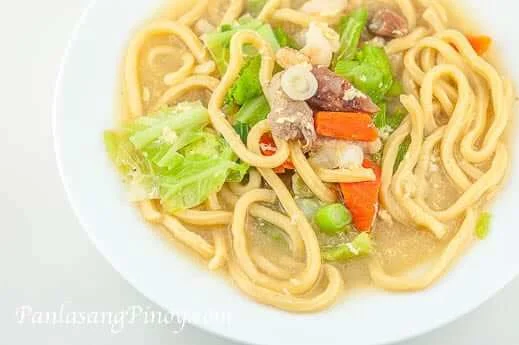
Oriental lomi is a thick, comforting noodle soup with pork, Chinese sausage and vegetables in a savoury broth. This version is a generous one-pot meal, finished with flour and egg for a lightly thickened texture.
Ingredients
- 425 g (15 oz)fresh round miki noodles
- 1 mediumcarrot, chopped
- 240 ml (1 cup)chopped Savoy cabbage
- 2 piecesChinese sausage, sliced diagonally
- 227 g (1/2 lb)pork, thinly sliced
- 120 ml (1/2 cup)chopped scallions
- 1 mediumonion, minced
- 3 clovesgarlic, crushed
- 720 ml (3 cups)chicken broth
- 480 ml (2 cups)water
- 3 tablespoons (about 24 g) flour, diluted in 120 ml (1/2 cup) waterall-purpose flour and water
- 45 ml (3 tablespoons)cooking oil
- 1egg
- to tastesalt and pepper
Instructions
- 1
Heat the oil
Heat the cooking oil in a pot.
- 2
Cook the aromatics
When the oil is hot, sauté the onion and garlic, taking care not to burn the garlic.
- 3
Brown the pork
Once the onion has softened, add the pork and cook until it turns light brown.
- 4
Add the sausage
Add the Chinese sausage and cook for 1 minute.
- 5
Simmer the broth
Pour in the chicken broth and water and bring to the boil. Cover the pot and simmer for 30 minutes.
- 6
Cook the noodles
Add the miki noodles and cook for 15 to 18 minutes.
- 7
Add the carrot
Stir in the carrot and cook for 5 minutes.
- 8
Add the greens
Add the Savoy cabbage and scallions, stir, and cook for 3 minutes.
- 9
Thicken the soup
Stir in the flour mixture and keep stirring as the broth cooks, until it thickens slightly.
- 10
Stir in the egg
Add the egg and stir quickly so it blends into the other ingredients.
- 11
Season to taste
Add salt and pepper to taste.
- 12
Serve the lomi
Transfer the lomi to a serving dish and serve.
- 13
Share and enjoy
Share and enjoy.
What is Oriental lomi?
Lomi is a Filipino noodle soup, commonly associated with Batangas, made with thick noodles and a rich, hearty broth. Its name is often linked to the Chinese term for a cooking style involving hand-pulled noodles.
This version combines pork and Chinese sausage with vegetables, then thickens the broth with flour and finishes it with egg. The result is a substantial soup with a soft, cohesive texture.
Nutrition and macros by portion
The nutrition label shows one serving as written: 390 calories, 20g protein, 39g carbs, 17g fat.
| Portion | Adjustment | kcal | Protein | Carbs | Fat |
|---|---|---|---|---|---|
| Lighter | Use less oil and sausage | 273 kcal | 14g | 27g | 12g |
| This serving | As written | 390 kcal | 20g | 39g | 17g |
| Hungry | Serve a larger bowl | 585 kcal | 30g | 59g | 26g |
The noodles and flour provide most of the carbohydrates, while the pork, Chinese sausage and egg contribute protein and fat; the cooking oil adds further fat. Pair a bowl with a fresh vegetable side, or add extra vegetables to the soup for a more balanced plate.
The noodles and broth
Fresh miki: these round wheat noodles are the main source of starch and give lomi its characteristic heft. They cook directly in the broth, so check their texture near the end of the stated cooking time.
Broth and water: chicken broth provides savoury depth, while water keeps the soup from becoming too concentrated as the noodles cook.
Build flavour in the pot
Onion and garlic: cook them gently until the onion softens, watching the garlic closely so it does not scorch and turn bitter.
Pork and sausage: browning the pork first gives the base more flavour, while the Chinese sausage contributes a sweet, savoury note as it simmers.
Get the thickness right
Flour mixture: stir the diluted flour into the pot and keep stirring as the soup thickens. Adding it after the noodles and vegetables helps you judge the final consistency.
Egg: add it near the end and stir promptly to distribute it through the hot soup. The egg should blend in rather than sit in a large clump.
Keep the vegetables tender
Carrot: it goes in after the noodles have had their head start, then cooks for 5 minutes. Cut it into similarly sized pieces so it softens evenly.
Cabbage and scallions: their brief 3-minute cook keeps them from disappearing into the thick soup. Stir them through so they heat evenly.
Timing and doneness
The pork simmers for 30 minutes before the noodles go in, followed by the listed noodle and vegetable cooking times. Total time is 90 minutes, including preparation.
Check the noodles for tenderness before thickening the broth. If they are not yet soft, continue cooking them in the broth and check again.
Serving suggestions
Serve the lomi hot while the broth is thick and the noodles are tender. Because it contains noodles, pork, sausage and vegetables, it can stand on its own as a meal.
For a fresher contrast, serve with a simple side of sliced vegetables or fruit. Offer extra pepper at the table if you like a sharper finish.
Recipe notes & tips
- Slice the pork thinly so it cooks evenly during the simmer.
- Keep the garlic moving in the pot and lower the heat if it begins to brown too quickly.
- Stir the flour mixture again just before adding it, as flour can settle in the water.
- Check the noodles for tenderness before adding the flour mixture.
- Taste the broth before adding salt, as the sausage and chicken broth may already be savoury.
Variations
- Add mushrooms: slice them and add them with the carrot for another savoury element.
- Use another cabbage: replace Savoy cabbage with a similar amount of another tender cabbage.
- Change the meat: use thinly sliced chicken in place of pork, keeping an eye on doneness.
- Adjust the thickness: use less flour mixture for a looser soup, adding it gradually.
- Add heat: serve with sliced chilli or a little chilli sauce at the table.
Common mistakes to avoid
- Burning the garlic: sauté it with the onion over moderate heat and stir often.
- Adding flour too quickly: stir the diluted flour in gradually while mixing the soup.
- Overcooking the greens: add the cabbage and scallions only for their stated 3 minutes.
- Skipping the noodle check: taste a noodle before thickening, since brands and thicknesses vary.
- Salting too early: season at the end so you can account for the saltiness of the broth and sausage.
How to store
Refrigerate leftovers in a covered container and use within 3 days. Reheat gently in a saucepan, stirring; add a splash of water or broth if the noodles have absorbed too much liquid.
Frequently asked questions
Can I use dried noodles instead of fresh miki?
Fresh round miki is specified for this recipe, and dried noodles may need different cooking times and liquid. Follow the packet instructions and check the noodles for tenderness before thickening the soup.
Can I use cornstarch instead of flour?
The recipe uses flour diluted in water. Cornstarch can thicken soup too, but it behaves differently, so add a small diluted amount gradually and stop when the broth is as thick as you like.
How do I know when the pork is ready?
The pork simmers in the broth for 30 minutes before the noodles are added. Cut the slices thinly and check a piece is cooked through before serving.
Why is my lomi very thick?
The noodles continue to absorb broth, especially as the soup stands. Stir in a little water or chicken broth when reheating to loosen it.
Can I prepare lomi ahead of time?
You can prepare the chopped ingredients ahead, but the noodles are best cooked close to serving so they do not become overly soft. Refrigerate prepared ingredients separately until needed.
Cook it from the original
This recipe comes from panlasangpinoy.com. Their page has the author’s own photos, notes and tips — the best place to cook it from.
Open the recipe on panlasangpinoy.com