
Garlic Cheddar Herb Irish Soda Bread
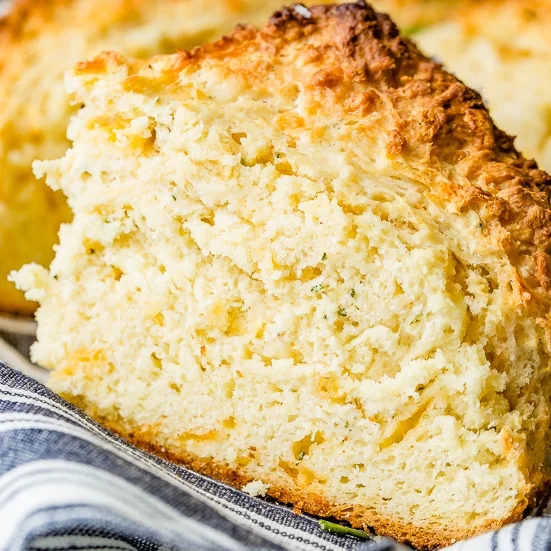
This no-yeast soda bread brings sharp cheddar, garlic and fresh herbs to a quick, rustic loaf. It is mixed by hand and baked until golden, making it a straightforward bread to serve warm with soup or alongside a meal.
Ingredients
- 516 g (4 cups plus 2 tablespoons)plain flour, plus extra for shaping
- 6 g (1¼ teaspoons)salt
- 5 g (1 teaspoon)bicarbonate of soda
- 4 g (1 teaspoon)sugar
- 75 g (⅔ cup)sharp cheddar, grated
- 2 clovesgarlic, minced
- 5 ml (1 teaspoon) fresh, chopped, or 2.5 ml (½ teaspoon) driedrosemary
- 5 ml (1 teaspoon) fresh, or 2.5 ml (½ teaspoon) driedthyme
- 57 g (4 tablespoons)cold butter
- 1 largeegg, whisked
- 420 ml (1¾ cups)buttermilk
Instructions
- 1
Preheat the oven
Heat the oven to 220°C (425°F).
- 2
Mix dry ingredients
In a large bowl, whisk together the flour, salt, bicarbonate of soda and sugar.
- 3
Add flavourings
Add the cheddar, garlic, rosemary and thyme, then toss to coat them in the flour.
- 4
Rub in butter
Break the cold butter into the flour mixture. Pinch and work it in with your hands until the mixture has a coarse, grainy texture.
- 5
Add wet ingredients
Make a well in the middle of the mixture and add the whisked egg and buttermilk.
- 6
Form the dough
Stir with a wooden spoon, then gently knead by hand just until the dough comes together into a ball.
- 7
Prepare the pan
Butter a skillet, Dutch oven or baking tray, then place the dough on it.
- 8
Score and bake
Cut a cross about 1.3 cm (½ inch) deep into the top of the dough. Bake for 35–40 minutes, until the top is brown and the loaf sounds hollow when tapped.
- 9
Serve warm
Take the bread out of the oven and serve it hot and fresh.
What is Irish soda bread?
Irish soda bread is a quick bread leavened with bicarbonate of soda rather than yeast. Its rise depends on the reaction between the soda and an acidic ingredient such as buttermilk, so it can be mixed and baked without a proving period.
This version keeps the simple, rustic approach and adds cheddar, garlic, rosemary and thyme for a savoury loaf. The cheese brings richness, while the herbs and garlic season the crumb.
Nutrition and macros by portion
The nutrition label shows one serving as written: 240 calories, 8g protein, 34g carbs, 8g fat.
| Portion | Adjustment | kcal | Protein | Carbs | Fat |
|---|---|---|---|---|---|
| Lighter | Smaller bread serving | 168 kcal | 6g | 24g | 6g |
| This serving | As written | 240 kcal | 8g | 34g | 8g |
| Hungry | Larger bread serving | 360 kcal | 12g | 51g | 12g |
The flour supplies most of the carbohydrates, while the cheddar, butter and egg contribute much of the fat and protein. Buttermilk and the other ingredients add further protein and carbohydrates; serve a slice with soup or salad for a more balanced plate.
Why the ingredients matter
Flour and soda: whisking them with the salt and sugar helps distribute the raising agent evenly before the wet ingredients go in.
Cheddar and herbs: sharp cheddar gives the bread a distinct savoury flavour, and fresh herbs add fragrance. Dried herbs work too, using the smaller quantities listed.
Handle the dough gently
Cold butter: pinch it into the flour until the mixture looks coarse and grainy. Small pieces of butter help give the loaf a tender texture.
Buttermilk mixture: stir in the egg and buttermilk, then knead only until the dough forms a ball. A little stickiness is normal; extended kneading can make the bread tougher.
Score and check for doneness
The cross: cut it about 1.3 cm deep, rather than slicing far into the loaf. It marks the surface and gives the dough room to open as it bakes.
The bake: begin checking at 35 minutes. Look for a brown top and tap the bread; a hollow sound is the recipe's cue that it is ready.
Choose a suitable pan
A buttered skillet, Dutch oven or baking tray can all be used. Whichever you choose, make sure it is large enough to hold the dough without crowding it.
The dough is shaped into a single ball, so keep it together on the pan rather than dividing it into smaller pieces; the stated baking time is for one loaf.
Serve it with a meal
This loaf is at its best served warm, when the cheddar is still fragrant and the crumb is soft. Cut it into wedges or slices once it is comfortable to handle.
Pair it with a bowl of soup, a simple salad or a savoury stew. Its garlic, cheese and herbs also make it flavourful enough to serve with just butter.
Recipe notes & tips
- Measure the flour carefully so the dough does not become unnecessarily dry.
- Use cold butter so it is easier to rub into the flour without melting.
- If using dried herbs, follow the smaller amounts given in the ingredient list.
- Butter the chosen pan before setting the dough on it.
- Check the loaf at 35 minutes, then continue baking if it is not browned and hollow-sounding.
Variations
- Extra herbs: Increase the rosemary or thyme slightly for a more pronounced herbal flavour.
- Different cheddar: Use another sharp cheddar in place of the listed variety.
- Dried herbs: Use the smaller dried-herb measures listed instead of fresh herbs.
- Garlic flavour: Reduce the minced garlic for a milder loaf.
- Skillet bake: Bake the dough in a buttered skillet instead of on a tray.
Common mistakes to avoid
- Overworking the dough: Knead only until it forms a ball to help keep the bread tender.
- Skipping the cross: Score the top about 1.3 cm deep before baking.
- Using warm butter: Keep it cold so it can be worked into a coarse texture.
- Guessing doneness by time alone: Check for a brown top and a hollow sound when tapped.
- Crowding the pan: Choose a pan with enough room for the whole dough ball.
How to store
Once cool, wrap the bread or store it in an airtight container at room temperature and eat within 2 days for the best texture. Reheat slices briefly in the oven, or warm them in a toaster if they fit.
Frequently asked questions
Can I use dried herbs instead of fresh?
Yes. Use ½ teaspoon dried rosemary and ½ teaspoon dried thyme, as listed in the ingredients.
How do I know when the bread is baked?
The top should be brown, and the loaf should sound hollow when tapped. The recipe gives a baking time of 35–40 minutes.
Can I make the dough ahead?
It is best to bake the dough soon after mixing, as the bicarbonate of soda starts reacting once it meets the buttermilk. Prepare the ingredients in advance, then mix and bake when ready.
Which pan should I use?
Use a buttered skillet, Dutch oven or baking tray, as specified in the method. Choose one large enough to hold the loaf.
Can I freeze the baked bread?
Yes. Once completely cool, wrap it well and freeze it. Thaw before serving, then warm it in the oven if you like.
Cook it from the original
This recipe comes from ohsweetbasil.com. Their page has the author’s own photos, notes and tips — the best place to cook it from.
Open the recipe on ohsweetbasil.com