
Sweet and Sour Pork (咕噜肉, Cantonese Style)
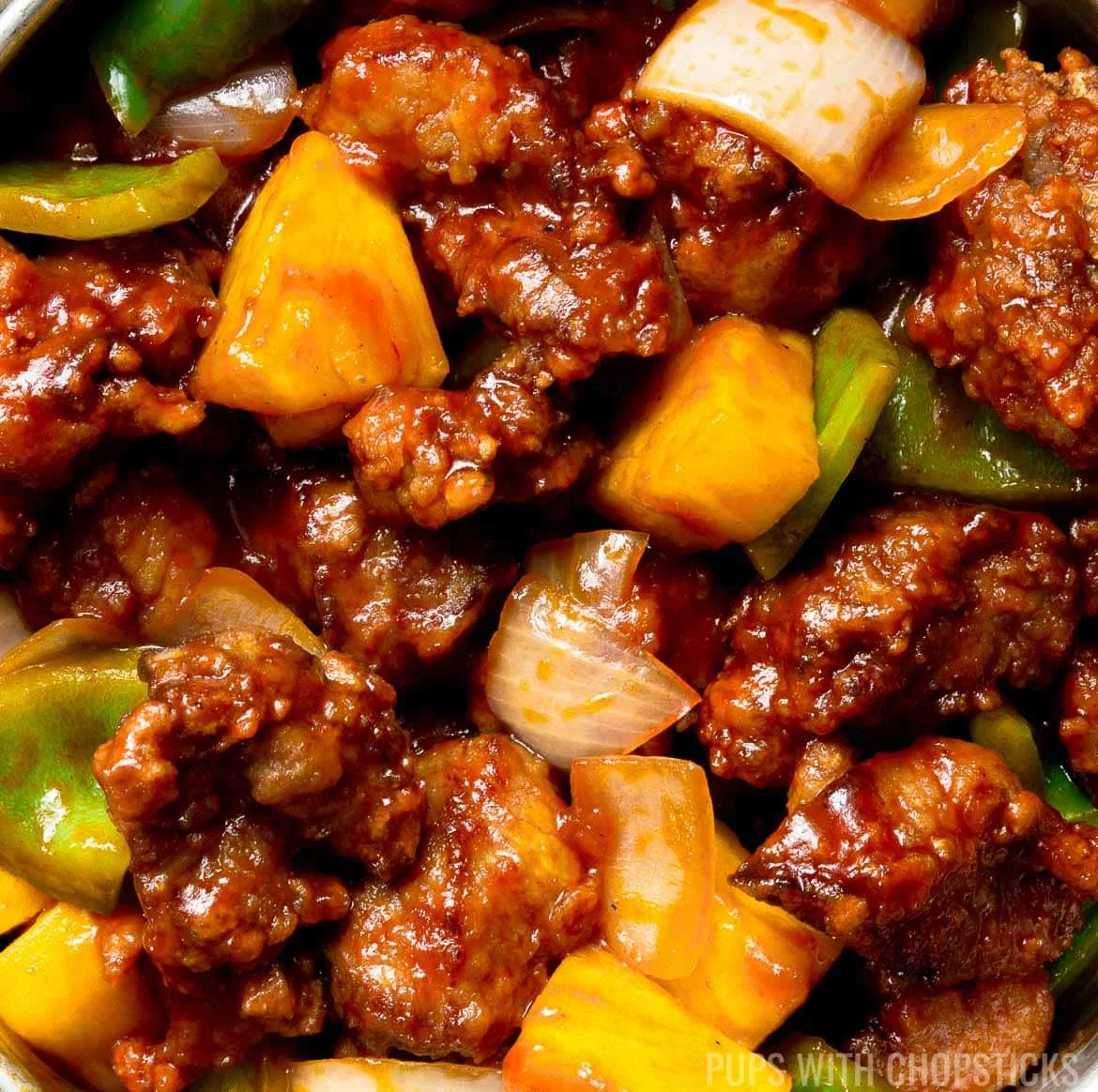
Crispy pieces of marinated pork are tossed with pineapple, peppers and onion in a glossy sweet and sour sauce. The double-fried coating and quick finish in the sauce help keep the pork crisp against the sweet, tangy vegetables.
Ingredients
- 150 g (1 cup)pineapple
- 1bell pepper, any colour, cut into 2.5 cm cubes
- 1/2white onion, cut into 2.5 cm cubes
- 454 g (1 lb)pork shoulder, cut into 2.5 cm pieces
- 2 tablespoonssoy sauce
- 1 small onion (approximately 60 ml grated, 1/4 cup)onion, grated
- 4–5 slices (approximately 2 tablespoons grated)ginger, grated
- 3 cloves (approximately 1 1/2 tablespoons grated)garlic, grated
- 120 g (1 cup)potato starch
- 4 tablespoonstomato paste
- 2 tablespoonsoil
- 120 ml (1/2 cup)white vinegar
- 100 g (1/2 cup)sugar
- 60 ml (1/4 cup)water
- 2 tablespoonssoy sauce
- 1 tablespooncornflour
- 1 tablespooncold water
Instructions
- 1
Prepare vegetables
Cut half a white onion and one bell pepper into 2.5 cm chunks and set them aside. For fresh pineapple, peel and core it, then cut it into 2.5 cm chunks. Drain canned pineapple and cut rings into chunks if needed; place the pineapple in a bowl.
- 2
Marinate pork
Cut the pork shoulder into 2.5 cm pieces and put them in a bowl. Blend the ginger, peeled garlic, small onion and 2 tablespoons soy sauce into a smooth paste; if you do not have a food processor, grate the aromatics instead. Mix the paste and pork well, adding the soy sauce if you grated the aromatics, then leave to marinate for 1 hour.
- 3
Coat the pork
Separate the marinated pork pieces so they are not clumped together. Toss them gently with half the potato starch until coated, then leave for 5 minutes, until the starch has absorbed the moisture and looks gummy. Put the remaining starch in a bowl or on a plate and coat each piece individually.
- 4
Fry until crisp
Heat a deep fryer to 180°C. Alternatively, heat oil in a frying pan or shallow pot over medium heat, with at least 2.5 cm of oil; a wooden chopstick or spoon dipped into the oil should bubble when it is hot enough. Fry the pork in batches if necessary for about 5 minutes, until crisp and browned. Lift it out for about 1 minute, then fry again for 30 seconds to 1 minute. Drain on a rack or absorbent paper.
- 5
Make the sauce
Heat 2–3 tablespoons of oil in a clean frying pan over medium heat. Add the tomato paste and toast for 1–2 minutes, until the oil turns dark reddish-orange. Stir in the vinegar, water, sugar and soy sauce and cook for 5 minutes. In a small bowl, dissolve the cornflour in the cold water, then pour it into the sauce slowly while stirring until thickened.
- 6
Finish and serve
Add the pepper, pineapple and onion to the thickened sauce and cook for 1–2 minutes, separating the onion chunks with a spatula. Add the crispy pork and quickly turn the pieces to coat them. Turn off the heat once coated, keeping the pork in the sauce for no more than 30 seconds to 1 minute, then plate and serve with rice.
What is Cantonese sweet and sour pork?
Sweet and sour pork, or 咕噜肉, is a Cantonese-style dish of fried pork coated in a lively sweet and tangy sauce. It is often served with pineapple and vegetables, with rice alongside.
This version builds flavour by marinating the pork with onion, ginger, garlic and soy, then giving it two starch coatings and two fries. The sauce is thickened before the pork goes in, so the pieces need only a brief toss to pick up its flavour.
Nutrition and macros by portion
The nutrition label shows one serving as written: 441 calories, 8g protein, 75g carbs, 13g fat.
| Portion | Adjustment | kcal | Protein | Carbs | Fat |
|---|---|---|---|---|---|
| Lighter | Less sugar, extra pepper | 309 kcal | 6g | 53g | 9g |
| This serving | As written | 441 kcal | 8g | 75g | 13g |
| Hungry | Larger portion with rice | 662 kcal | 12g | 113g | 20g |
The sugar and pineapple provide much of the carbohydrate, while the frying oil and pork contribute fat; pork is also the main source of protein. Serve with rice as suggested, and add extra vegetables on the side if you want a more balanced plate.
The pork and its marinade
Cut size: Aim for pieces around 2.5 cm so they cook evenly and are easy to coat. Keep the pieces separate when adding the starch to avoid clumps.
Aromatics: Blending or grating the onion, ginger and garlic makes a paste that clings to the pork with the soy sauce. Give it the full hour to marinate, as directed.
Why the coating is done twice
First layer: Half the potato starch goes onto the marinated meat and rests for 5 minutes. It absorbs the surface moisture and becomes gummy, helping the next layer adhere.
Second layer: Dipping each piece separately in the remaining starch gives it a more even outer coating. Shake off any loose excess before frying.
Frying for a crisp finish
Oil temperature: The recipe calls for 180°C in a deep fryer, or medium heat for a pan or shallow pot. In a pot, a wooden chopstick or spoon should bubble when dipped into the oil.
Two rounds: Fry the pieces for about 5 minutes until browned and crisp, then rest them for about 1 minute before frying again for 30 seconds to 1 minute. Work in batches if needed so the pan is not crowded.
Getting the sauce right
Tomato paste: Toast it in the hot oil for 1–2 minutes, until the oil turns dark reddish-orange. This is the colour cue given in the method before adding the vinegar, water, sugar and soy sauce.
Cornflour: Mix it with cold water before adding it slowly to the sauce while stirring. Stop when the sauce has thickened; this lets it cling to the pork and vegetables.
When to add the vegetables and pork
Vegetables: Give the pepper, pineapple and onion 1–2 minutes in the thickened sauce. This warms them while keeping the process quick.
Pork: Add the fried pieces last and coat them promptly. Leaving the coating in the sauce for longer than 30 seconds to 1 minute can make it soggy.
Serving the dish
Serve the pork as soon as it is coated, with rice to catch the sweet and sour sauce. The recipe combines tender pork, crisp coating, juicy pineapple and chunks of pepper and onion.
For a meal with more vegetables, serve extra vegetables alongside rather than leaving the fried pork to sit in the sauce.
Recipe notes & tips
- Cut the pork into similarly sized pieces so they fry at a similar rate.
- Pat fresh pineapple dry if it is very juicy before adding it to the sauce.
- Let the first starch coating rest for the full 5 minutes so it can absorb the marinade.
- Fry in batches if necessary to avoid crowding the pan.
- Have the sauce ingredients measured and ready before you start cooking it.
- Toss the pork into the sauce just before serving to preserve the crisp coating.
Variations
- Use canned pineapple: Drain it well and cut rings into chunks before adding them.
- Choose another pepper: Use any colour of bell pepper, as the recipe allows.
- Make it tangier: Adjust the balance at the table with a little extra vinegar.
- Add vegetables: Serve extra vegetables alongside the pork and rice.
- Grate by hand: Grate the ginger, garlic and onion if you do not have a food processor.
Common mistakes to avoid
- Clumped pork: Separate the pieces before coating so each one gets starch all around.
- Skipping the rest: Leave the first starch coating for 5 minutes so it turns gummy and moist.
- Crowding the oil: Fry in batches if the pieces cannot sit without crowding.
- Adding pork too soon: Thicken the sauce and cook the vegetables before adding the fried pieces.
- Over-saucing the coating: Toss the pork for no more than 30 seconds to 1 minute, then serve.
- Pouring in dry cornflour: Dissolve it in cold water first and stir as you add it to the sauce.
How to store
Refrigerate leftovers in an airtight container and use within 3 days. Reheat in a pan or oven until hot; the coating will soften after storage, especially if kept with the sauce.
Frequently asked questions
Can I use canned pineapple?
Yes. Drain it first, and cut the rings into chunks if needed.
Can I grate the aromatics instead of blending them?
Yes. Grate the ginger, garlic and small onion, then mix them with the soy sauce and pork.
How do I know the oil is ready?
In a pan or pot, dip in a wooden chopstick or the back of a wooden spoon. The oil is ready when bubbles form around it.
Do I need to fry the pork twice?
The method calls for two fries: about 5 minutes for the first, then 30 seconds to 1 minute after resting the pork for about 1 minute.
Can I make the sauce ahead?
You can prepare it ahead, but reheat and thicken it before adding the vegetables and freshly fried pork. Coat the pork just before serving to help keep it crisp.
What should I serve with sweet and sour pork?
The recipe suggests serving it with rice. Extra vegetables on the side also work well.
Cook it from the original
This recipe comes from pupswithchopsticks.com. Their page has the author’s own photos, notes and tips — the best place to cook it from.
Open the recipe on pupswithchopsticks.com