
Canned Diced Tomatoes
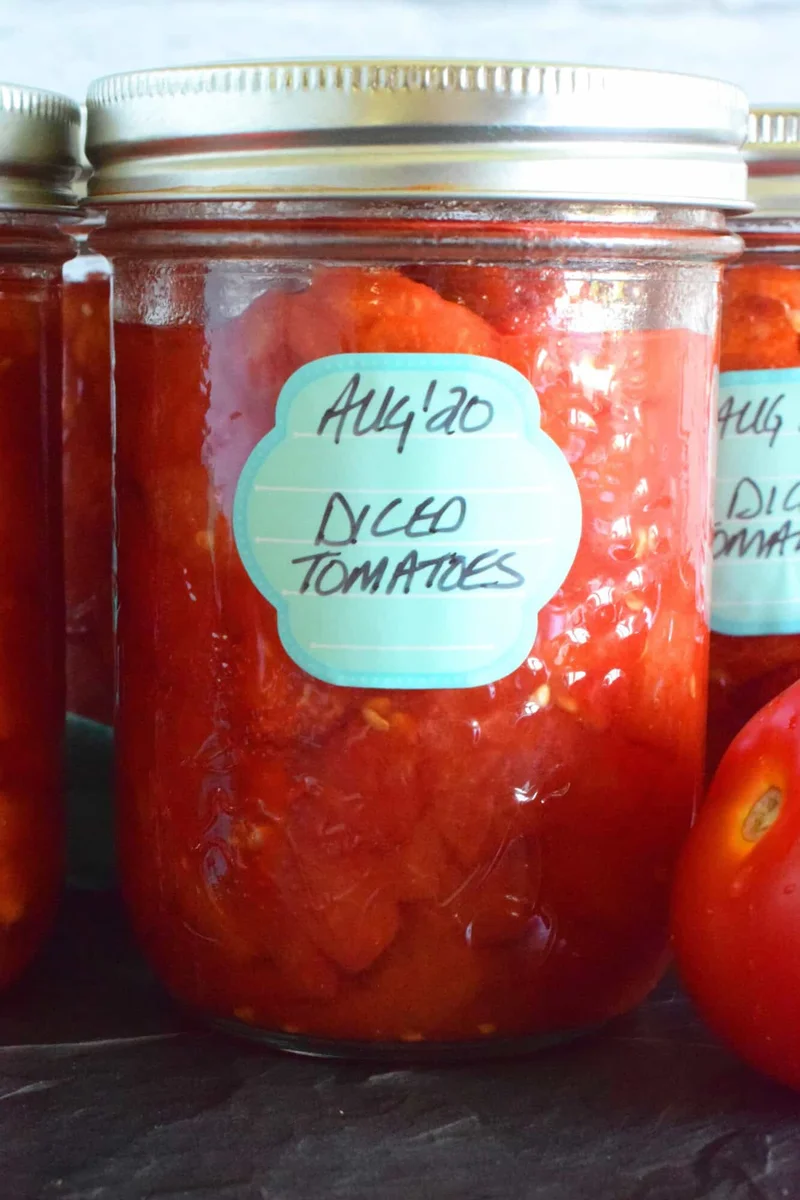
A pantry batch of peeled, diced plum tomatoes preserved with bottled lemon juice and salt. It’s a way to save a summer glut for later cooking, provided you follow a current, tested canning process for your jars, equipment and altitude.
Ingredients
- 9.53 kg (21 lb)plum (Roma) tomatoes, peeled, cored and diced
- 120 ml (8 tablespoons)bottled lemon juice
- 20 ml (4 teaspoons)salt
Instructions
- 1
Prepare the jars
Wash the jars and screw bands in soapy water, then rinse them thoroughly under hot running water. Put the clean jars on a baking tray in an oven preheated to 200°F (about 93°C), and set the bands aside. Boil a kettle, pour the water into a clean glass bowl and carefully submerge the sealing discs; leave them there.
- 2
Peel the tomatoes
Bring a small pan of water to a full boil. Lightly score an X through the skin on the bottom of each tomato, without cutting deeply, and set a bowl of ice water in the sink. Blanch about four tomatoes at a time for 30 seconds, lift them out with a slotted spoon and transfer them straight to the ice water. Repeat until all the tomatoes are blanched. When the skins have opened at the cuts, peel them off by hand and put the tomatoes in a clean bowl. Chop them, removing and discarding the cores.
- 3
Fill the jars
Take the jars out of the oven. Using a funnel, ladle in the diced tomatoes, keeping the rims clean. Pack them firmly, pressing the tomatoes down with a clean spoon.
- 4
Add lemon and salt
Add 1 tablespoon of bottled lemon juice and 1/2 teaspoon of salt to each jar.
- 5
Wipe the rims
Use a damp paper towel to clean each jar rim, making sure no tomato is left on it.
- 6
Position the discs
Use a magnetic lid lifter to take the sealing discs from the hot water. Place one directly on each jar without touching its underside.
- 7
Tighten the bands
Screw on the bands until firm, using only your fingertips and not forcing them tight.
- 8
Prepare the canner
Set up your pressure canner according to the instructions for its specific make and model.
- 9
Load the canner
Use a jar lifter to place the jars in the canner, then secure the lid.
- 10
Process the jars
Process for 30 minutes at 10 pounds (69 kPa) using a weighted gauge, adjusting pressure for altitudes above 1,000 feet as required. Start timing only once the canner reaches full pressure. When processing is complete, turn off the heat and let the pressure fall naturally.
- 11
Remove the jars
Lift each jar out carefully with the jar lifter. Keep the jars upright and do not wipe them dry. Set them on a wire cooling rack covered with a clean tea towel.
- 12
Cool and store
Leave the jars undisturbed to cool for at least 12 hours. Once cool, wipe away any residue on the outside, label the jars and store them in a cool, dark cupboard.
What are canned diced tomatoes?
Canned diced tomatoes are peeled, chopped tomatoes preserved for use in dishes such as soups, sauces and stews. Home canning has long been a way to keep seasonal produce available beyond the harvest.
This version uses plum tomatoes, bottled lemon juice and salt. The recipe’s pressure-canning directions should not be treated as a universal process: use current, tested guidance suited to your tomatoes, jar size, canner and altitude.
Nutrition and macros by portion
The nutrition label shows one serving as written: 54 calories, 3g protein, 12g carbs, 1g fat.
| Portion | Adjustment | kcal | Protein | Carbs | Fat |
|---|---|---|---|---|---|
| Lighter | Use a smaller portion | 38 kcal | 2g | 8g | 1g |
| This serving | As written | 54 kcal | 3g | 12g | 1g |
| Hungry | Serve a larger portion | 81 kcal | 5g | 18g | 2g |
The recipe’s supplied nutrition per serving is 54 kcal, with most of the carbohydrates coming from the tomatoes; the lemon juice and salt contribute little energy. Serve a portion alongside a protein-rich food and a vegetable or wholegrain side for a more rounded plate.
Choosing the tomatoes
Plum tomatoes: Their firm flesh is convenient for chopping and packing into jars. Choose sound tomatoes and discard any that are spoiled or damaged.
Ripeness: Ripe tomatoes give the batch its flavour, but very soft fruit can be harder to handle neatly during peeling and packing.
Peeling and chopping
Score lightly: A shallow X gives the skin a place to split without cutting far into the flesh.
Cool promptly: The ice bath halts the blanching and makes the loosened skins easier to remove. After peeling, remove the cores before dicing.
Keeping jar rims clean
Leave the rim clear: Tomato residue on the sealing surface can interfere with a clean closure, so use the funnel while filling and wipe each rim before fitting a disc.
Pack carefully: Press the tomatoes down with a clean spoon as the method directs, but avoid smearing the rim while doing so.
Pressure-canning details
Use tested guidance: Processing time and pressure depend on factors including the canner, jar size and altitude. Confirm the correct process for your setup with a reliable, current home-canning source before making this batch.
Altitude: The recipe says to adjust pressure above 1,000 feet but does not give the adjustment. Do not guess; check the canner instructions and tested guidance for your altitude.
Cooling and doneness cues
Natural depressurisation: The method calls for turning off the heat and letting the canner depressurise on its own. Follow your canner’s instructions before opening it.
Cool undisturbed: Keep jars upright on the covered rack for at least 12 hours. Do not retighten bands or move jars around during cooling.
Ways to use the tomatoes
Soups and stews: Add the tomatoes along with their juices to a simmering pot for a convenient tomato base.
Sauces: Drain them if a thicker starting point is useful, or include the liquid when the recipe needs extra moisture. Season the finished dish to taste.
Recipe notes & tips
- Blanch only a few tomatoes at a time so you can move them promptly into the ice bath.
- Use a funnel to keep tomato pieces away from the jar rims.
- Keep a clean bowl ready for the peeled tomatoes and discard the cores as you chop.
- Use a jar lifter when moving hot jars in or out of the canner.
- Check the pressure-canner instructions and current tested guidance before processing.
Variations
- Add herbs later: Stir fresh or dried herbs into a dish when you open a jar rather than changing the canning ingredients.
- Make a smooth sauce: Blend the tomatoes after opening a jar for a less chunky texture.
- Season at the table: Adjust herbs, spices and salt in the recipe you are making with the tomatoes.
- Use for soup: Add the diced tomatoes and their juices to a soup pot as its tomato base.
Common mistakes to avoid
- Cutting too deeply: Score only the skin so the tomatoes remain intact for peeling.
- Skipping the ice bath: Transfer each batch straight from the boiling water to the cold water to loosen the skins.
- Leaving tomato on the rim: Wipe the sealing surface with a damp paper towel before fitting the disc.
- Tilting hot jars: Lift them upright and set them down carefully after processing.
- Guessing the pressure adjustment: Check tested canning guidance for your altitude and equipment instead.
How to store
After cooling, label the jars and store them in a cool, dark cupboard, as the method directs. Follow current tested canning guidance for checking seals and storage; refrigerate after opening and use the contents promptly.
Frequently asked questions
Can I use another type of tomato?
The ingredient list specifies plum (Roma) tomatoes. If you want to use a different type, check tested canning guidance for the appropriate preparation and process.
Why does the method use bottled lemon juice?
It is the acidifying ingredient specified in this recipe. Keep to the amount and type in a tested canning process rather than substituting fresh lemon juice.
How should I adjust the pressure for altitude?
The recipe does not provide the adjustment amounts. Check current tested guidance for your altitude and the instructions for your particular pressure canner; do not estimate.
Can I use a water-bath canner instead?
This method specifies a pressure canner, not a water-bath canner. Use only a tested process that is appropriate for the tomatoes, preparation and equipment.
How long should the jars cool?
The method says to leave them undisturbed for at least 12 hours. Keep them upright on the covered rack while they cool.
Do the ingredient amounts match the per-jar instructions?
Not as written: the ingredient list gives 8 tablespoons of lemon juice and 4 teaspoons of salt, while the method calls for 1 tablespoon and 1/2 teaspoon per jar. Check a tested recipe and confirm the batch yield before starting.
Cook it from the original
This recipe comes from lordbyronskitchen.com. Their page has the author’s own photos, notes and tips — the best place to cook it from.
Open the recipe on lordbyronskitchen.com