
Adobo Pork Chops
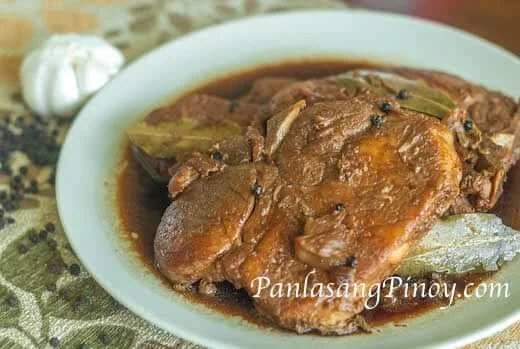
These Filipino-style adobo pork chops are browned in a pan, then simmered with soy sauce, cane vinegar, garlic, peppercorns and bay leaves. The savoury, gently tangy sauce is made for spooning over steamed rice.
Ingredients
- 907 g (2 lb)pork chops
- 60 ml (4 tablespoons)soy sauce
- 5 cloves, crushedgarlic
- 45 ml (3 tablespoons)cane vinegar
- 10 ml (2 teaspoons)whole peppercorns
- 4–5dried bay leaves
- 240 ml (1 cup)water
- to taste, if neededsalt
- 45 ml (3 tablespoons)cooking oil
Instructions
- 1
Heat the oil
Warm the cooking oil in a wide, deep pan over medium-high heat.
- 2
Brown the chops
When the oil is hot, fry the pork chops, turning each one after its first side becomes light to medium brown. This should take about 3–5 minutes per side, depending on the chops’ thickness.
- 3
Cook the aromatics
Add the garlic, peppercorns and bay leaves. Cook for about 2–3 minutes, until the garlic is lightly browned.
- 4
Add the liquids
Pour in the water and soy sauce, then bring the mixture to the boil.
- 5
Simmer the chops
Cover the pan and simmer for about 40–50 minutes, until the liquid has reduced by half. Add more water if needed.
- 6
Add the vinegar
Pour in the vinegar and let the liquid boil. Stir, then cook uncovered for 10 minutes.
- 7
Adjust the seasoning
Taste and add salt if needed. The soy sauce may provide enough saltiness, so season to your preference.
- 8
Serve with rice
Serve the pork chops with steamed white rice.
What are adobo pork chops?
Filipino adobo is known for meat cooked with a savoury, tangy mixture that commonly includes vinegar, soy sauce, garlic and seasonings. This version uses pork chops in place of the more familiar pork belly.
Browning the chops first builds colour in the pan, while the covered simmer gives the meat time to become tender and take on the sauce’s flavour.
Nutrition and macros by portion
The nutrition label shows one serving as written: 472 calories, 51g protein, 4g carbs, 26g fat.
| Portion | Adjustment | kcal | Protein | Carbs | Fat |
|---|---|---|---|---|---|
| Lighter | Use less cooking oil | 330 kcal | 36g | 3g | 18g |
| This serving | As written | 472 kcal | 51g | 4g | 26g |
| Hungry | Add extra steamed rice | 708 kcal | 77g | 6g | 39g |
The pork chops provide most of the protein, while the cooking oil contributes much of the fat. The small amount of carbohydrate comes mainly from the soy sauce and other sauce ingredients; rice served alongside adds substantially more. For a more balanced plate, serve with a generous portion of vegetables alongside the rice and chops.
Why these ingredients work
Pork chops: They make this a straightforward, bone-in or boneless alternative to belly; the method works with either, though thickness affects cooking time.
Soy sauce and vinegar: Soy sauce brings salt and savouriness, while cane vinegar gives the sauce its characteristic tang. The recipe adds the vinegar after the covered simmer.
Garlic and whole spices: Crushed garlic, peppercorns and bay leaves infuse the cooking liquid as the chops simmer.
Brown before simmering
Let the oil heat before adding the chops, and give them 3–5 minutes per side to develop a light to medium brown colour. Work in batches if the pan is too crowded to turn them comfortably.
Once the aromatics go in, keep an eye on the garlic: it should turn light brown after about 2–3 minutes, not become deeply browned.
Let the sauce reduce
Simmer the covered chops for around 40–50 minutes, checking that there is still liquid in the pan. Add a little more water if it is reducing too quickly.
The recipe’s cue is for the liquid to reduce to about half before adding vinegar. The final 10 minutes uncovered lets the sauce cook down further.
Season with care
Soy sauce contributes plenty of salt, so wait until the end to taste before adding any extra. The recipe leaves salt to preference rather than setting a fixed amount.
Keep the vinegar addition in its stated place, after the covered simmer. This preserves the method’s distinct stages and gives the sauce time to boil before its final uncovered cook.
Serve it with rice
Steamed white rice is the suggested accompaniment: it makes a simple base for the chops and their savoury, tangy sauce.
Spoon some of the pan sauce over the rice when serving so each portion gets both the meat and its cooking liquid.
Recipe notes & tips
- Choose chops of similar thickness so they brown and simmer at a similar pace.
- Use a wide, deep pan that can hold the chops and sauce without crowding.
- Turn each chop once during browning, after the first side has coloured.
- Check the liquid during the covered simmer and add water if it is reducing too quickly.
- Taste before adding salt because the soy sauce may be salty enough.
- Serve promptly with steamed white rice to catch the sauce.
Variations
- Use another vinegar: Substitute a different mild vinegar if cane vinegar is unavailable, keeping the stated quantity.
- Add onion: Include sliced onion with the garlic for a sweeter, more rounded aromatic flavour.
- Make it pepperier: Add extra whole peppercorns if you enjoy a stronger pepper note.
- Serve with greens: Add steamed greens alongside the rice and pork for a vegetable accompaniment.
- Use boneless chops: Choose boneless pork chops, adjusting the simmer according to their thickness and doneness.
Common mistakes to avoid
- Crowding the pan: The chops will be harder to brown evenly; cook them in batches if needed.
- Adding salt too early: Soy sauce already seasons the liquid; taste at the end before adding more.
- Letting the pan dry out: Check during the covered simmer and add water if the liquid is reducing too far.
- Over-browning the garlic: Cook it only until light brown, about 2–3 minutes.
- Skipping the uncovered finish: Cook for the stated 10 minutes after adding vinegar so the sauce can boil and reduce.
How to store
Refrigerate leftover pork and sauce in a covered container for up to 3 days. Reheat gently in a pan until hot throughout, adding a splash of water if the sauce has become too thick.
Frequently asked questions
Can I use bone-in or boneless pork chops?
Either can be used. Thickness affects how quickly the chops cook, so check them during the simmer.
Why add the vinegar after the covered simmer?
That is the order used in this recipe: the chops first simmer with water and soy sauce, then the vinegar is boiled and cooked uncovered for 10 minutes.
How do I know when the sauce has reduced enough?
After about 40–50 minutes covered, the recipe calls for the liquid to have reduced to roughly half its starting amount. Add water if it is reducing too quickly.
Should I add salt?
Taste the sauce first. Soy sauce may make it salty enough, but you can add salt at the end if needed.
What should I serve with adobo pork chops?
The recipe suggests steamed white rice, which is well suited to the savoury, tangy sauce.
Can I make the pork chops ahead?
Yes. Refrigerate them with the sauce and reheat gently before serving, adding a little water if needed.
Cook it from the original
This recipe comes from panlasangpinoy.com. Their page has the author’s own photos, notes and tips — the best place to cook it from.
Open the recipe on panlasangpinoy.com