
Bibingkang Malagkit Recipe
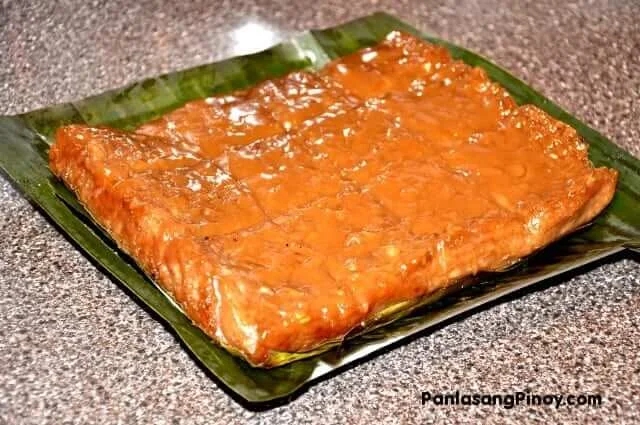
Bibingkang malagkit is a Filipino sticky rice cake topped with a thick coconut and brown sugar mixture. It is rich, sweet and satisfying, and makes a shareable dessert for a family meal or gathering.
Ingredients
- 400 g (2 cups)glutinous rice (sweet rice or malagkit), washed
- 450 g (2¼ cups)brown sugar
- 960 ml (4 cups)coconut milk
- 480 ml (2 cups)coconut cream
- ½ tspsalt
- as neededbanana leaves
Instructions
- 1
Cook the rice
Combine the washed glutinous rice and 960 ml coconut milk in a pot. Bring to the boil, then lower the heat and cook, stirring, until thickened; this can take 18–20 minutes or longer.
- 2
Add sugar
Stir in 250 g of the brown sugar and the salt. Keep stirring and cook for another 10 minutes, or until the rice is fully cooked and very sticky.
- 3
Prepare the pan
Line a 23 × 33 cm baking pan with banana leaves. Transfer the sticky rice mixture to the pan and set it aside.
- 4
Cook the topping
Heat a saucepan and combine the coconut cream with the remaining 200 g brown sugar. Bring to the boil, then simmer, stirring occasionally, until thickened.
- 5
Heat the oven
Preheat the oven to 200°C (400°F).
- 6
Bake the topping
Spread the topping evenly over the sticky rice. Bake for 12–18 minutes, or until the topping is slightly firm.
- 7
Cool the cake
Remove the pan from the oven and leave the cake to cool.
- 8
Serve
Serve the cooled bibingkang malagkit.
What is bibingkang malagkit?
Bibingkang malagkit is a Filipino baked sticky rice cake, often made with coconut milk and finished with a sweet coconut topping. Its name combines bibingka, a family of Filipino rice cakes, with malagkit, meaning sticky.
This version cooks the rice on the hob before baking it under a brown sugar and coconut cream topping. That two-stage method gives the rice time to become tender and sticky while the topping sets in the oven.
Nutrition and macros by portion
The nutrition label shows one serving as written: 1100 calories, 8g protein, 128g carbs, 59g fat.
| Portion | Adjustment | kcal | Protein | Carbs | Fat |
|---|---|---|---|---|---|
| Lighter | Smaller dessert slice | 770 kcal | 6g | 90g | 41g |
| This serving | As written | 1100 kcal | 8g | 128g | 59g |
| Hungry | Larger slice | 1650 kcal | 12g | 192g | 89g |
Most of the carbohydrates come from the glutinous rice and brown sugar, while the coconut milk and cream contribute most of the fat. The rice and coconut provide some protein, but this dessert is not a major protein source. Balance a portion with unsweetened tea or fruit, or serve it after a meal that includes a protein-rich main.
The rice and coconut base
Glutinous rice: this short-grain rice becomes cohesive and chewy when cooked; it is not the same as ordinary rice cooked until fluffy. Wash it as directed, then stir regularly as it thickens in the coconut milk.
Coconut milk: it cooks the rice and brings flavour through the whole cake. The mixture may take longer than 20 minutes to thicken, so use the texture rather than the clock as your guide.
Getting the sticky rice right
Stirring: scrape the bottom and sides of the pot as the mixture thickens so the rice cooks evenly and is less likely to catch. Reduce the heat if it begins sticking before the grains are tender.
Doneness: the rice should be fully cooked and very sticky before you transfer it to the pan. If it still tastes firm, continue cooking and stirring rather than relying on the oven to finish it.
Making the topping
Coconut cream: this makes a richer, thicker topping than coconut milk. Simmer it with the reserved brown sugar, stirring from time to time, until the mixture has thickened.
Even coverage: spread the topping over the rice in a level layer so it bakes at a similar rate across the pan. It should be a little firm when it comes out of the oven.
Banana leaves and baking
Lining: arrange the banana leaves in the pan before adding the cooked rice. Make sure they cover the base; use enough leaves for the pan size.
Baking: the oven stage is short, at 200°C for 12–18 minutes. Check the topping towards the end of that range and remove the pan once it has set slightly.
How to serve it
Cooling: let the cake cool after baking so the topping can settle and the sticky rice is easier to portion. Cut it into squares or rectangles for sharing.
Pairing: its coconut and brown sugar flavours are rich and sweet, so serve modest pieces alongside unsweetened tea or coffee. Fresh fruit can also provide a fresh contrast.
Recipe notes & tips
- Stir the rice mixture frequently as it thickens to help prevent it catching on the pot.
- Keep cooking the rice until tender and very sticky, even if it takes longer than 20 minutes.
- Measure out the sugar for the rice first so the remainder is ready for the topping.
- Simmer the coconut cream topping until thickened before spreading it over the rice.
- Let the baked cake cool before cutting so the pieces hold together more neatly.
Variations
- Toasted coconut: scatter toasted coconut over the topping after baking for extra texture.
- Pandan flavour: add a little pandan extract to the rice mixture for a fragrant variation.
- Less sweet: use less brown sugar in the topping, bearing in mind that it may set differently.
- Individual portions: divide the mixture between smaller banana-leaf-lined oven-safe dishes and check them early.
- No banana leaves: line the pan with baking paper if banana leaves are unavailable.
Common mistakes to avoid
- Stopping too early: rice that is still firm will not become tender during the short bake; cook it fully on the hob first.
- Leaving the pot unstirred: the thick mixture can catch on the base; stir regularly and lower the heat if needed.
- Using coconut milk for the topping: coconut cream gives the topping its thicker consistency; use the listed cream.
- Spreading unevenly: a lumpy topping can bake inconsistently; smooth it into an even layer over the rice.
- Cutting while hot: the cake may be difficult to portion neatly; let it cool before serving.
How to store
Store covered in the refrigerator for up to 3–4 days. Reheat individual portions gently in the microwave or in a low oven until warmed through.
Frequently asked questions
Can I use ordinary rice instead of glutinous rice?
Glutinous rice is what gives this cake its distinctive sticky, cohesive texture. Ordinary rice will not produce the same result.
How do I know when the rice is cooked?
It should be tender throughout and very sticky after cooking with the coconut milk and sugar. If the grains are still firm, continue cooking and stirring.
Can I make it without banana leaves?
Yes. Use baking paper to line the pan if you do not have banana leaves.
Why is my topping still runny?
It may need more simmering before it goes on the rice. Cook the coconut cream and sugar until the mixture thickens, then bake until it is slightly firm.
Can I serve it warm?
Yes, though letting it cool first makes it easier to cut and serve in neat portions.
Cook it from the original
This recipe comes from panlasangpinoy.com. Their page has the author’s own photos, notes and tips — the best place to cook it from.
Open the recipe on panlasangpinoy.com