
Kimchi Fried Rice with Spam
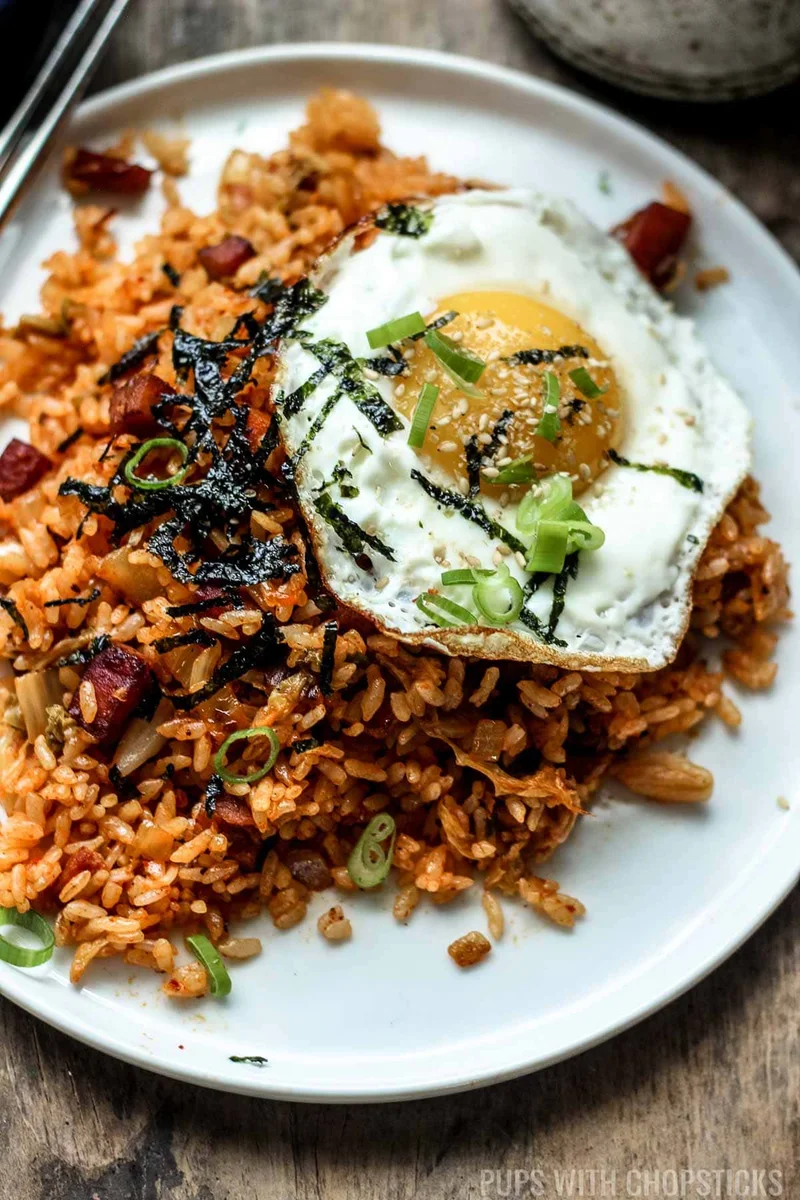
Kimchi fried rice, or kimchi bokkeumbap, combines cold rice with tangy kimchi, savoury Spam and a punchy sauce. It makes a quick, hearty meal, especially with a sunny-side-up egg on top.
Ingredients
- 570 g (3 cups)cold leftover rice
- about 170 g (1 cup)Spam, cut into 6 mm (¼-inch) cubes
- 2 cloves (about 1½ tablespoons)garlic, finely minced
- about 50 g (⅓ cup)onion, diced
- about 150 g (1 cup)kimchi
- 28–42 g (2–3 tablespoons)butter
- 10 ml (2 teaspoons)sesame oil
- optional; 1 egg per servingegg, for a sunny-side-up topping
- 60 ml (¼ cup)kimchi liquid, squeezed from the kimchi
- 15 ml (1 tablespoon)gochujang (Korean hot pepper paste)
- 15 ml (1 tablespoon)fish sauce or soy sauce
- to tastetoasted sesame seeds
- to tastegreen onions
- to tasteroasted seaweed
Instructions
- 1
Break up rice
Gently separate the cold leftover rice into small pieces by hand.
- 2
Prepare kimchi
Measure the kimchi and squeeze its liquid into a separate bowl. Chop the kimchi into small pieces about 6 mm (¼ inch) across and set it aside.
- 3
Prepare toppings
Remove the Spam from its can, cut it into 6 mm (¼-inch) cubes and set aside. Peel and dice the onion, then peel and finely mince the garlic. If using roasted seaweed, cut it into small pieces with scissors; finely chop the green onions if using. Set both garnishes aside.
- 4
Mix the sauce
Measure the reserved kimchi liquid. If there is not enough, make up the shortfall by mixing 2½ teaspoons of gochujang with 2 tablespoons of water; double that mixture if you need more than 2 tablespoons of liquid. Stir the kimchi liquid with the fish sauce and gochujang until combined.
- 5
Fry the egg
If serving with a fried egg, pan-fry it sunny-side up, transfer it to a plate and set it aside for the end.
- 6
Brown the Spam
Set a frying pan over medium-high heat and melt the butter with 1–2 tablespoons of oil. Add the Spam and cook for about 3–4 minutes, until it is a deep, toasted pink.
- 7
Cook the aromatics
Reduce the heat to medium. Add the onion and garlic and cook for 2 minutes.
- 8
Cook the kimchi
Add the chopped kimchi and cook for 3–4 minutes, until little or no liquid remains in the pan.
- 9
Warm the rice
Add the cooked rice and cook for 1–2 minutes.
- 10
Add the sauce
Pour in the sauce and stir for about 1 minute, until evenly mixed and no white rice remains. If you find lumps, let the rice warm through, then press them apart with your utensil. Taste and add salt or soy sauce if needed.
- 11
Finish and serve
Turn off the heat and stir in the sesame oil. Add your chosen toppings and, if using, place the fried egg on top. Serve hot as a main or side, enjoying the rice with the runny yolk.
What is kimchi fried rice?
Kimchi bokkeumbap is a Korean fried-rice dish built around cooked rice and kimchi. Its appeal is the contrast between tangy, fermented kimchi, savoury seasoning and the soft, chewy grains.
This version adds browned Spam for a substantial, salty bite, then finishes with sesame oil and optional garnishes. A fried egg on top brings a rich yolk that coats the rice.
Nutrition and macros by portion
The nutrition label shows one serving as written: 774 calories, 18g protein, 117g carbs, 24g fat.
| Portion | Adjustment | kcal | Protein | Carbs | Fat |
|---|---|---|---|---|---|
| Lighter | Less butter and Spam | 542 kcal | 13g | 82g | 17g |
| This serving | As written | 774 kcal | 18g | 117g | 24g |
| Hungry | Add a fried egg | 1161 kcal | 27g | 176g | 36g |
Most of the carbohydrates come from the rice, while the butter, cooking oil and sesame oil supply much of the fat. Spam and the optional egg contribute protein, with the kimchi and seasonings adding flavour and some sodium. Pair a portion with fresh vegetables or salad for a more balanced plate.
Why use cold rice?
Cold leftover rice is easier to separate than freshly cooked rice, so it is less likely to turn sticky as it fries. Break up clumps gently before cooking to make it easier to coat every grain with sauce.
If the rice still has a few lumps in the pan, let it heat through first, then press them apart with a spoon or spatula.
Get the kimchi ready
Kimchi liquid: Squeezing it from the kimchi gives you a flavourful base for the sauce. Keep it separate while you chop the kimchi, and use the gochujang-and-water mixture to make up any shortfall.
Kimchi pieces: Small pieces distribute more evenly through the rice. Cooking them until the pan is nearly dry helps prevent excess moisture from making the finished rice soggy.
Build the flavour
Spam: Browning the cubes for 3–4 minutes gives them a toasted exterior before the onion and garlic go in. Stir occasionally so they colour without sticking.
Sauce: Gochujang brings chilli heat, while fish sauce or soy sauce adds savouriness. Taste the finished rice before adding extra salt, as both the Spam and sauce already contribute seasoning.
Watch the texture
The kimchi should cook until little or no liquid is left in the pan before you add the rice. This helps the grains fry rather than steam.
Once the sauce is added, stir until the rice is evenly coloured, with no white patches. Finish with sesame oil off the heat to preserve its fragrant aroma.
Make it a meal
Serve the rice hot with a sunny-side-up egg if you like; the runny yolk makes a rich topping. Chopped green onions, toasted sesame seeds and roasted seaweed add fresh, nutty and crisp notes.
For a simple plate, pair it with a fresh, lightly dressed salad or a side of vegetables to balance the savoury rice.
Recipe notes & tips
- Use cold, leftover rice and loosen it before it reaches the pan.
- Squeeze the kimchi over a bowl so you can reserve its liquid for the sauce.
- Cut the Spam and kimchi into small, similar-sized pieces for an even mix.
- Let the kimchi cook until the pan is nearly dry before adding the rice.
- Taste before adding salt, especially if you used Spam and fish sauce.
- Stir in the sesame oil after turning off the heat.
Variations
- Use soy sauce: Swap it for the fish sauce for a different savoury note.
- Add an egg: Top each serving with a sunny-side-up egg and let the yolk run into the rice.
- Adjust the heat: Use more or less gochujang to suit your preference.
- Add seaweed: Scatter small pieces of roasted seaweed over the rice just before serving.
- Finish with spring onions: Add finely chopped green onions for a fresh garnish.
Common mistakes to avoid
- Using freshly cooked rice: It can clump and turn sticky; cold leftover rice is easier to separate.
- Skipping the kimchi squeeze: Too much liquid can make the rice soggy; reserve the liquid and cook the chopped kimchi until the pan is nearly dry.
- Adding the rice too soon: Wait until the kimchi has cooked down before stirring in the rice.
- Leaving white patches: Keep mixing after adding the sauce until the rice is evenly coated.
- Over-seasoning: Spam and the sauce are savoury already; taste before adding extra salt or soy sauce.
- Adding sesame oil too early: Stir it in after turning off the heat to keep its aroma.
How to store
Refrigerate leftovers in an airtight container and eat within 3–4 days. Reheat until steaming hot in a frying pan or microwave, adding a small splash of water if the rice seems dry. Store any fried egg separately and cook it fresh if possible.
Frequently asked questions
Can I use freshly cooked rice?
Cold leftover rice is easiest to fry because the grains separate well. If using freshly cooked rice, spread it out and cool it thoroughly first.
What can I use instead of Spam?
The recipe lists no specific replacement. You can omit it or use another savoury protein that suits you, adjusting the seasoning to taste.
What if I do not have enough kimchi liquid?
Mix 2½ teaspoons of gochujang with 2 tablespoons of water to make up the shortfall. Double the mixture if you need more than 2 tablespoons of liquid.
Can I leave out the egg?
Yes. The egg is an optional topping; serve the rice with the sesame seeds, green onions or seaweed instead.
How do I stop the rice from getting soggy?
Use cold rice, squeeze excess liquid from the kimchi and cook the kimchi until little or no liquid remains before adding the rice.
Can I make it less spicy?
Use less gochujang in the sauce. You can also taste the rice before adding the full amount and adjust it to your preference.
Cook it from the original
This recipe comes from pupswithchopsticks.com. Their page has the author’s own photos, notes and tips — the best place to cook it from.
Open the recipe on pupswithchopsticks.com