
French Crepes
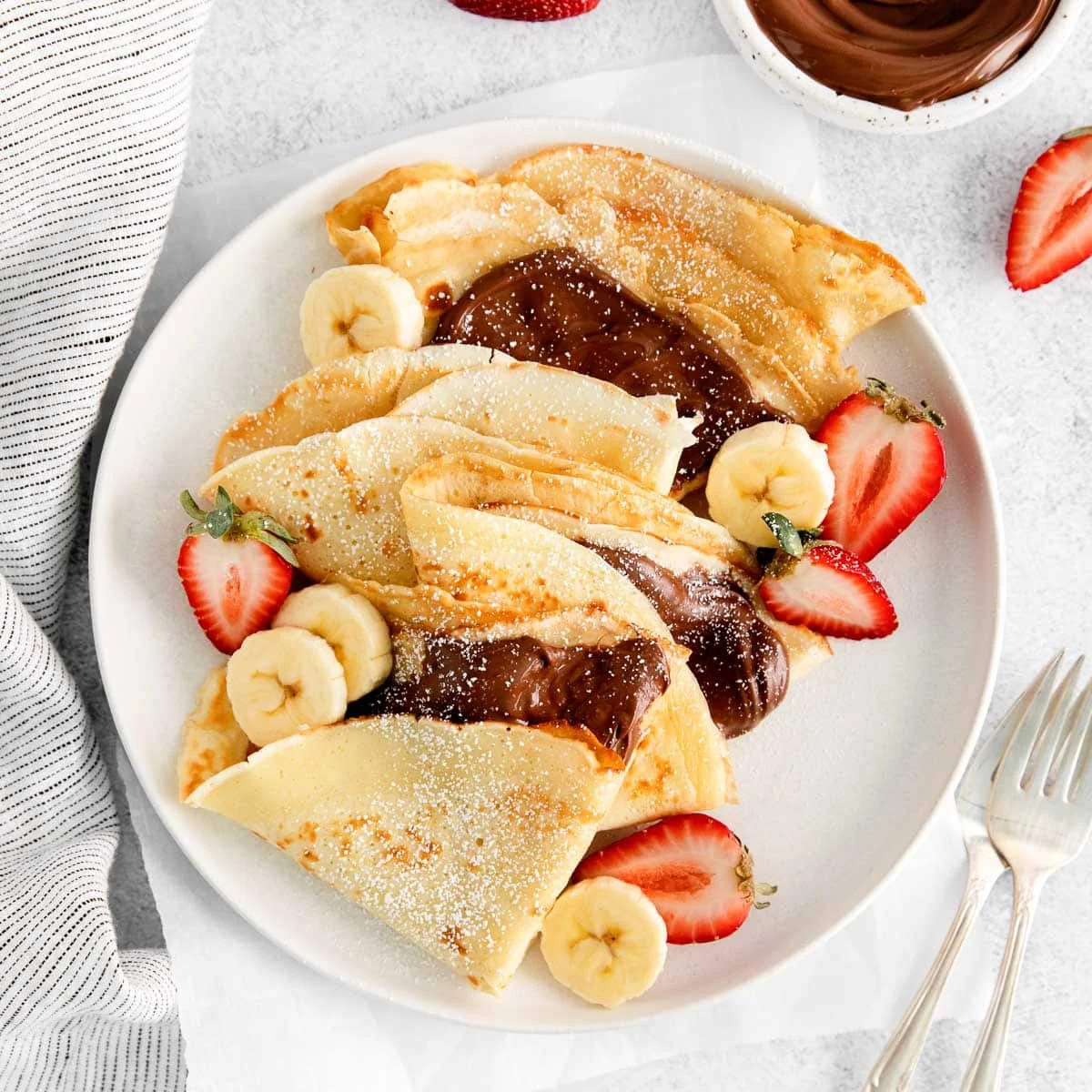
French crêpes are thin, soft pancakes with delicate, lightly crisp edges and a buttery flavour. This simple batter works for sweet or savoury fillings, making them a versatile choice for breakfast, dessert or a light meal.
Ingredients
- 120 mlwhole milk
- 120 mlwater, at room temperature
- 2 largeeggs, at room temperature
- 57 g, melted, plus extra for greasingunsalted butter
- 125 gplain flour
Instructions
- 1
Blend wet ingredients
Put the milk, water, eggs and melted butter in a high-speed blender. Blend for 15 seconds, or until fully combined.
- 2
Add the flour
Add the flour and pulse for 10 seconds, until any large dry lumps have gone. Scrape down the blender sides if needed.
- 3
Chill the batter
Refrigerate the batter for at least 30 minutes or up to overnight. Chilling helps the flour absorb moisture so the crêpes can cook thin and crisp; do not skip this step.
- 4
Warm the pan
Set a large 20 cm non-stick frying pan over medium-low heat. When it is just warm, add about 2.5 ml (½ teaspoon) butter and let it melt, coating the pan evenly.
- 5
Spread the batter
Pour 60 ml (¼ cup) of batter into the centre of the pan, tilting it in a circle as you pour so the batter spreads evenly. If tilting is awkward, pour the batter in a circle and gently shake the pan to make a thin layer; the crêpes may be less round but will still be delicious.
- 6
Cook and flip
Cook for 1–2 minutes, until the edges and underside are golden brown. Flip the crêpe and cook for another 1–2 minutes.
- 7
Cook the rest
Repeat the warming, spreading and cooking steps with the remaining batter, adding more butter to the pan as needed.
- 8
Add your fillings
Serve the crêpes with your favourite fillings.
What are French crêpes?
Crêpes are thin pancakes associated with France, where they are served with both sweet and savoury fillings. Unlike thicker breakfast pancakes, they rely on a loose batter that spreads across the pan in a fine layer.
This version uses a straightforward milk, water, egg, butter and flour batter. Blending makes it quick to combine, while chilling gives the flour time to absorb liquid.
Nutrition and macros by portion
The nutrition label shows one serving as written: 106 calories, 3g protein, 10g carbs, 6g fat.
| Portion | Adjustment | kcal | Protein | Carbs | Fat |
|---|---|---|---|---|---|
| Lighter | Use less pan butter | 74 kcal | 2g | 7g | 4g |
| This serving | As written | 106 kcal | 3g | 10g | 6g |
| Hungry | Serve extra crêpes | 159 kcal | 5g | 15g | 9g |
The flour supplies most of the carbohydrates, while the butter contributes much of the fat and the eggs and milk provide some protein. Serve with fruit or vegetables alongside, or add a protein-rich filling such as eggs or cheese to make the plate more substantial.
Why chill the batter?
Resting time: the recipe calls for at least 30 minutes in the fridge, or up to overnight. This helps the flour hydrate and makes the batter easier to spread thinly.
Before cooking: give the chilled batter a gentle stir if it has settled. Keep it cold while you prepare the pan and fillings.
Getting a thin, even crêpe
Pour and tilt: add 60 ml of batter to the centre of the warm pan, then tilt the pan in a circular motion. Work promptly so the batter spreads before it begins to set.
No perfect circle needed: if tilting feels tricky, gently shake the pan to spread the batter. Uneven edges do not affect the taste.
Pan heat and butter
Heat level: begin with a medium-low setting and wait until the pan is just warm. Too much heat can set the batter before it has spread.
Light coating: use about 2.5 ml of butter for the first crêpe, enough to coat the surface. Add more between crêpes when the pan looks dry.
When are they cooked?
First side: look for golden-brown colour around the edges and underneath, usually after 1–2 minutes. The edges should look set before you flip.
Second side: cook for another 1–2 minutes. Lift an edge carefully with a spatula to check the colour and avoid tearing the thin crêpe.
Sweet or savoury fillings
Sweet serving: try fruit, yoghurt, jam or a little sugar and lemon. Add fillings after cooking so the crêpes stay easy to handle.
Savoury serving: pair them with cheese, cooked vegetables or eggs. Choose fillings that are already cooked, as the recipe only cooks the crêpes.
Recipe notes & tips
- Measure the batter for each crêpe so they cook at a similar rate.
- Use a non-stick pan and a thin, even film of butter.
- Keep the heat at medium-low and adjust it if the edges brown too quickly.
- Have a thin spatula ready before you start cooking.
- Stack cooked crêpes on a plate while you finish the batch.
Variations
- Vanilla: add a little vanilla extract to the batter for sweet fillings.
- Citrus: add finely grated lemon or orange zest for a fragrant sweet version.
- Herbs: stir chopped fresh herbs into the batter for savoury crêpes.
- Cheese: fill warm crêpes with grated cheese and fold while the filling softens.
- Fruit: serve with sliced seasonal fruit for a fresh topping.
Common mistakes to avoid
- Skipping the rest: the batter may be harder to spread thinly; chill it for at least 30 minutes.
- Overheating the pan: the batter can set before it spreads; reduce the heat to medium-low.
- Using too much batter: the crêpe becomes thick; measure about 60 ml for each one.
- Adding too much butter: the batter can slide rather than coat the pan; use just enough to make a thin film.
- Flipping too soon: an unset crêpe may tear; wait until the edges look set and the underside is golden.
How to store
Cool leftover crêpes, stack them with baking paper between if you like, and store in an airtight container in the fridge for up to 2 days. Reheat briefly in a lightly buttered pan over low heat, turning once.
Frequently asked questions
Can I make the batter ahead?
Yes. The recipe allows the batter to chill for up to overnight in the fridge. Stir it gently before cooking if it has separated.
Can I make crêpes without a blender?
Yes. Whisk the wet ingredients together, then gradually whisk in the flour until combined. Aim for a smooth batter without large lumps.
How much batter goes in each crêpe?
Use about 60 ml (¼ cup) per crêpe, poured into the centre of the pan and spread by tilting.
Why are my crêpes tearing?
They may be too delicate to flip if the first side has not set. Give it more time, and use a thin spatula to loosen the edge before turning.
Can I freeze cooked crêpes?
Yes. Cool them completely, separate them with baking paper and freeze in a sealed container. Thaw in the fridge and warm in a pan.
Cook it from the original
This recipe comes from platedcravings.com. Their page has the author’s own photos, notes and tips — the best place to cook it from.
Open the recipe on platedcravings.com