
Browned Butter Ravioli
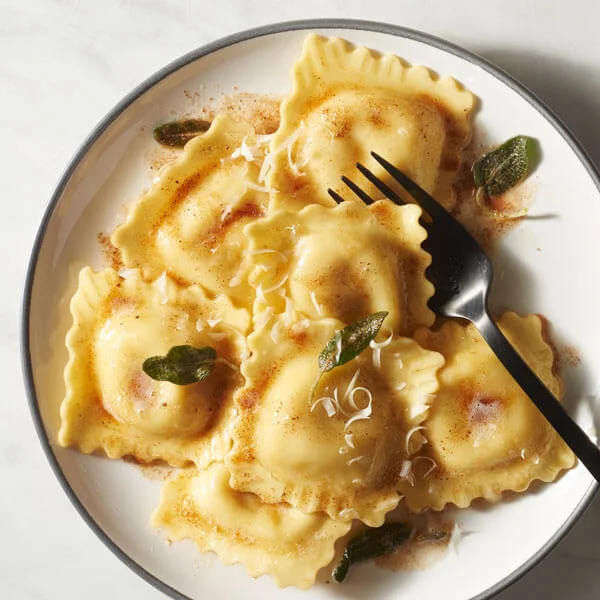
Cheese-filled ravioli are tossed in butter browned until golden, then finished with fresh sage and Parmesan. It is a quick pasta supper with a nutty, savoury sauce that comes together while the ravioli cook.
Ingredients
- 567–709 g (20–25 oz)refrigerated or frozen cheese ravioli
- 59 ml (1/4 cup)butter with olive oil and sea salt
- 12fresh sage leaves
- to tasteshredded Parmesan cheese
Instructions
- 1
Cook the ravioli
Cook the ravioli in salted water following the directions on the packet. Drain and set aside.
- 2
Brown the butter
Meanwhile, melt the butter with olive oil and sea salt in a 30 cm (12-inch) sauté pan over medium-high heat. Watch closely as it cooks for 3–5 minutes, until it foams and just begins to turn a delicate golden colour. Take the pan off the heat.
- 3
Toss and serve
Stir in the sage leaves, then gently fold in the cooked ravioli until coated. Sprinkle with shredded Parmesan to taste.
What is browned butter ravioli?
Ravioli are Italian filled pasta, commonly served with a simple sauce that lets the filling remain the focus. Here, cheese-filled ravioli are coated in butter cooked until its milk solids turn golden and develop a toasted, nutty flavour.
Fresh sage and a little Parmesan round out the dish without requiring a long list of ingredients. The quick method makes it useful for a weeknight meal or an easy first course.
Nutrition and macros by portion
The nutrition label shows one serving as written: 550 calories, 19g protein, 61g carbs, 25g fat.
| Portion | Adjustment | kcal | Protein | Carbs | Fat |
|---|---|---|---|---|---|
| Lighter | Use less butter | 385 kcal | 13g | 43g | 18g |
| This serving | As written | 550 kcal | 19g | 61g | 25g |
| Hungry | Add more ravioli | 825 kcal | 29g | 92g | 38g |
The ravioli provide most of the carbohydrates and some of the protein, while the butter contributes much of the fat; the cheese adds further protein and fat. Pair a portion with a generous serving of vegetables or salad for a more balanced plate.
Choosing the ravioli
Cheese filling: Refrigerated or frozen cheese ravioli both work; use the cooking time on the packet because shapes and brands vary.
Salted water: Cook the pasta in well-salted water, but avoid adding salt to the butter sauce automatically, since the butter and Parmesan can already be salty.
Watch the butter closely
Golden stage: The butter should foam and begin to take on a delicate golden colour after 3–5 minutes over medium-high heat. Keep your attention on the pan, as it can move from browned to burnt quickly.
Stop the cooking: Take the pan off the heat as soon as the colour starts to change. The hot pan will continue to cook the butter for a short time.
Keep the ravioli tender
Gentle handling: Drain the cooked ravioli carefully and fold them into the sauce rather than stirring vigorously. This helps keep filled pasta intact.
Coated, not crowded: Turn the ravioli just enough to cover them in butter. If your pan is too full to toss comfortably, combine the pasta and sauce in a larger warm bowl.
Sage and Parmesan
Fresh sage: Add the leaves after removing the pan from the heat, as directed. The warmth of the butter helps release their aroma without needing another cooking step.
Finishing cheese: Sprinkle Parmesan over the ravioli just before serving. Add it to taste, keeping in mind that a generous amount will make the dish saltier.
Timing and serving
Work in parallel: Start the butter while the ravioli cook, keeping a close eye on both. Drain the pasta when it is ready so it can be tossed with the sauce straight away.
On the plate: Serve as a main with a crisp green salad or lightly cooked vegetables alongside. A little extra Parmesan can be offered at the table.
Recipe notes & tips
- Check the ravioli packet for its cooking time, especially if using frozen pasta.
- Have the sage and Parmesan ready before you drain the ravioli.
- Use a pan large enough to toss the ravioli without crushing them.
- Take the butter off the heat as soon as it starts turning golden.
- Taste before adding extra salt, since the butter and Parmesan are seasoned.
Variations
- Add black pepper: Grind it over the finished ravioli for a peppery contrast.
- Use toasted walnuts: Sprinkle a small handful over the dish for added crunch.
- Add lemon: Finish with a little lemon zest for a fresh, sharp note.
- Try another herb: Replace the sage with fresh thyme leaves for a different aroma.
- Use a different filling: Choose another filled pasta, adjusting the cooking time to its packet directions.
Common mistakes to avoid
- Leaving the butter unattended: It can burn quickly once it foams, so watch for the first golden colour.
- Overcooking the ravioli: Follow the packet timing and drain them when tender to help prevent splitting.
- Stirring too roughly: Fold the ravioli gently into the sauce to keep the filling inside.
- Adding sage over high heat: Stir it in after taking the pan off the heat, as the method directs.
- Salting without tasting: The seasoned butter and Parmesan can add plenty of salt, so taste before adjusting.
How to store
For the best texture, serve the ravioli straight away. Refrigerate leftovers in a covered container for up to 3 days, then reheat gently in a pan with a small splash of water; the butter sauce may not look as smooth after chilling.
Frequently asked questions
Can I use frozen ravioli?
Yes. Cook it according to the packet directions, which may differ from those for refrigerated ravioli.
How can I tell when the butter is browned?
It will foam and begin to turn a delicate golden colour. Remove the pan from the heat at that point rather than waiting for a deep brown colour.
Can I make the sauce ahead?
It is best made just before serving so the butter does not cool and separate. The steps are quick enough to carry out while the ravioli cook.
What can I serve with browned butter ravioli?
A green salad or lightly cooked vegetables make a simple accompaniment. Serve them alongside so the pasta remains the centre of the meal.
Can I use dried sage?
Fresh sage is specified for this recipe and gives the sauce its leafy aroma. If substituting dried sage, use a small amount because its flavour is more concentrated.
Cook it from the original
This recipe comes from landolakes.com. Their page has the author’s own photos, notes and tips — the best place to cook it from.
Open the recipe on landolakes.com