
Non Alcoholic Sangria
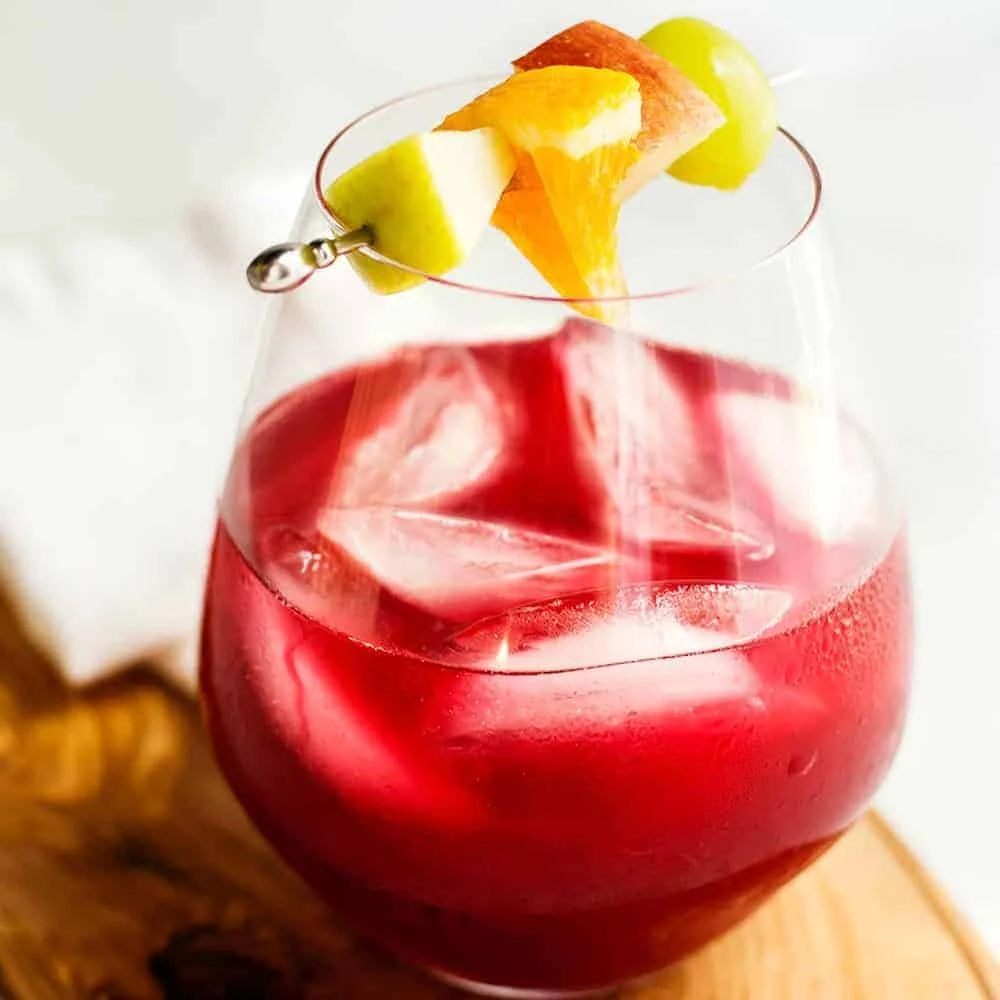
This alcohol-free sangria combines hibiscus tea, citrus, fruit and alcohol-free orange bitters for a colourful pitcher with a pleasantly complex flavour. Make it ahead so the fruit has time to infuse the drink before serving.
Ingredients
- 6hibiscus tea bags
- 355 ml (1 1/2 cups)boiling water
- 355 ml (1 1/2 cups)ice cubes
- 60 ml (1/4 cup)honey
- 30 ml (2 tablespoons)water
- 1/2lemon, juiced and zested
- 240 ml (1 cup)fresh orange juice
- 30 ml (2 tablespoons)alcohol-free orange bitters
- 1orange, thinly sliced into rounds
- 1apple, halved, cored and thinly sliced
- 150 g (1 cup)grapes, red or green, or a mix
Instructions
- 1
Steep the tea
Put the tea bags in a measuring pitcher of at least 950 ml capacity. Pour over the boiling water and leave to steep for 5 minutes. Remove the bags, pressing them against the side of the pitcher with the back of a spoon to extract the flavour. Add the ice and stir.
- 2
Make the syrup
While the tea steeps, put the honey and water in a small saucepan over low heat. Warm just until the honey becomes liquid and stirs easily into the water. Take the pan off the heat, stir in the lemon juice and zest, and leave to cool.
- 3
Mix the drink
Pour the tea and any remaining ice into a large pitcher with a capacity of at least 1.9 litres. Stir in the honey syrup, orange juice and bitters until combined.
- 4
Add fruit and chill
Add the orange and apple slices and grapes, then stir gently. Refrigerate for at least 1 hour and up to overnight before serving.
What is non-alcoholic sangria?
Sangria is a fruit-filled drink associated with Spain and the wider Iberian Peninsula, traditionally made with wine. This version uses hibiscus tea as its base, bringing tartness and a deep red colour without alcohol.
Orange bitters add a fragrant, layered note that helps give the drink complexity, while citrus, apple and grapes bring familiar sangria flavours. It is a good choice when you want a make-ahead pitcher to share.
Nutrition and macros by portion
The nutrition label shows one serving as written: 131 calories, 0g protein, 30g carbs, 0g fat.
| Portion | Adjustment | kcal | Protein | Carbs | Fat |
|---|---|---|---|---|---|
| Lighter | Use less honey | 92 kcal | 0g | 21g | 0g |
| This serving | As written | 131 kcal | 0g | 30g | 0g |
| Hungry | Serve with substantial snacks | 197 kcal | 0g | 45g | 0g |
The carbohydrates come mainly from the honey, orange juice and fruit, while the tea and bitters contribute flavour with little energy. The recipe contains no meaningful protein or fat per serving according to the supplied nutrition figures. Serve a glass with a protein-rich snack, such as hummus, to make it part of a more filling spread.
Why hibiscus tea works
Tea choice: Hibiscus has a bright, tangy flavour that stands up well to fruit and orange juice. Steeping it for 5 minutes gives the base time to develop flavour before it is diluted with ice.
Press gently: Squeeze the tea bags against the pitcher with the back of a spoon after steeping, as directed, to release more of the brewed tea.
Make the honey syrup
Low heat: Warm the honey with the measured water only until it turns liquid and blends easily. There is no need to boil it.
Cool first: Stir in the lemon juice and zest off the heat, then let the mixture cool before adding it to the pitcher. This helps keep the finished drink cold when you combine the ingredients.
Balance the citrus
Fresh juice: Fresh orange juice supplies a rounded citrus flavour, while the bitters add a more aromatic orange note. Together they complement the tart hibiscus base.
Lemon: Juice and zest add a sharper lift to the sweet honey and fruit. Use the zest as well as the juice, as both are included in the recipe.
Give the fruit time
Chilling: Refrigerate the pitcher for at least an hour so the sliced fruit can infuse the drink. It can be left overnight, which makes it convenient to prepare ahead.
Gentle stirring: Fold in the fruit carefully so the slices stay intact. Thin rounds of orange and apple are easy to serve from the pitcher.
Serve it well
Pitcher size: Use a pitcher that holds at least 1.9 litres, leaving room for the tea, ice, juice and fruit to mix comfortably.
With food: Serve chilled alongside savoury snacks or a Mediterranean-style spread. The crisp fruit and citrus notes work well with salty bites.
Recipe notes & tips
- Use a pitcher of at least 1.9 litres so the fruit and liquid are easy to stir together.
- Set a timer for the 5-minute tea steep to keep the flavour consistent.
- Warm the honey only until it dissolves easily; do not let the syrup boil.
- Let the honey mixture cool before adding it to the tea.
- Chill the finished sangria for at least an hour before serving.
- Slice the orange and apple thinly so they are easy to pour and serve.
Variations
- Mixed grapes: Use both red and green grapes for a varied look and flavour.
- Extra citrus: Add more thin orange slices for a stronger citrus presence.
- Apple choice: Use a crisp eating apple that holds its shape while chilling.
- Less sweet: Reduce the honey to suit your taste.
- More tart: Add a little extra lemon juice for a sharper finish.
Common mistakes to avoid
- Over-steeping the tea: Keep to 5 minutes so the hibiscus base does not become too intense.
- Boiling the honey: Warm it gently until liquid, then take the pan off the heat.
- Adding warm syrup: Let the honey, water and lemon mixture cool before mixing it into the pitcher.
- Skipping the chill: Refrigerate for at least an hour to give the fruit time to infuse the drink.
- Stirring roughly: Fold the fruit in gently to keep the slices and grapes intact.
How to store
Keep the sangria covered in the refrigerator and serve within 1–2 days for the freshest fruit and flavour. Stir gently before pouring; this drink is served chilled and does not need reheating.
Frequently asked questions
Can I make this sangria ahead?
Yes. Chill it for at least an hour, or prepare it the night before as the method allows. Keep it refrigerated until serving.
Can I use a different hibiscus tea?
Yes, use another hibiscus tea bag variety. The recipe specifies hibiscus tea, and its tart character is central to the flavour.
What if I cannot find alcohol-free orange bitters?
The recipe calls for alcohol-free orange bitters, which provide a distinct aromatic note. If you cannot find them, you can leave them out, though the flavour will be less complex.
Can I use bottled orange juice?
The ingredients call for fresh orange juice. Bottled juice can be used if needed, though the citrus flavour may differ.
How long should the fruit sit in the drink?
Chill the pitcher for at least 1 hour and up to overnight before serving.
Can I make it less sweet?
Yes. Start with less honey syrup, then taste and add more if you prefer. The fruit and orange juice also contribute sweetness.
Cook it from the original
This recipe comes from pinchandswirl.com. Their page has the author’s own photos, notes and tips — the best place to cook it from.
Open the recipe on pinchandswirl.com