
Brown Butter Cacio e Pepe with Crispy Fried Egg
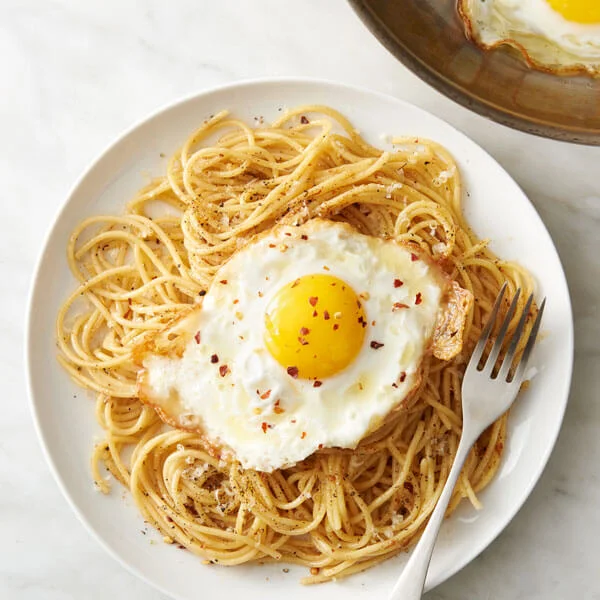
Spaghetti is coated in peppery brown butter and Parmesan, then finished with crisp-edged fried eggs. It makes a quick, savoury meal with a rich sauce and a runny-yolk option.
Ingredients
- 227 g (8 oz)uncooked dried spaghetti
- 57 g (½ stick; ¼ cup)butter
- 1 teaspooncoarsely ground black pepper
- 57 g (2 oz)grated Parmesan cheese
- 3 tablespoonsbutter
- 4 largeeggs
- as desiredgrated Parmesan cheese
- as desiredcrushed red pepper flakes
Instructions
- 1
Cook the spaghetti
Cook the spaghetti according to the packet directions, then drain, reserving 475 ml (2 cups) of the cooking water. Set the pasta aside.
- 2
Brown the butter
Put 57 g (¼ cup) butter and the pepper in a medium saucepan. Cook over medium heat for 5–7 minutes, watching closely, until the butter foams and turns golden brown. Add the spaghetti and stir to coat, then mix in 57 g (2 oz) Parmesan.
- 3
Loosen the sauce
Add the reserved cooking water 120 ml (½ cup) at a time, stirring until the sauce reaches your preferred consistency. Discard any water left over and cover the pasta to keep it warm.
- 4
Heat the frying pan
Meanwhile, heat 3 tablespoons butter in a 30 cm (12-inch) pan over medium-high heat. Swirl it gently to coat the pan; it should shimmer and just begin to smoke.
- 5
Fry and baste eggs
Carefully slide the eggs into the butter, dropping them close to the pan’s surface to limit splattering. Tilt the pan so the butter gathers at one side, then use a heatproof spoon to baste the whites, avoiding the yolks. Cook for 1–2 minutes, until the edges are crisp and golden.
- 6
Drain the eggs
Carefully loosen the eggs from the pan with a spatula and transfer them to a plate lined with kitchen paper to drain.
- 7
Serve the pasta
Transfer the warm pasta to serving plates and top with the fried eggs. Serve immediately with extra Parmesan and crushed red pepper flakes, as desired.
What is cacio e pepe?
Cacio e pepe is a Roman pasta dish whose name means cheese and pepper. Its familiar combination of pasta, grated cheese and black pepper is kept here, but brown butter gives the sauce a nutty note and fried eggs make it a more substantial plate.
The method builds flavour in the butter, then uses starchy pasta water to help the cheese coat the spaghetti. The eggs are cooked separately so their crisp edges stay distinct from the silky pasta.
Nutrition and macros by portion
The nutrition label shows one serving as written: 520 calories, 18g protein, 44g carbs, 30g fat.
| Portion | Adjustment | kcal | Protein | Carbs | Fat |
|---|---|---|---|---|---|
| Lighter | Use less finishing butter | 364 kcal | 13g | 31g | 21g |
| This serving | As written | 520 kcal | 18g | 44g | 30g |
| Hungry | Add extra spaghetti | 780 kcal | 27g | 66g | 45g |
The spaghetti supplies most of the carbohydrates, while butter contributes much of the fat and the Parmesan and eggs provide protein as well as additional fat. Serve it with a green salad or vegetables to add freshness and balance the rich pasta.
Brown butter carefully
Butter stage: cook the butter and pepper over medium heat, keeping a close eye on the pan as it foams. Take it to golden brown, rather than letting it darken too far.
Pepper choice: coarsely ground pepper gives the sauce a noticeable bite and texture. It goes into the butter early, so its flavour infuses the fat.
Use pasta water for the sauce
Reserved water: save the cooking water before draining the spaghetti; its starch helps the butter and cheese form a coating sauce. Add it gradually instead of pouring in the full amount at once.
Consistency: stop adding water when the sauce clings to the strands but still looks supple. The recipe calls for discarding any extra water.
Fry eggs with crisp edges
Hot butter: wait until it shimmers and just begins to smoke before adding the eggs. Sliding them in close to the pan helps reduce splattering.
Basting: tilt the pan to pool the butter and spoon it over the whites, taking care not to cover the yolks. The stated cue is crisp, golden edges after 1–2 minutes.
Keep the timing in sync
Pasta first: cook and sauce the spaghetti before frying the eggs, then cover the pasta to keep it warm while you work. This helps everything reach the table promptly.
Serve promptly: transfer the eggs from the kitchen-paper-lined plate straight onto the pasta. The contrast between the crisp edges and warm, coated spaghetti is best just after cooking.
Finish and serve
Toppings: add extra Parmesan and crushed red pepper flakes as desired. The cheese reinforces the savoury sauce, while the flakes bring heat.
On the side: a crisp green salad or simply dressed vegetables provide freshness alongside the buttery pasta. Serve the eggs whole so each person can break a yolk into their portion.
Recipe notes & tips
- Reserve the pasta water before draining so it is ready when the sauce needs loosening.
- Stir the Parmesan into the pasta before adding the reserved water.
- Add the cooking water in measured additions and stop when the sauce coats the spaghetti.
- Use a heatproof spoon when basting the eggs in hot butter.
- Keep the pasta covered while frying the eggs, then serve straight away.
Variations
- More pepper: add extra coarsely ground black pepper to the butter for a sharper bite.
- Chilli finish: increase the crushed red pepper flakes for more heat at the table.
- Extra cheese: offer additional Parmesan at serving for a cheesier finish.
- Runny yolks: keep the yolks intact while basting the whites, then let each diner break one over the pasta.
- Greens on the side: serve with lightly dressed salad leaves for a fresh contrast.
Common mistakes to avoid
- Burnt butter: watch it closely as it foams and take it off the heat once golden brown.
- Watery sauce: add the reserved cooking water gradually rather than all at once.
- Dry pasta: keep back the cooking water and use enough to make the sauce coat the strands.
- Splattering eggs: slide them into the pan close to its surface.
- Broken yolks: baste the whites with the spoon and avoid pouring butter over the yolks.
How to store
Store leftover pasta and eggs in an airtight container in the fridge and use within 2 days. Reheat gently in a pan with a small splash of water; the eggs will lose their crisp edges and the yolks may set further.
Frequently asked questions
Can I use another type of pasta?
Yes, another dried pasta shape can work, though the cooking time will vary. Cook it according to its packet directions and reserve some of its cooking water.
How much pasta water should I add?
Add it 120 ml (½ cup) at a time until the sauce coats the spaghetti to your liking. You may not need all the reserved water.
How do I know when the butter is browned?
The butter will foam and then turn golden brown. Watch it closely during the 5–7 minutes of cooking so it does not go too dark.
Can I fry the eggs ahead?
They are best cooked just before serving, when the edges are crisp. If they stand, they will soften and cool.
Can I make this without the eggs?
Yes. The brown-butter, pepper and Parmesan spaghetti can be served on its own, with extra Parmesan or vegetables alongside if you like.
Cook it from the original
This recipe comes from landolakes.com. Their page has the author’s own photos, notes and tips — the best place to cook it from.
Open the recipe on landolakes.com