
Currywurst Recipe
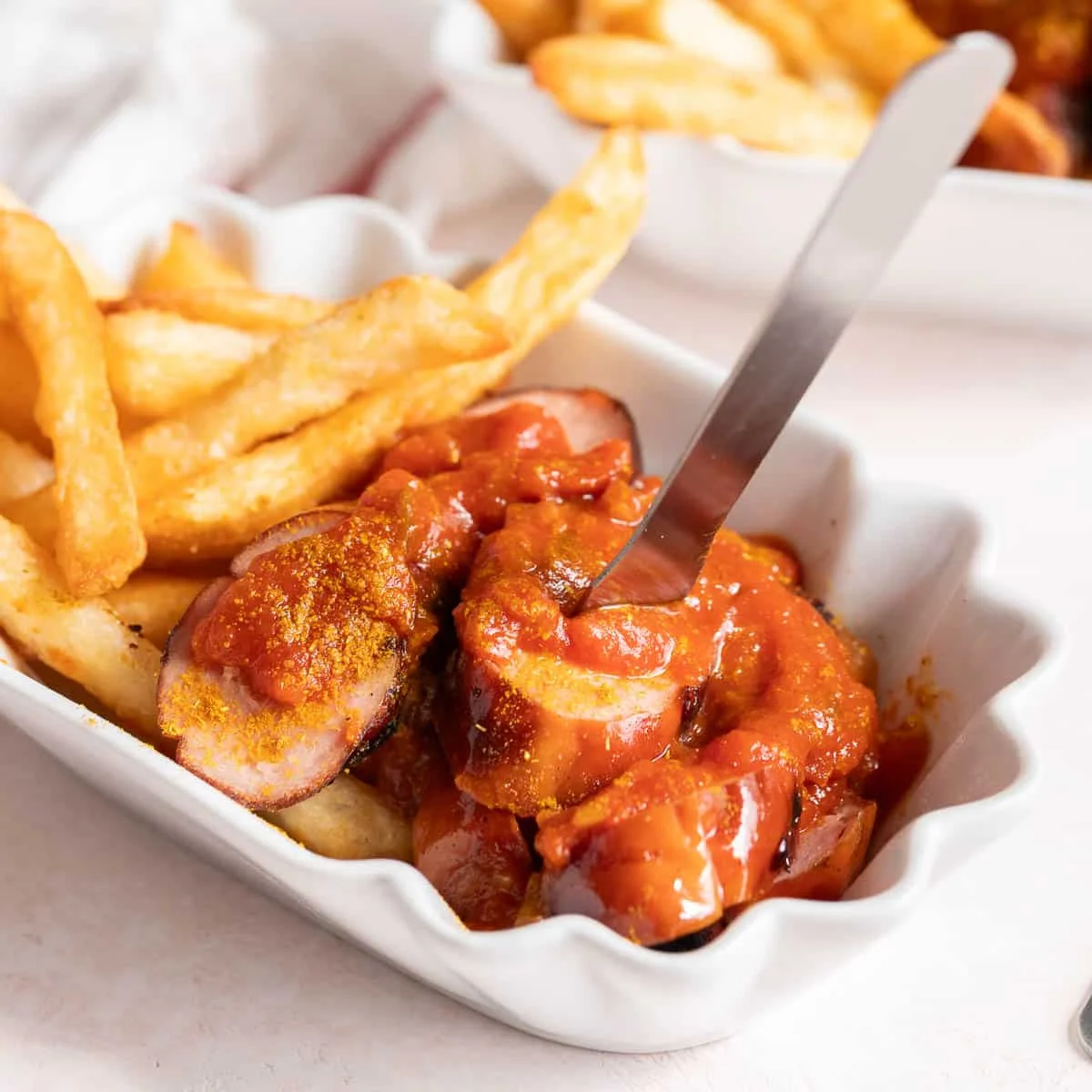
Currywurst pairs browned sausages with a warmly spiced tomato sauce, finished with a dusting of curry powder. This generous batch is quick to make and works well for a casual meal or a gathering.
Ingredients
- 3–4 mediumGerman-style pickles
- 1 medium (or 2)onion (or shallots)
- 4 tablespoons (60 ml)unsalted butter
- 1 tablespoon (15 ml)sugar
- 4 tablespoons (60 ml)curry powder
- 70 g (¼ cup)tomato paste
- 830 ml (3½ cups)passata (or crushed tomatoes)
- 475 ml (2 cups)tomato ketchup
- 2 teaspoons (10 ml)salt
- 2 teaspoons (10 ml)beef Better Than Bouillon
- 1½ tablespoons (22.5 ml)apple cider vinegar
- 16sausages (bratwurst or cooked sausages)
- to tastecurry powder, for sprinkling
Instructions
- 1
Chop the vegetables
Finely chop the pickles and onion by hand, then set them aside.
- 2
Soften the onion
Melt the butter in a large saucepan over medium-high heat. Add the onion and sugar and cook for about 3 minutes, stirring often, until the onion has softened.
- 3
Toast the spices
Stir in the curry powder and cook for 2 minutes, stirring constantly, until fragrant. Add the tomato paste and stir for a few more seconds.
- 4
Combine the sauce
Add the passata or crushed tomatoes, ketchup, salt, beef bouillon, vinegar and reserved chopped pickles. Stir to combine.
- 5
Simmer the sauce
Bring the sauce to the boil over medium heat, stirring occasionally. Turn the heat down, cover the pan and simmer for 15 minutes. Taste and adjust the seasoning as needed.
- 6
Brown the sausages
While the sauce simmers, grill the sausages on a barbecue or pan-fry them until nicely browned.
- 7
Serve the currywurst
Slice the grilled sausages and serve them with the sauce and a sprinkle of curry powder. Alternatively, while the sauce is still hot, ladle it into 4 clean 450 g mason jars and seal immediately.
What is currywurst?
Currywurst is a German street-food dish of sausage served with a tomato-based sauce flavoured with curry powder. It is closely associated with Berlin, where it became a popular quick meal after the Second World War.
This version builds a sweet, tangy sauce with ketchup, passata, vinegar and chopped pickles. Browning the sausages separately gives them colour and lets the sauce remain the main flavour.
Nutrition and macros by portion
The nutrition label shows one serving as written: 312 calories, 11g protein, 18g carbs, 23g fat.
| Portion | Adjustment | kcal | Protein | Carbs | Fat |
|---|---|---|---|---|---|
| Lighter | Use less sauce | 218 kcal | 8g | 13g | 16g |
| This serving | As written | 312 kcal | 11g | 18g | 23g |
| Hungry | Add chips or bread | 468 kcal | 17g | 27g | 35g |
The sausages and butter provide most of the fat, while the sausages also contribute protein. The passata, ketchup and sugar supply most of the carbohydrates. Balance a serving with vegetables or salad alongside, and add chips or bread if you want a more substantial plate.
The sauce's flavour base
Onion and sugar: Cooking these together in butter softens the onion and gives the sauce a rounded starting point. Stir frequently so the onion softens without catching.
Curry and tomato paste: Briefly cooking both in the pan brings out their aroma before the wetter ingredients go in. Keep stirring, as the paste can stick if left unattended.
Pickles and vinegar: The pickles add a savoury, sharp note, while the vinegar brightens the tomato and ketchup. Chop the pickles finely so their flavour is spread throughout the sauce.
Getting the sauce texture right
The 15-minute covered simmer gives the ingredients time to meld. Stir occasionally and keep the heat low enough for a gentle simmer rather than a vigorous boil.
Passata makes a smooth sauce, while crushed tomatoes leave it more textured. Taste at the end and adjust the seasoning to suit the saltiness of your ketchup and bouillon.
Browning the sausages
Grill or pan-fry the sausages while the sauce cooks, turning them as needed for even browning. They should be hot all the way through; follow the packet guidance if using raw sausages.
Slice them before serving, as the recipe directs, so the sauce coats the pieces easily. Add the curry-powder topping just before serving for a fresh, fragrant finish.
Timing and batch size
The sauce takes about 20 minutes from softening the onion through simmering, and the sausages cook alongside it, keeping the total preparation time to around 30 minutes. Use a large saucepan so the sauce can be stirred without spilling.
This recipe makes 16 portions, so it suits a crowd or a batch-cooking plan. If cooking fewer sausages, the sauce can still be made as written and stored separately.
What to serve with currywurst
Chips or crusty bread are useful for catching the sauce, while a simple green salad or steamed vegetables add a fresh contrast. Keep sides fairly plain so they do not compete with the tangy, spiced topping.
For a casual spread, serve the sliced sausages and sauce separately so everyone can choose how much sauce and curry powder they want.
Recipe notes & tips
- Chop the pickles finely so they mix evenly into the sauce.
- Stir constantly while toasting the curry powder to stop it catching on the pan.
- Keep the sauce at a gentle simmer once covered.
- Taste the sauce after simmering before adding extra salt, as ketchup and bouillon can be salty.
- Brown the sausages while the sauce simmers to keep the overall cooking time short.
- Sprinkle on the finishing curry powder just before serving.
Variations
- Use shallots: Swap in the two shallots listed as an alternative to the onion.
- Choose crushed tomatoes: Use them instead of passata for a more textured sauce.
- Try bratwurst: Use bratwurst for a traditional-style sausage option.
- Adjust the curry: Add a little more curry powder at the end for a stronger topping.
- Serve with chips: Add chips on the side for a classic casual meal.
Common mistakes to avoid
- Burning the curry powder: Stir it constantly and cook only until fragrant.
- Skipping the pickle chop: Finely chop the pickles so there are no large, uneven pieces in the sauce.
- Boiling too hard: Lower the heat after bringing the sauce to the boil so it simmers gently under the lid.
- Over-salting: Taste after simmering before adjusting, since the ketchup and bouillon already season the sauce.
- Serving sausages pale: Grill or pan-fry them until nicely browned before slicing.
- Treating sealed jars as shelf-stable: Refrigerate the sauce after cooling; sealing hot jars using this method does not make them safe for cupboard storage.
How to store
Refrigerate leftover sauce and sausages in separate airtight containers for up to 3–4 days, then reheat until piping hot. The sauce can also be frozen for up to 3 months; thaw it in the fridge and reheat in a saucepan. Do not store the hot-filled jars at room temperature unless they have been processed using a tested canning method.
Frequently asked questions
Can I make the sauce ahead?
Yes. Make the sauce ahead and refrigerate it in an airtight container, then reheat it gently while you cook the sausages.
Can I use crushed tomatoes instead of passata?
Yes. The recipe allows either; crushed tomatoes will give the sauce a chunkier texture than passata.
Which sausages work best?
The recipe suggests bratwurst or cooked sausages. If using raw sausages, cook them thoroughly according to their packaging.
How can I make the sauce smoother?
Use passata rather than crushed tomatoes, and chop the pickles very finely before adding them.
Can I freeze the sauce?
Yes. Cool it, transfer it to a freezer-safe container and freeze for up to 3 months. Thaw in the fridge before reheating.
Can I safely keep the filled jars in the cupboard?
No. The recipe's hot-filling and sealing step is not a substitute for tested canning. Refrigerate the jars promptly or freeze the sauce.
Cook it from the original
This recipe comes from platedcravings.com. Their page has the author’s own photos, notes and tips — the best place to cook it from.
Open the recipe on platedcravings.com